
Data Driven CRO Campaign Optimisation for Maximum Returns
Digital marketing in today’s landscape goes beyond merely creating ads or initiating campaigns. Successful businesses leverage Data Driven CRO Campaign Optimization for Maximum Returns to make informed choices, boost conversions, and enhance their return on investment (ROI).
Conversion Rate Optimization (CRO) aims to enhance the number of visitors who complete a specific action, be it making a purchase, enrolling in a newsletter, or downloading a resource. When driven by data, CRO makes every decision quantifiable, testable, and scalable. Rather than relying on assumptions about what works, marketers examine user behaviour, website performance, and campaign data to discover what truly drives conversions.
This data-centric approach enables companies to consistently refine their marketing tactics and optimize returns from their traffic and advertising expenditures.
In this guide, we’ll explore how businesses can implement Data Driven CRO Campaign Optimisation for Maximum Returns, the tools involved, the metrics that matter most, and the strategies that deliver measurable growth.
Understanding Conversion Rate Optimization (CRO)
Conversion Rate Optimization (CRO) is the systematic process of increasing the percentage of website visitors who take a specific, desired action, such as filling out a form, signing up for a trial, or making a purchase.
Rather than focusing solely on driving more traffic to a site, CRO focuses on making the existing traffic more valuable by improving the user experience and removing friction.
Key Components of CRO
- Data Analysis: Using tools like Google Analytics to identify where users are dropping off in the funnel.
- User Research: Gathering qualitative feedback through surveys and heatmaps to understand why users aren’t converting.
- A/B Testing: Comparing two versions of a webpage (e.g., different headlines or button colours) to see which performs better.
Ultimately, CRO is about understanding user behaviour and using those insights to create a seamless journey that aligns the visitor’s needs with the business’s goals.
Conversion Rate Optimization (CRO) is the process of improving a website, landing page, or marketing campaign so that a higher percentage of visitors complete a desired action.
What Is CRO and Why It Matters?
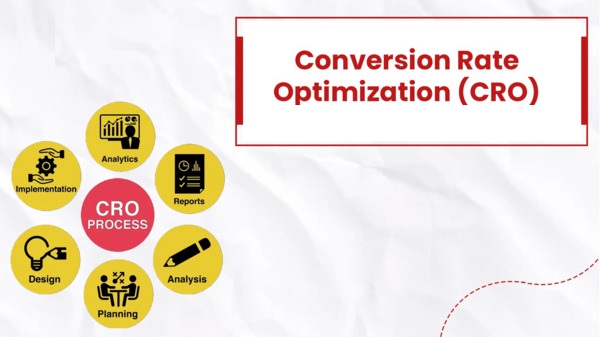
CRO focuses on turning more visitors into customers without necessarily increasing traffic. Instead of spending more on advertising, businesses optimize existing traffic to get better results.
For example, if a website receives 10,000 visitors per month and converts 2% of them into customers, that equals 200 conversions. If CRO improvements increase the conversion rate to 4%, the same traffic produces 400 conversions.
That’s why CRO is one of the most cost-effective marketing strategies.
Key benefits include:
- Higher revenue from existing traffic
- Better user experience
- Lower customer acquisition cost
- Improved marketing efficiency
The Role of Data in CRO Success
Data serves as the compass for any successful Conversion Rate Optimization strategy, moving the process away from guesswork and toward evidence-based decision-making.
By analyzing quantitative metrics, such as bounce rates, click-through rates, and session recordings, businesses can pinpoint exactly where users are struggling or losing interest.
- Identifying Friction: Data reveals the “leaks” in a sales funnel, showing which specific pages or forms cause users to exit.
- Validating Hypotheses: Instead of relying on intuition, data-driven A/B testing provides statistical proof of which changes actually drive revenue.
- Personalization: Granular data allows for segmented insights, helping tailor the user experience to different audience behaviours and needs.
Without data, CRO is merely a series of “best guesses”; with it, it becomes a predictable engine for growth that maximizes the value of every visitor.
Data provides the foundation for successful CRO strategies. Without data, optimization becomes guesswork.
Data sources for CRO include:
- Website analytics
- User behaviour tracking
- Heatmaps
- Session recordings
- Customer surveys
- A/B test results
By analyzing these insights, marketers can understand how users interact with their websites and identify opportunities for improvement.
What Is Data-Driven Marketing?
Data-driven marketing refers to using analytics, customer insights, and measurable data to guide marketing decisions. Instead of relying on intuition alone, marketers analyze real performance metrics to determine what works best.
Core Principles of Data-Driven Decision Making
A strong data-driven strategy typically includes:
- Collecting accurate user data
- Analyzing behavioral patterns
- Testing hypotheses
- Measuring campaign performance
- Continuously improving strategies
These principles ensure that marketing decisions are based on facts rather than assumptions.
Benefits of Data-Focused Marketing Campaigns
Businesses that use data-driven marketing gain several advantages:
- More accurate targeting
- Better personalization
- Higher campaign performance
- Improved budget allocation
- Faster growth
Companies that effectively implement Data Driven CRO Campaign Optimisation for Maximum Returns often outperform competitors who rely on traditional marketing methods.
Importance of Data Driven CRO Campaign Optimisation for Maximum Returns
Optimizing campaigns through data helps businesses identify which strategies produce the highest results.
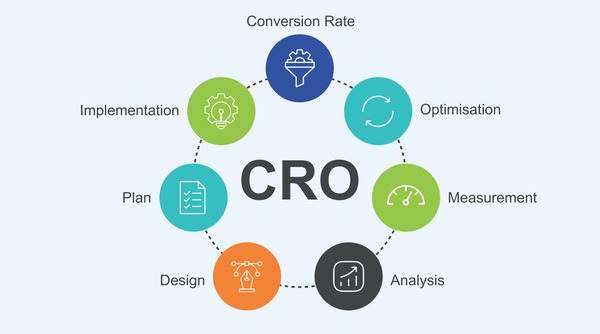
Improving Marketing ROI
One of the biggest advantages of CRO optimization is maximizing return on investment.
Instead of increasing advertising spend, companies focus on improving:
- Landing page performance
- User experience
- Conversion funnels
- Call-to-action effectiveness
Small changes, such as adjusting headlines or simplifying forms, can significantly improve conversions.
Creating Customer-Centric Experiences
Data-driven CRO also helps businesses understand their customers better.
By analysing behavioural data, marketers can:
- Identify user preferences
- Understand browsing patterns
- Reduce friction in the user journey
- Deliver personalized experiences
When customers feel understood and supported, they’re more likely to convert.
Key Metrics to Track for CRO Campaign Optimisation
To achieve successful CRO optimization, marketers must monitor specific performance
indicators.
Conversion Rate
Conversion rate measures the percentage of users who complete a desired action.
Formula: Conversions ÷ Total Visitors × 100, A higher conversion rate means the website or campaign is effectively persuading visitors.
Bounce Rate
Bounce rate measures the percentage of users who leave a website after viewing only one page. A high bounce rate may indicate:
- Poor user experience
- Slow page load time
- Irrelevant content
- Confusing navigation
Reducing bounce rate often improves conversions.
Customer Acquisition Cost
Customer Acquisition Cost (CAC) measures how much it costs to acquire a new customer. Lower CAC combined with higher conversions significantly improves profitability.
Average Order Value
Average Order Value (AOV) measures the average amount spent per purchase.
Increasing AOV through upselling, bundles, or recommendations boosts revenue without increasing traffic.
Tools Used for Data Driven CRO Campaign Optimisation
Modern CRO strategies rely on powerful analytics tools.
Analytics Platforms
Analytics platforms help marketers understand user behaviour and campaign performance.
Popular tools include:
- Google Analytics
- Adobe Analytics
- Mixpanel
These tools track traffic sources, user journeys, and conversion funnels.
You can learn more about Google’s analytics platform here: https://analytics.google.com
Heatmap and Behaviour Tracking Tools
Heatmap tools visually display how users interact with webpages. They reveal:
- Where users click
- How far they scroll
- Which elements attract attention
Popular heatmap tools include:
- Hotjar
- Crazy Egg
- Microsoft Clarity
A/B Testing Platforms
A/B testing platforms allow marketers to compare two versions of a page or campaign.
Examples include:
- Optimizely
- VWO
- Google Optimize
These tools help determine which design or messaging produces better results.
Steps to Build a Data-Driven CRO Strategy
A structured approach ensures consistent CRO success.
Data Collection and Analysis
The first step is gathering accurate data. Sources include:
- Website analytics
- User session recordings
- Customer feedback
- Conversion funnels
This data reveals where users drop off and what prevents conversions.
Identifying Bottlenecks in the Funnel
After analyzing data, marketers identify areas where users abandon the process.
Common bottlenecks include:
- Long checkout forms
- Slow page loading
- Confusing navigation
- Poor mobile experience
Fixing these issues often improves conversion rates quickly.
Hypothesis Creation
A hypothesis is an assumption about what change might improve conversions.
Example: “Changing the call-to-action button color will increase clicks.”
Hypotheses provide direction for testing.
Testing and Experimentation
Testing validates whether changes improve performance. Common experiments include:
- Headline variations
- Layout changes
- Call-to-action adjustments
- Form simplification
Continuous experimentation is essential for ongoing improvement.
Using A/B Testing to Optimize Campaign Performance
A/B testing is one of the most powerful CRO techniques.
How Split Testing Works
In A/B testing, two versions of a webpage are shown to different groups of visitors.
Version A: Original design
Version B: Modified design
The version that generates more conversions becomes the winning variation.
Best Practices for Reliable Testing
To ensure accurate results:
- Test only one variable at a time
- Use statistically significant sample sizes
- Run tests long enough to gather reliable data
- Avoid bias in test results
Following these best practices ensures meaningful insights.
Personalization in Data-Driven CRO
Personalization plays a major role in improving conversion rates.
Behavioural Segmentation
Behavioural segmentation groups users based on actions such as:
- Browsing history
- Purchase behaviour
- Device usage
- Geographic location
These insights allow marketers to tailor content and offers.
Dynamic Content and Targeting
Dynamic content adapts based on user behavior. Examples include:
- Personalized product recommendations
- Location-based offers
- Customized landing pages
Personalization improves engagement and conversions.
Common Mistakes in CRO Campaign Optimisation
While the goal of CRO is to improve performance, certain pitfalls can lead to skewed results or missed opportunities. One of the most frequent errors is relying on “best practices” without testing them against a specific audience’s unique behaviour. What works for a massive e-commerce site might fail for a niche B2B service.
Frequent Pitfalls to Avoid
- Testing Without Statistical Significance: Ending an A/B test too early can lead to “false positives.” Without a large enough sample size, the “winning” variation might just be the result of random chance.
- Focusing on Micro-Conversions Only: While button clicks are interesting, optimizing for them at the expense of final sales or lead quality can hurt the bottom line.
- Ignoring Qualitative Data: Quantitative data tells you what is happening, but skipping user surveys or heatmaps means you never understand why users are leaving.
- Testing Too Many Variables at Once: In standard A/B testing, changing the headline, the image, and the button colour simultaneously makes it impossible to know which change actually drove the result.
Note: Successful CRO is a marathon, not a sprint. Over-optimizing for short-term gains can sometimes damage long-term brand trust and user experience. Even experienced marketers make mistakes during CRO campaigns.
Ignoring Data Insights
Making decisions without analyzing data often leads to poor optimization results. Always rely on data rather than assumptions.
Testing Too Many Variables
Testing multiple changes at once makes it difficult to identify which factor influenced results. Focus on one change per experiment.
Lack of Clear Goals
CRO campaigns must have clear objectives, such as:
- Increasing sign-ups
- Boosting purchases
- Improving click-through rates
Without clear goals, measuring success becomes difficult.
Real-World Examples of Data Driven CRO Success
Many companies have achieved significant growth using CRO optimization.
E-commerce Conversion Improvements
Online retailers often improve conversions through:
- Simplified checkout processes
- Faster website loading speeds
- Mobile-friendly designs
- Trust signals like reviews and guarantees
These improvements reduce friction and encourage purchases.
SaaS Lead Generation Growth
Software companies use CRO strategies to increase sign-ups. Common tactics include:
- Free trials
- Interactive demos
- Clear value propositions
- Optimized landing pages
These strategies help convert website visitors into qualified leads.
Future Trends in Data-Driven CRO
The landscape of Conversion Rate Optimization is shifting from manual, reactive changes to autonomous, predictive systems. As we move into 2026, the focus is less on static A/B tests and more on creating fluid, real-time experiences that adapt to each individual user.
Emerging Trends for 2026
- AI-Native Experimentation: Traditional A/B testing is being replaced by AI agents that can automatically generate hundreds of page variations, run simultaneous tests, and implement winners in real-time, significantly increasing testing velocity.
- Predictive Intent Modelling: Instead of analyzing what a user did, advanced machine learning models now forecast what a user is likely to do next. This allows brands to proactively offer assistance or discounts before a user even shows signs of abandoning a cart.
- Privacy-First Optimization: With the tightening of global privacy regulations and the decline of third-party cookies, CRO is moving toward Zero-Party Data (data users intentionally share) and server-side tracking to maintain personalization without compromising trust.
- Hyper-Personalization at Scale: Modern CRO uses real-time behavioural data to create “segments of one,” where a visitor’s industry, past interactions, and even local weather can trigger unique content, headers, and pricing.
The Shift: In 2026, CRO is no longer just a marketing tactic; it is becoming a core “intelligence layer” that bridges the gap between massive data sets and individual human experiences.
CRO continues to evolve with new technologies.
AI and Predictive Analytics
Artificial intelligence helps marketers predict user behaviour and optimize campaigns automatically. AI tools can:
- Identify conversion patterns
- Personalize user experiences
- Recommend design improvements
Privacy-Friendly Data Tracking
With increasing privacy regulations, marketers must adapt to new data collection practices. Privacy-first analytics solutions are becoming more common as companies focus on ethical data usage.
Frequently Asked Questions
-
What is Data Driven CRO Campaign Optimisation for Maximum Returns?
It refers to improving marketing campaigns using data insights, analytics, and testing to increase conversion rates and maximize ROI.
-
Why is CRO important for businesses?
CRO helps businesses generate more conversions from existing traffic, reducing marketing costs and improving revenue.
-
What tools are commonly used for CRO optimization?
Common tools include Google Analytics, Hotjar, Crazy Egg, Optimizely, and VWO.
-
How long should an A/B test run?
A/B tests should run long enough to reach statistical significance, typically several weeks depending on traffic volume.
-
What are the main CRO metrics to track?
Key metrics include conversion rate, bounce rate, customer acquisition cost, and average order value.
-
Can small businesses benefit from CRO strategies?
Yes. Even small improvements in conversion rates can significantly increase revenue for small businesses.
Conclusion
Contemporary marketing triumph relies significantly on Data-Driven CRO Campaign Optimization for Optimal Returns. By merging analytics, consumer insights, and ongoing experimentation, organizations can substantially enhance conversion rates and maximize their marketing return on investment.
Instead of depending on assumptions, data-informed CRO enables marketers to make more intelligent choices that yield measurable outcomes. Each phase, from examining user behaviour to conducting A/B testing and adopting personalization tactics, plays a role in enhancing customer experience and boosting conversions.
As digital competition escalates, firms that prioritize data-driven optimization will secure a notable competitive edge. By concentrating on continuous testing, evaluation, and enhancements, businesses can transform their websites and campaigns into highly effective tools for conversion.