

Introduction to AI Multipurpose Content at Scale
In 2026, AI Multipurpose Content at Scale is no longer just about clicking a button to generate a thousand blog posts; it’s about building a versatile “content engine” that speaks your brand’s language across every imaginable format. Think of it as taking a single core idea, like a deep-dive interview or a unique company insight and using AI to intelligently slice, dice, and transform it into newsletters, social snippets, video scripts, and interactive guides in seconds.
To make this high-speed output feel truly human, we have to move past generic “AI-speak” and focus on these three pillars:
- The “Human-in-the-Loop” Strategy: AI provides the heavy lifting and the first draft, but a human expert provides the “soul.” This means adding personal anecdotes, lived experiences, and a unique point of view that a machine simply hasn’t lived through.
- Hyper-Personalization, Not Mass-Production: Instead of blasting the same message to everyone, scaling in 2026 means using AI to tailor content to niche sub-audiences. It’s the difference between a generic flyer and a letter that feels like it was written just for you.
- Structural Empathy: We humanize content by making it easy to digest. Using AI to create clear headings, “TL;DR” summaries, and scannable bullet points shows respect for the reader’s time, a very human trait in a noisy digital world.
Ultimately, scaling content isn’t about replacing the creator; it’s about amplifying a human voice so it can reach more people without losing its original warmth and intent.
Creating content at scale with AI has become one of the most powerful strategies in modern digital marketing. Businesses today need to publish consistent, high-quality content to stay competitive, and AI makes that possible.
AI content creation refers to using tools like language models to generate blog posts, product descriptions, and more at a much faster pace than traditional methods. But here’s the catch: scaling content doesn’t mean sacrificing quality. In fact, Google doesn’t penalize AI content simply because it’s AI-generated. Instead, it focuses on whether the content is helpful, original, and valuable to users.
Google’s Stance on AI-Generated Multipurpose Content
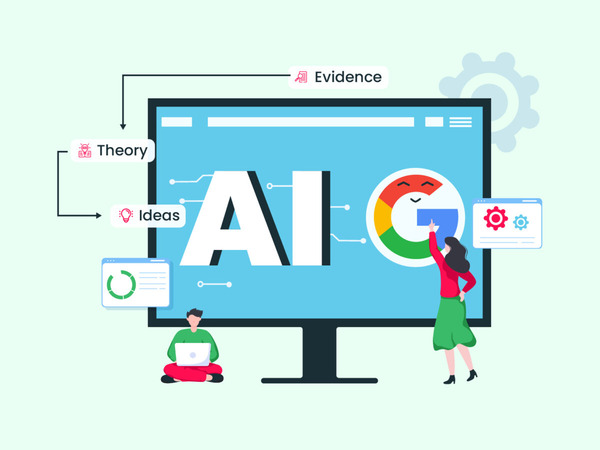
As of 2026, Google’s stance on AI-generated content has remained consistent: Google does not penalize content simply because it was created by AI. Their focus is on the quality and intent of the content, not the tool used to produce it.
However, when it comes to Multipurpose Content at Scale, Google has drawn very clear lines to prevent the web from being flooded with “workslop” (low-value, automated filler).
The Golden Rule: E-E-A-T
Google evaluates all content, human or A, through the lens of E-E-A-T (Experience, Expertise, Authoritativeness, and Trustworthiness). The AI Challenge: AI can simulate Expertise, but it cannot possess Experience.
The Solution: To rank, your scaled content must include “proof of life”, personal anecdotes, original photos, unique case studies, or data that an AI couldn’t have invented.
“Scaled Content Abuse” Policy
Google’s 2024 and 2026 spam updates specifically target Scaled Content Abuse. This is defined as producing large volumes of pages for the primary purpose of manipulating search rankings rather than helping users.
What’s Flagged: If you use AI to churn out thousands of pages that just “re-hash” what’s already on the internet without adding new value, Google’s SpamBrain AI will likely demote the entire site, not just the specific pages.
What’s Safe: Using AI to repurpose a high-quality human-led webinar into a blog post, an FAQ, and a summary is considered helpful automation.
Focus on “User Intent”
Google’s algorithms are now sophisticated enough to detect “robotic patterns”, uniform sentence lengths, repetitive structures, and a lack of emotional flow.
Key Insight: Content that satisfies the user’s “Search Intent” (actually answering their question quickly) will rank well. Content that “talks in circles” just to hit a word count (a common AI trait) is increasingly ignored.
The Bottom Line: Google views AI as a powerful assistant. If you use it to amplify your unique expertise and make it more accessible, you’ll win. If you use it to “pollute” the search results with generic summaries, your visibility will eventually drop.
Helpful Content System Explained
Google’s ranking systems are designed to reward people-first content. That means your content must genuinely help users, answer questions, and provide value. According to official guidance, Google rewards high-quality content “however it’s produced.”
March 2024 Spam Update Insights
The March 2024 update introduced stricter rules against scaled content abuse, a practice where large volumes of low-quality pages are created just to manipulate rankings. Key takeaway: AI is not the problem. Low-value, mass-produced content is.
Understanding E-E-A-T for AI Content
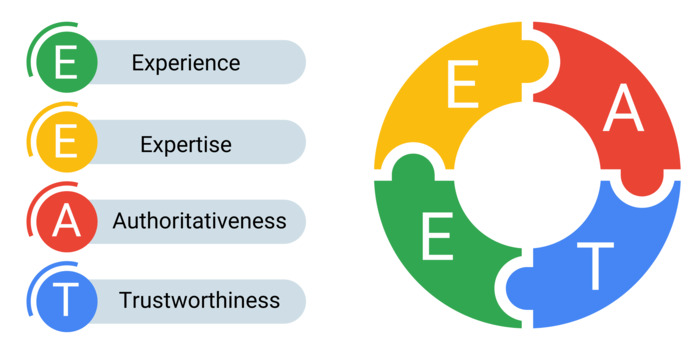
When it comes to AI content, E-E-A-T, Experience, Expertise, Authoritativeness, and Trustworthiness, acts like a quality check that keeps things real. AI can help you write faster, but it doesn’t replace genuine knowledge or lived experience. That’s where you come in.
Think of AI as your assistant, not the expert. Your role is to add personal insights, verify facts, and make sure the content actually helps someone. When readers feel that a real person is behind the words, they’re more likely to trust what they’re reading and that’s exactly what search engines look for too. In simple terms, E-E-A-T helps turn AI-generated content into something more human, more credible, and far more valuable.
E-E-A-T stands for:
- Experience
- Expertise
- Authoritativeness
- Trustworthiness
These are critical ranking signals for Google.
Why E-E-A-T Matters More Than Ever?
In today’s content-heavy world, people don’t just want information, they want reliable information they can trust. That’s where E-E-A-T (Experience, Expertise, Authoritativeness, and Trustworthiness) really shines. With so much AI-generated content online, Google is paying closer attention to whether the content feels real, helpful, and written by someone who actually knows what they’re talking about.
Think about it this way, would you trust health advice from a random blog, or from someone who’s actually experienced it or studied it deeply? That’s exactly how Google sees it too. Content that shows real-life experience, clear expertise, and honest intent naturally stands out and builds credibility with readers.
In short, E-E-A-T isn’t just an SEO concept anymore, it’s what makes your content feel human, trustworthy, and worth reading.
Even AI-generated content can rank well if it demonstrates strong E-E-A-T signals. This includes:
- Real-life examples
- Expert insights
- Credible sources
- Accurate information
Experience as a Ranking Factor
Google increasingly values first-hand experience. AI alone cannot provide this, so human input becomes essential.
Benefits of Creating Content at Scale with AI

When you transition from manual creation to AI-driven scale, you aren’t just “making more stuff”, you’re effectively decoupling your creative potential from the limitations of the 24-hour day.
Here are the primary benefits of scaling your content strategy with AI:
Velocity and Market Responsiveness
The most immediate advantage is speed. In a fast-moving digital economy, being the first to respond to a trend or news cycle is vital. AI allows you to move from “concept” to “published” in minutes rather than days, ensuring your brand stays relevant in real-time conversations.
Radical Cost Efficiency
Traditional scaling requires hiring massive teams of writers, designers, and editors. AI acts as a force multiplier, allowing a small, agile team to produce the output of a much larger agency. This significantly lowers the “cost per asset,” freeing up your budget for high-level strategy and paid distribution.
Infinite Repurposing (The “Create Once, Distribute Everywhere” Model)
AI excels at transforming a single “pillar” asset into a diverse ecosystem of content. For example:
- A 30-minute webinar can be instantly turned into 5 blog posts, 10 LinkedIn updates, a newsletter, and a series of short-form video scripts.
- This ensures message consistency across all platforms while saving your team from the burnout of repetitive manual drafting.
Data-Driven Personalization
Scaling with AI isn’t just about volume; it’s about relevance. AI can help you create 50 versions of the same campaign, each tweaked for a specific demographic, industry, or region. “Instead of one message for a million people, AI enables a million messages tailored for one person.”
SEO Dominance and “Topic Authority”
To win at SEO today, you need to prove you are an authority on a subject. AI helps you build Topic Clusters, writing dozens of interconnected articles that cover every facet of a niche. This comprehensive coverage signals to search engines that you are a go-to resource, boosting your rankings across the board.
Creative Freedom for Humans
Perhaps the most “human” benefit is that AI handles the drudgery. By automating the first drafts, formatting, and basic research, your creative team can focus on what they do best:
- Developing high-level strategy.
- Conducting original interviews.
- Injecting unique brand personality and “wit” into the final polish.
Time-saving Automation
AI can generate:
- Blog drafts
- Product descriptions
- Content outlines
This significantly reduces manual effort and speeds up production.
Cost-effectiveness
Instead of hiring large content teams, businesses can scale with fewer resources while maintaining output. Over 80% of marketers now use AI in some capacity, highlighting its growing importance.
Risks of AI Content at Scale
Creating content at scale with AI can feel like a superpower, but it comes with its fair share of risks if not handled carefully. When content is produced too quickly without proper review, it can end up sounding generic, repetitive, or even inaccurate.
That’s something readers notice right away, and it can slowly reduce trust in your brand. Another common issue is losing the “human touch.” If everything feels automated, your content may struggle to connect emotionally with your audience.
Over time, this can lead to lower engagement and weaker results. In simple terms, scaling content isn’t the problem, scaling low-quality content is. That’s why it’s important to balance speed with thoughtful editing, real insights, and a focus on genuinely helping your readers.
Thin Content Issues
AI-generated content can sometimes:
- Lack depth
- Repeat existing information
- Feel generic
Google flags such content as low quality.
Over-automation Risks
Publishing unedited AI content at scale can lead to penalties due to:
- Lack of originality
- Poor user experience
- No added value
Step-by-Step Guide to Creating Content at Scale
Keyword Research & Topic Clustering
Start with strong SEO fundamentals:
- Identify high-volume keywords
- Group related topics into clusters
- Focus on search intent
Prompt Engineering Techniques
AI performs better with detailed prompts. Include:
- Target audience
- Tone of voice
- Keywords
- Content structure
Section-by-Section Content Creation
Instead of generating full articles at once:
- Create content one section at a time
- Review and refine each part
- Maintain consistency and quality
Using AI Tools Effectively
AI Writing Tools
Tools like ChatGPT help with:
- Idea generation
- Draft creation
- Content structuring
AI Image Tools
Visual tools can create:
- Blog images
- Infographics
- Custom visuals
These improve engagement and SEO performance.
Human + AI Collaboration Strategy
Editing and Fact-checking
AI can make mistakes. Always:
- Verify facts
- Correct inaccuracies
- Improve readability
Adding Unique Insights
Human input adds:
- Personal experiences
- Case studies
- Real-world examples
This is what makes content stand out.
Content Optimization for Google
Internal Linking & Structure
- Use clear headings
- Add internal links
- Improve navigation
Multimedia Integration
Adding images and videos:
- Improves user experience
- Increases time on page
- Boosts SEO
Measuring Success of AI Content
Organic Traffic Growth
Track:
- Keyword rankings
- Traffic increase
- Search visibility
Engagement Metrics
Monitor:
- Bounce rate
- Time on page
- Click-through rates
Future of AI Multipurpose Content and SEO
The future of content isn’t about choosing between “human-made” and “AI-generated”, it’s about how we blend the two to stay helpful in a world of instant answers. As search engines evolve into “answer engines,” the secret to staying visible isn’t just about keywords; it’s about being the most trusted voice in the room.
The Shift from Clicks to Citations
In 2026, SEO is no longer just about ranking #1; it’s about Generative Engine Optimization (GEO). With AI overviews providing instant answers, your goal is to be the source those AI models cite.
- Multipurpose Content: A single piece of deep research should now feed a dozen formats, a structured blog for AI crawlers, a quick video for social search, and a concise “FAQ block” for voice assistants.
- Zero-Click Reality: Since users often get their answers directly on the search page, your content needs to be so insightful that they click through not for the fact, but for your perspective.
Why “Human-First” is Your Competitive Edge?
As the web becomes flooded with generic AI text, search engines are doubling down on E-E-A-T (Experience, Expertise, Authoritativeness, and Trustworthiness). The Golden Rule: AI can summarize a process, but it can’t tell you what it felt like to fail at it and what you learned.
To stay ahead, focus on:
- Personal Narratives: Share real-world case studies and “behind-the-scenes” data that an algorithm can’t invent.
- Structured Clarity: Use clear headings and data tables. If a machine can easily “read” your expertise, it’s more likely to recommend you.
- Predictive Intent: Instead of chasing what people searched for yesterday, use AI tools to predict the questions they’ll ask tomorrow.
Ultimately, the future of SEO feels a bit more “human” than it used to. We’re moving away from tricking algorithms and moving toward building authority.
Use AI to handle the heavy lifting of formatting and research, but keep your unique voice at the steering wheel. That’s how you turn a casual searcher into a loyal follower.
AI is evolving rapidly, and so is search.
- AI-generated answers are increasing
- Google prioritizes high-quality sources
- Competition for top rankings is rising
The future belongs to those who combine AI efficiency with human creativity.
FAQs on Create Multipurpose Content at Scale with AI
Does Google penalize AI-generated content?
Not really, Google isn’t against AI itself. What it cares about is the quality of the content. If AI is used to create helpful, accurate, and user-focused content, there’s no issue at all. But if someone uses AI to quickly produce lots of low-quality, spammy, or repetitive content just to rank higher, that’s when Google steps in. So, it’s less about how the content is made and more about how useful and trustworthy it is for readers.
What is scaled content abuse?
Scaled content abuse happens when a large number of pages are created mainly to manipulate search rankings rather than help users. This often means publishing tons of shallow, repetitive, or low-value articles without adding anything new or meaningful. Think of it as quantity over quality taken too far. Google is getting better at spotting this, so simply pushing out content in bulk without real value can actually hurt your website in the long run.
Can AI content rank on Google?
Yes, absolutely, AI content can rank very well on Google. The key is making sure the content is high-quality, original, and genuinely useful. When you combine AI with human editing, fact-checking, and real insights, the result can be just as good (or even better) than traditional content. Following E-E-A-T principles also helps ensure your content builds trust and authority, which are important ranking factors.
How do I make AI content more human-like?
The best way to humanize AI content is to add your personal touch. This could include sharing real experiences, opinions, or examples that AI alone can’t provide. Also, take time to edit the content, adjust the tone, simplify complex ideas, and make it sound natural and conversational. When readers feel like a real person is speaking to them, the content becomes more engaging and trustworthy.
What are the best AI tools for content creation?
There are many great AI tools available today, and each serves a different purpose. Tools like ChatGPT are excellent for writing and brainstorming ideas, while MidJourney can help create stunning visuals. Canva is perfect for designing graphics and presentations. The best approach is to use a combination of tools depending on your needs, rather than relying on just one.
How much AI content is too much?
There’s no strict limit on how much AI content you can create. However, focusing only on volume can be risky. It’s far better to publish fewer pieces of high-quality, well-edited content than a large number of low-quality ones. Always ask yourself: Is this content helpful? Does it add value? If the answer is yes, you’re on the right track, no matter how much you publish.
Conclusion
Creating multipurpose content at scale with AI is no longer just a smart strategy, it’s becoming essential for staying competitive in today’s fast-moving digital world. AI gives you the power to produce content quickly and repurpose it across blogs, social media, emails, and more, without starting from scratch every time.
However, the real magic happens when you combine AI efficiency with human creativity. By adding your unique voice, real insights, and a clear understanding of your audience, you turn simple AI-generated drafts into valuable, engaging content that truly connects.
At the end of the day, it’s not about producing more content, it’s about creating better, more meaningful content that serves multiple purposes while still feeling authentic. When done right, this approach not only saves time but also builds trust, boosts visibility, and delivers long-term results.
Creating multipurpose content at scale with AI is not just possible, it’s incredibly powerful when done right. The key is to use AI as a tool, not a replacement for human creativity.
Focus on:
- Quality over quantity
- Value over automation
- People-first content
When you combine AI efficiency with human expertise, you create content that both users and Google will love.