

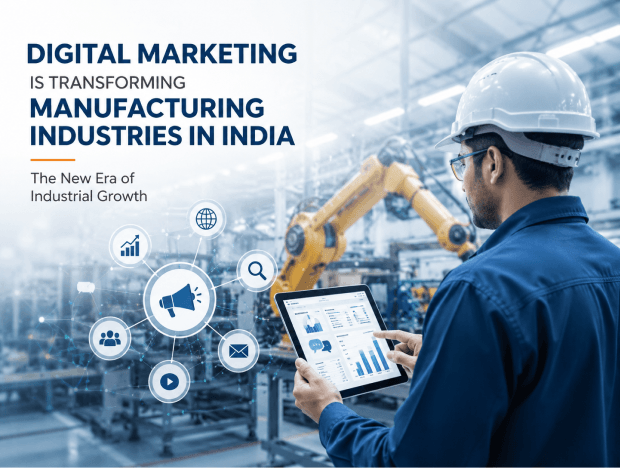
For decades, India’s manufacturing sector relied heavily on traditional methods of business development. Trade fairs, distributor networks, cold calling, print advertisements, and word-of-mouth referrals were the primary channels through which manufacturers generated leads and expanded their businesses. While these methods still hold value, the rapid digital transformation of the global economy has significantly changed how industrial buyers search for suppliers and make purchasing decisions.
Today, digital marketing has emerged as a powerful growth engine for manufacturing companies across India. Whether it is a small-scale engineering unit in Ahmedabad, a textile manufacturer in Surat, an automotive component producer in Pune, or a large industrial equipment company in Chennai, businesses are increasingly leveraging digital platforms to connect with customers, generate qualified leads, and establish a competitive advantage.
The manufacturing industry is no longer limited by geographical boundaries. With the right digital marketing strategy, companies can showcase their products to customers across India and even worldwide. This shift is fundamentally transforming how manufacturers operate, market their offerings, and drive business growth.
The Digital Shift in Manufacturing Industries in India
Modern buyers behave differently than they did a decade ago. Before contacting a supplier, procurement managers, business owners, and decision-makers conduct extensive online research. They compare products, evaluate supplier credibility, read reviews, and analyze company websites.
Research consistently shows that most B2B buyers complete a significant portion of their purchasing journey online before speaking with a sales representative. This change in buyer behaviour has created a compelling need for manufacturers to establish a strong digital presence.
Manufacturing companies that fail to embrace digital marketing risk becoming invisible to potential customers. On the other hand, businesses that invest in digital channels gain greater visibility, stronger brand authority, and access to a larger customer base.
Increased Online Visibility Through Search Engines
One of the most significant ways digital marketing is transforming manufacturing industries in India is through Search Engine Optimization (SEO). When businesses search online for products such as industrial machinery, precision components, packaging materials, chemicals, or engineering solutions, they often begin with Google.
Manufacturers that rank on the first page of search results have a much higher chance of attracting potential customers. SEO helps manufacturing companies:
- Improve website visibility
- Generate organic traffic
- Attract highly targeted leads
- Build long-term credibility
- Reduce dependency on paid advertising
For example, if a company manufactures CNC machining parts in Gujarat, ranking for keywords related to CNC components can bring inquiries from businesses actively seeking suppliers. This creates a steady stream of qualified prospects without continuous advertising expenses.
Lead Generation Has Become More Efficient
Traditionally, manufacturers invested considerable resources in exhibitions, trade shows, and sales teams to generate business opportunities. While these channels remain important, digital marketing has made lead generation significantly more efficient and measurable. Manufacturers can now attract prospects through:
- Search engine marketing
- LinkedIn campaigns
- Industry-specific content
- Email marketing
- Landing pages
- Online directories
Unlike traditional marketing, digital campaigns allow companies to track every interaction. Businesses can identify where leads originate, which campaigns perform best, and how prospects engage with their content. This data-driven approach enables manufacturers to optimize their marketing budgets and focus on activities that deliver the highest return on investment.
Building Trust Through Content Marketing
In the manufacturing sector, trust plays a crucial role in purchasing decisions. Buyers often seek reliable suppliers capable of meeting quality standards, delivery timelines, and technical requirements. Content marketing has become an effective tool for building this trust. Manufacturers are increasingly publishing:
- Technical blogs
- Product guides
- Industry insights
- Whitepapers
- Case studies
- Videos and demonstrations
By sharing valuable information, companies position themselves as industry experts rather than just product sellers. For example, a manufacturer of industrial pumps can publish articles about pump maintenance, energy efficiency, and industry applications.
Such content educates potential buyers while simultaneously demonstrating technical expertise. When customers perceive a company as knowledgeable and trustworthy, they are more likely to initiate business conversations.
Social Media is Changing Industrial Communication
Many manufacturing companies once viewed social media as relevant only for consumer brands. However, platforms like LinkedIn, YouTube, Facebook, and Instagram have become powerful marketing channels for industrial businesses. LinkedIn, in particular, has emerged as a key platform for B2B marketing. Manufacturers use social media to:
- Showcase new products
- Share company achievements
- Highlight production capabilities
- Publish customer success stories
- Engage with industry professionals
- Build corporate credibility
Video content has become especially impactful. Factory tours, production demonstrations, machine operations, and quality control processes help potential buyers understand a company’s capabilities before initiating contact. Social media allows manufacturers to humanize their brands and maintain direct communication with customers and stakeholders.
Expanding Beyond Local Markets
One of the greatest advantages of digital marketing is its ability to remove geographical limitations. In the past, many small and medium-sized manufacturers primarily served customers within their local regions.
Expanding into new markets often required substantial investments in sales infrastructure and distribution networks. Digital marketing has changed this dynamic. Today, a manufacturer in India can:
- Reach customers across the country
- Generate export inquiries
- Build international partnerships
- Participate in global supply chains
- Compete with larger organizations
Through SEO, digital advertising, and online marketplaces, manufacturers can showcase their products to audiences worldwide. This has opened significant growth opportunities, particularly for small and medium enterprises (SMEs).
Better Customer Relationship Management
Digital marketing is not only about acquiring new customers. It also helps manufacturers strengthen relationships with existing clients. Email marketing remains one of the most effective tools for customer retention. Manufacturers can use email campaigns to:
- Share product updates
- Announce new technologies
- Provide maintenance tips
- Inform customers about industry trends
- Promote special offers
Marketing automation tools further enhance customer engagement by delivering personalized communications based on customer behaviour and preferences. By maintaining regular contact, manufacturers stay top-of-mind and encourage repeat business.
Data-Driven Decision Making
Traditional marketing often relied on assumptions and limited feedback. Digital marketing provides manufacturers with access to real-time data and performance metrics. Companies can measure:
- Website traffic
- Lead sources
- Conversion rates
- Customer engagement
- Campaign performance
- Return on investment
These insights enable businesses to make informed decisions rather than relying on guesswork. For example, if analytics reveal that a particular product page attracts substantial traffic but generates few inquiries, the company can optimize the page to improve conversions. This continuous improvement process helps manufacturers maximize marketing effectiveness and business outcomes.
Supporting Industry 4.0 Transformation
India’s manufacturing sector is increasingly adopting Industry 4.0 technologies such as automation, artificial intelligence, Internet of Things (IoT), and smart manufacturing systems.
Digital marketing complements this transformation by enabling companies to communicate innovation effectively. Manufacturers investing in advanced technologies can use digital channels to:
- Demonstrate technological capabilities
- Educate customers about new solutions
- Showcase innovation initiatives
- Build thought leadership
- Differentiate themselves from competitors
As technology becomes a key competitive factor, digital marketing helps organizations communicate their value proposition more effectively.
Cost-Effective Marketing for SMEs
Many small and medium manufacturing businesses operate with limited marketing budgets. Digital marketing provides a cost-effective alternative to traditional advertising channels.
Compared to television, print media, or large trade exhibitions, digital campaigns often require lower investment while delivering highly targeted results. Benefits include:
- Flexible budgeting
- Precise audience targeting
- Measurable performance
- Higher lead quality
- Improved ROI
Even smaller manufacturers can compete with larger companies by implementing strategic digital marketing initiatives. This democratization of marketing has created new opportunities for businesses of all sizes.
Challenges Manufacturers Must Address
While digital marketing offers tremendous benefits, manufacturers must overcome certain challenges to achieve success. Common obstacles include:
Resistance to Change
Many traditional manufacturing businesses remain hesitant to adopt digital strategies due to established practices and organizational culture.
Limited Digital Expertise
Manufacturers often lack in-house digital marketing knowledge and may require external support or specialized talent.
Technical Content Requirements
Industrial products can be complex, requiring accurate and technically detailed content that resonates with professional buyers.
Long Sales Cycles
Manufacturing purchases often involve multiple stakeholders and lengthy decision-making processes, requiring consistent nurturing strategies.
Despite these challenges, companies that embrace digital transformation are achieving significant competitive advantages.
The Future of Manufacturing Marketing in India
The future of manufacturing marketing in India is undeniably digital. As internet penetration increases, buyer behaviour evolves, and technology continues to advance, digital channels will play an even greater role in business growth. Emerging trends include:
- Artificial intelligence-powered marketing
- Predictive analytics
- Marketing automation
- Interactive product experiences
- Virtual factory tours
- Personalized customer journeys
- Account-based marketing (ABM)
Manufacturers that adapt early will be better positioned to capture market opportunities and strengthen customer relationships.
Conclusion
Digital marketing is no longer optional for manufacturing companies in India, it has become a critical component of sustainable growth and competitiveness. From improving online visibility and generating qualified leads to expanding market reach and building customer trust, digital marketing is transforming every aspect of how manufacturers connect with buyers.
Indian manufacturing businesses that embrace digital strategies are not only improving their marketing performance but also preparing themselves for the future of industrial commerce. As the manufacturing landscape becomes increasingly digital, companies that invest in strong online presence, valuable content, data-driven decision-making, and customer-centric marketing will lead the next phase of industrial growth.
The transformation is already underway, and digital marketing is proving to be one of the most powerful catalysts driving the evolution of India’s manufacturing sector.