
SEO has changed dramatically over the past few years. There was a time when simply inserting the right keywords into a webpage could help businesses rank on Google. Today, that approach is no longer enough.
Search engines have become remarkably intelligent. They don’t just understand words, they understand context, intent, and increasingly, the emotions behind every search. Think about it.
Someone searching for “best laptop under ₹50,000” is looking for recommendations. Someone searching for “why is my laptop so slow?” needs help. Another person searching “how to recover files from a crashed laptop” may be anxious or even desperate. Although all three searches involve laptops, each person has a completely different emotional state and expectation.
This is why modern SEO has become more human than ever before. Today’s successful SEO strategies are built around understanding people, their questions, concerns, motivations, and emotions, not just their search queries. In this guide, we’ll explore how emotional search intent is transforming SEO, why it matters, and how businesses can create content that truly connects with their audience while achieving higher search rankings.
Search intent has evolved far beyond matching keywords. Today, search engines use artificial intelligence, natural language processing, and user behavior signals to understand the real meaning behind every query. People no longer search with robotic phrases, they ask detailed questions, seek personalized recommendations, and expect answers that match their unique needs. As a result, modern SEO is no longer just about ranking for keywords; it’s about understanding human intent and delivering valuable, relevant experiences.
In this new era of SEO, businesses that create content focused on solving real problems, answering genuine questions, and guiding users through every stage of their journey are far more likely to succeed. Whether someone wants information, wants to compare options, or is ready to make a purchase, content that aligns with their intent earns higher engagement, stronger trust, and better search visibility. Understanding search intent isn’t just an SEO strategy anymore. it’s the foundation of meaningful digital marketing.
What Is Search Intent?
Search intent is the reason behind every search someone makes on Google or any other search engine. It reflects what the person is actually trying to achieve, whether they’re looking for information, comparing options, finding a specific website, or getting ready to make a purchase. Understanding search intent helps businesses create content that answers real questions, solves real problems, and delivers the information users expect, leading to better engagement, higher rankings, and more meaningful connections with their audience.
Search intent refers to the real reason behind a user’s search query. It’s the purpose that motivates someone to type words into Google. For years, marketers categorized search intent into four basic types:
- Informational
- Navigational
- Commercial Investigation
- Transactional
While these categories are still relevant, modern SEO goes much deeper. Today’s search engines attempt to understand:
- What the user wants
- Why they need it
- How urgently they need it
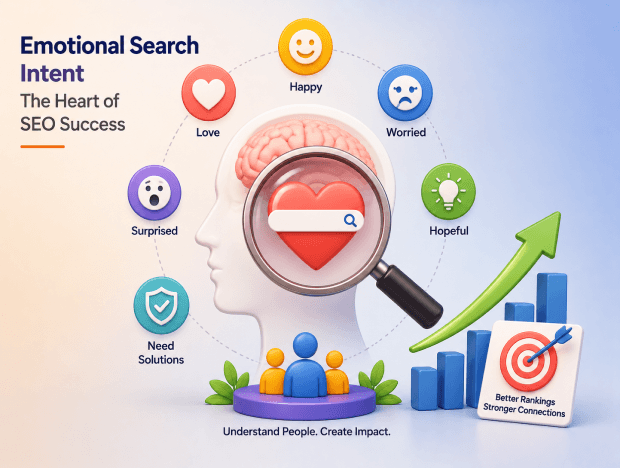
- What emotion is driving the search
This shift is changing how businesses should approach content creation.
SEO Is No Longer About Keywords Alone
Search engine optimisation is no longer just about adding the right keywords to a page. Modern SEO is about understanding what people are truly looking for and creating content that provides clear, relevant, and valuable answers. Search engines now evaluate context, user experience, content quality, expertise, and intent to deliver the most helpful results. Businesses that focus on solving users’ problems instead of simply targeting keywords are more likely to earn higher rankings, attract qualified traffic, and build long-term trust with their audience.
Imagine someone searches:
“How do I prepare for my first job interview?”
Technically, this is an informational search.
But emotionally, the person may be:
- Nervous
- Excited
- Uncertain
- Looking for reassurance
If your article simply lists interview tips without addressing these emotions, it may fail to build trust.
Now imagine another article that begins with:
“Feeling nervous before your first interview is completely normal. Almost everyone experiences it. Here’s how you can prepare confidently.”
Which one feels more helpful?
The second one speaks to the person,not just the keyword. That’s emotional SEO.
Why Search Intent Has Become More Human
Search intent has become more human because people now use search engines the same way they ask questions in everyday conversations. Instead of typing a few keywords, users search with complete questions, specific needs, emotions, and real-life situations.
Search engines have evolved to understand this context, prioritising content that genuinely helps users rather than pages filled with keywords. As a result, businesses that create authentic, people-first content are more likely to connect with their audience, build trust, and achieve better search visibility.
Google’s algorithms have evolved significantly with AI-powered systems that focus on delivering the most helpful results rather than simply matching keywords. Today’s search engine evaluates:
- Context
- User satisfaction
- Content usefulness
- Experience
- Trustworthiness
- Expertise
- Real-world value
Google understands that behind every search is a real person trying to solve a problem. This means businesses must write for humans first and algorithms second. Ironically, that’s exactly what helps them rank better.
The Psychology Behind Every Search
Every Google search begins with a human need. That need usually comes from an emotion. For example:
| Search Query | Emotional Trigger |
|---|---|
| Best dentist near me | Pain or urgency |
| How to lose weight naturally | Hope |
| Affordable study visa consultants | Uncertainty |
| Best CRM software | Business growth |
| Why is my website not ranking? | Frustration |
| Wedding photographer near me | Excitement |
| How to stop hair fall | Anxiety |
| Digital marketing agency | Opportunity |
Understanding these emotions helps create content that feels more relatable and persuasive.
Features of Emotion-Driven SEO
Modern SEO strategies focus on far more than keywords.
1. Audience-Centric Content
Instead of asking:
“What keyword should I target?”
Ask:
“What problem is my audience trying to solve?”
This mindset creates more valuable content.
2. Conversational Language
People don’t search like robots. They ask natural questions such as:
- Why is my website slow?
- Which visa consultant is trustworthy?
- How can I increase my online sales?
Your content should answer these questions naturally.
3. Problem-Solving Focus
Helpful content consistently performs better than promotional content. Readers appreciate businesses that educate first and sell later.
4. Storytelling
Stories create emotional connections. Real customer experiences, case studies, and practical examples make content more memorable.
5. Trust Signals
People trust businesses that demonstrate:
- Experience
- Expertise
- Reviews
- Testimonials
- Transparent information
- Clear pricing
- Helpful guidance
Trust improves user engagement and conversion rates.
6. Helpful User Experience
Google increasingly values:
- Fast-loading websites
- Mobile responsiveness
- Easy navigation
- Clear headings
- Readable content
- Helpful visuals
Good UX supports emotional satisfaction by reducing frustration.
Benefits of Understanding Emotional Search Intent
Understanding emotional search intent helps businesses create content that connects with people on a deeper level, not just with search engines. When you recognise the feelings, concerns, and motivations behind a search, you can provide more meaningful answers and build stronger relationships with your audience.
Some key benefits include:
- Builds Trust Faster: Content that addresses users’ emotions and concerns feels more authentic and reliable.
- Improves User Engagement: Visitors are more likely to stay longer, explore more pages, and interact with your content when it resonates with their needs.
- Increases Conversion Rates: People are more likely to take action when they feel understood and confident in your solution.
- Strengthens Brand Loyalty: Brands that consistently provide helpful, empathetic content are more likely to earn repeat customers.
- Supports Better SEO Performance: Search engines reward content that satisfies user intent, leading to improved rankings and higher-quality organic traffic.
- Creates More Meaningful Customer Experiences: Understanding why people search allows you to deliver the right message at the right stage of their journey, making every interaction more valuable.
Higher Search Rankings
Content that genuinely helps users often earns better engagement signals, which can contribute to stronger organic visibility over time.
Better User Engagement
Visitors tend to stay longer when content answers both their questions and their concerns. Higher engagement often leads to:
- Lower bounce rates
- More page views
- Increased trust
Improved Conversion Rates
People rarely purchase solely because of information. They buy because they feel confident. Emotion-driven content builds that confidence.
Stronger Brand Authority
When your content consistently solves real problems, readers begin viewing your brand as an expert. Authority builds long-term organic growth.
Increased Customer Loyalty
Helpful content keeps users returning. Returning visitors often become repeat customers and brand advocates.
More Qualified Leads
Understanding intent attracts visitors who genuinely need your products or services instead of simply generating traffic. Quality always beats quantity.
How AI Has Changed Search Intent
Artificial intelligence has transformed the way search engines understand and respond to user queries. Instead of matching pages based only on keywords, AI analyses context, language, behaviour, and user intent to deliver more relevant and personalised results.
Here’s how AI has changed search intent:
- Understands Natural Language: AI can interpret conversational questions and long-tail searches, making it easier for users to search the way they naturally speak.
- Focuses on Context, Not Just Keywords: Search engines now consider the meaning behind a query rather than relying on exact keyword matches.
- Delivers More Personalised Results: AI takes into account factors like location, search history, and preferences to provide answers that are more relevant to each user.
- Recognises Emotional Intent: Modern search engines can identify whether a user is looking for reassurance, guidance, comparisons, or immediate solutions, allowing them to surface content that best meets those needs.
- Rewards Helpful Content: AI prioritises high-quality, people-first content that answers questions clearly and provides genuine value over content written solely for search rankings.
- Improves the Search Experience: By understanding intent more accurately, AI helps users find the right information faster, creating a smoother and more satisfying search journey.
As AI continues to evolve, successful SEO is becoming less about optimising for algorithms and more about understanding real people. Brands that create relevant, trustworthy, and user-focused content are better positioned to earn visibility, engagement, and long-term success in search.
Artificial intelligence has transformed search engines. Google now understands:
- Synonyms
- Context
- Follow-up searches
- Related topics
- User behavior
- Search history (where applicable)
- Natural language
For example:
Searching:
“How do I improve my website?”
may lead Google to understand you actually want help with:
- SEO
- Website speed
- User experience
- Conversion optimization
- Mobile friendliness
This means businesses must create comprehensive content rather than isolated keyword pages.
Why Empathy Is Becoming an SEO Superpower
Empathy means understanding what someone is experiencing. In SEO, empathy helps answer questions like:
- What is the user worried about?
- What information will make them feel confident?
- What obstacles are preventing a decision?
- What reassurance do they need?
When content addresses these emotional factors, users are more likely to engage, share, and convert.
Practical Ways to Create Emotion-Driven SEO Content
Know Your Audience
Build detailed customer personas. Understand:
- Goals
- Challenges
- Questions
- Fears
- Motivations
Answer Real Questions
Use customer support conversations, FAQs, reviews, and industry forums to discover what people genuinely want to know.
Write Like a Human
Avoid stuffing pages with keywords. Instead:
- Use short sentences.
- Write conversationally.
- Explain complex ideas simply.
- Focus on clarity over jargon.
Add Real Examples
Examples help readers relate.
Instead of saying:
“Our SEO strategies improve rankings.”
Say:
“A local business optimized its service pages, improved site speed, and answered customer questions more clearly. Within a few months, it saw a noticeable increase in qualified organic traffic.”
Specific examples feel more credible and easier to understand.
Focus on User Experience
Create content that’s easy to consume. Include:
- Clear headings
- Bullet points
- Images
- Infographics
- Videos
- FAQs
- Internal links
These elements make information easier to find and understand.
Update Content Regularly
Search behavior changes. Industries evolve. Google updates its algorithms. Refreshing your content helps keep it relevant and useful.
Common Mistakes Businesses Still Make
Many companies continue to focus only on rankings. Common mistakes include:
- Writing only for search engines
- Ignoring audience emotions
- Publishing generic content
- Keyword stuffing
- Overusing AI-generated text without editing
- Failing to understand search intent
- Creating content without offering practical value
These practices often result in lower engagement and weaker long-term SEO performance.
The Future of SEO Is Human
Search engines will continue becoming smarter. Voice search, AI assistants, and conversational search are making queries more natural than ever.
Instead of typing:
“SEO company Ahmedabad”
Users increasingly ask:
“Which SEO company can help my manufacturing business generate more leads?”
The search is longer, more conversational, and much more specific. Businesses that understand these human conversations, not just keywords, will have a competitive advantage.
Conclusion :
SEO is no longer a race to insert the perfect keyword into every heading or paragraph. It’s about understanding the people behind the searches. Every query represents someone with a goal, a challenge, or a decision to make. The brands that succeed are the ones that respond with empathy, expertise, and genuinely helpful information.
When you align your content with both search intent and human emotion, you create experiences that resonate with readers, build trust, and encourage meaningful engagement. Those positive experiences naturally support stronger visibility in search results and better long-term business outcomes.
As search engines continue to evolve, one principle remains constant: create content for people first. When your audience feels understood, your SEO strategy becomes more effective, your brand becomes more credible, and your digital presence grows in a sustainable way.