
Introduction to Hashtags in Digital Marketing
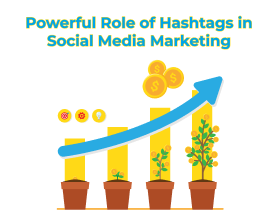
Hashtags’ Function in Social Media has evolved from being a straightforward tool for classification, and marketing has developed into a potent growth engine. In 2007, Twitter introduced hashtags as a means of organizing discussions. These days, they function as cross-platform algorithm signals, branding assets, and search tools.
A word or phrase that starts with the “#” symbol is called a hashtag. Users view content associated with the keyword when they click on it. Easy, isn’t it? But tremendously strong.
In digital marketing, hashtags help brands:
- Increase visibility
- Improve discoverability
- Join trending conversations
- Create brand communities
- Drive engagement
In short, they make your content searchable and shareable.
Why the Role of Hashtags in Social Media Marketing Matters?
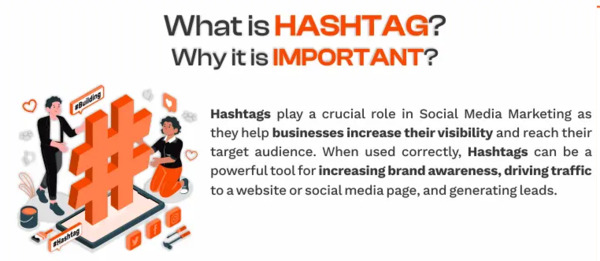
Hashtags act as the digital filing system of the social media world, turning huge amounts of unorganized data into searchable, themed conversations.
By using the right tags, you permit your content to break out of your instant follower bubble and appear in front of users who are vigorously searching for or following detailed topics.
Beyond mere discoverability, hashtags are vital for brand recognition and community building. Custom-branded hashtags help track the achievement of precise campaigns and encourage user-generated content, creating a centralized hub where your audience can interact with your brand and each other.
Key Benefits of Hashtags:
- Boosts Engagement: Posts with at least one hashtag often see significantly more interaction than those without.
- Targeted Reach: They help the platform’s algorithm understand your content and show it to a relevant audience.
- Competitive Analysis: Following industry hashtags allows you to monitor what competitors are doing and what’s trending in real-time.
Understanding the Role of Hashtags in Social Media Marketing is essential for businesses that want to grow organically.
Increasing Organic Reach
Social media algorithms rely on signals. Hashtags act as content tags that tell the platform what your post is about. When someone searches or follows a hashtag, your content may appear in their feed, even if they don’t follow you.
This dramatically increases:
- Impressions
- Profile visits
- Click-through rates
- Engagement rates
For example, a small bakery using #GlutenFreeDesserts may reach customers actively searching for that niche.
Building Brand Identity
Hashtags help brands create identity and consistency. A branded hashtag encourages user-generated content and builds community. Think of Nike’s famous campaign #JustDoIt. It’s more than a tagline, it’s a movement.
Branded hashtags:
- Encourage customers to share experiences
- Increase brand recognition
- Make campaigns easy to track
- Strengthen emotional connections
When customers repeatedly see and use your hashtag, your brand stays top of mind.
Types of Hashtags Used in Social Media Marketing
In social media marketing, hashtags are more than just a way to categorize content; they are strategic tools used to reach specific audiences and achieve different business goals.
Understanding the various types allows you to balance broad visibility with niche targeting. Not all hashtags are created equal. Smart marketers use different categories strategically.
Branded Hashtags
These are unique to a specific company. They don’t necessarily have to include the brand name, but they should embody the brand’s identity or a specific campaign.
- Purpose: To consolidate user-generated content (UGC) and build brand recognition.
- Example: #ShareACoke (Coca-Cola) or #JustDoIt (Nike).
Industry & Niche Hashtags
These tags are specific to the field you work in. They aren’t as broad as general tags, which means they attract a more qualified and interested audience.
- Purpose: To connect with a community that is already interested in your specific service or product.
- Example: #DigitalMarketing, #SolarInstallation, or #SustainableEnergy.
Event & Seasonal Hashtags
These are time-sensitive tags used for real-time engagement. They can revolve around a specific conference, a national holiday, or a global event.
- Purpose: To capitalize on “the now” and join trending conversations while they are at their peak.
- Example: #COP28, #BlackFriday, or #Diwali2026.
Location Hashtags
For businesses serving specific regions, location tags are vital. They help your content show up in local searches and “Explore” pages for people in that area.
- Purpose: To attract local customers and build a presence in a specific geographic market.
- Example: #AhmedabadBusiness, #SydneyRealEstate, or #ExploreGujarat.
Community & Interest Hashtags
These are tags used by specific groups of people with shared hobbies or lifestyles. They are less about the “product” and more about the “person” using it.
- Purpose: To humanize a brand and align it with the lifestyle of its target demographic.
- Example: #WorkFromHome, #TechLife, or #GreenLiving.
Quick Comparison Table
| Hashtag Type | Reach | Intent | Best Use Case |
| Branded | Specific | High | Tracking campaigns & UGC |
| Industry | Medium | High | Reaching potential B2B/B2C clients |
| Event | Very High | Medium | Short-term visibility spikes |
| Location | Targeted | Very High | Local SEO & service-based marketing |
Social Media Platform-Specific Hashtag Strategies
In 2026, the “more is better” approach to hashtags is officially dead. Most social algorithms now treat hashtags as contextual labels rather than reach-drivers. If you overload a post, you risk being flagged as spam by AI-driven recommendation engines.
Here is the current platform-specific breakdown for an effective strategy: Each platform uses hashtags differently. Let’s break it down.
Instagram Hashtag Optimization
On Instagram:
- Use 5–15 relevant hashtags
- Combine large, medium, and small hashtags
- Place them in captions or first comment
- Use location-based tags
Instagram allows users to follow hashtags, making them powerful discovery tools.
Twitter/X Hashtag Strategy
On Twitter (X):
- Use 1–2 hashtags per tweet
- Focus on trending topics
- Keep them short and readable
Too many hashtags can reduce engagement.
LinkedIn Hashtag Strategy
LinkedIn favours professional content.
Best practice:
- Use 3–5 industry-related hashtags
- Focus on B2B terms
- Add them at the end of posts
Example:
#ContentMarketing #Leadership #StartupGrowth
TikTok Hashtag Strategy
TikTok relies heavily on hashtags for its “For You” algorithm.
Tips:
- Mix trending and niche hashtags
- Use #FYP strategically
- Analyze competitor hashtags
Hashtags directly influence discoverability on TikTok.
Advanced Hashtag Features and Tools
In 2026, the landscape of hashtagging has shifted from “discovery” to “contextual intelligence.” Advanced features now focus on helping AI recommendation engines understand exactly what your content is about, rather than just placing it in a feed.
Advanced AI & Native Platform Features
Platforms have integrated deep learning to make hashtags more functional for both users and creators:
- AI-Driven “Topic” Mapping: Instagram and TikTok now use Semantic Clustering. Instead of just matching a keyword, the AI analyzes the “intent” of the hashtag. For example, using #SolarEPC tells the AI to show your post to users interested in “Industrial Renewable Energy,” not just generic “Sustainability.”
- Hashtag Sentiment Indexing: Platforms now track the sentiment (positive/negative/neutral) associated with specific hashtags. If a trending tag is currently associated with negative news, the algorithm may suppress posts using it to protect brand safety.
- Geographical “Hotspot” Discovery: Tools like Trendsmap and native platform maps now allow you to see where a hashtag is gaining momentum in real-time. This is crucial for local service providers (like solar installers in Ahmedabad) to jump on regional trends.
Essential Hashtag Research & Analytics Tools
To move beyond guessing, professionals use specialized software to track ROI and competitiveness:
| Tool | Best For | Key Feature |
| Keyhole | Campaign Tracking | Real-time tracking of reach, impressions, and Influencer impact for specific tags. |
| RiteTag | Instant Feedback | Color-coded suggestions (Green/Blue/Red) that tell you if a tag will get you seen now or over time. |
| Flick | Strategy Management | Helps you organize “Hashtag Sets” and tracks which specific tags are actually driving your rank. |
| Brand24 | Social Listening | Monitors brand-specific hashtags across the web, including news sites and forums, not just social media. |
| TikTok Creative Center | Viral Research | The gold standard for seeing which hashtags are moving the needle on TikTok by region and industry. |
Strategic Advanced Tactics
- The “Ladder Strategy”: Use a mix of “Difficult” (high volume), “Medium,” and “Easy” (niche) hashtags. This allows you to rank quickly in the niche tag, which provides the engagement “fuel” to potentially trend in the larger, more competitive tags.
- Alt-Text Integration: Always pair your hashtags with AI-optimized Alt-Text. In 2026, the AI cross-references your tags with the hidden image descriptions to verify that your content is authentic and relevant.
- Rotation & A/B Testing: Avoid using the exact same block of hashtags on every post. This can be flagged as “spammy behaviour.” Instead, use tools like Later or Sprout Social to rotate between 3–4 different hashtag “clusters” to see which drives the most saves and shares.
Modern marketing goes beyond simply adding “#”.
Hashtag Analytics Tools
Advanced tools help measure performance. Examples include:
- Sprout Social
- Hootsuite
- Brandwatch
They track:
- Reach
- Engagement rate
- Follower growth
- Click-throughs
This helps marketers refine strategies.
AI-Powered Hashtag Generators
AI tools now analyze:
- Audience behaviour
- Keyword trends
- Competitor data
They suggest optimized hashtag combinations for maximum visibility. AI reduces guesswork and improves performance.
Examples of Successful Hashtag Campaigns
Coca-Cola’s #ShareACoke
Coca-Cola encouraged customers to share photos with personalized bottles.
Results:
- Massive user-generated content
- Increased brand engagement
- Global campaign success
Nike’s #JustDoIt
Nike transformed a slogan into a global identity. The hashtag motivates athletes and everyday people alike.
It promotes:
- Inspiration
- Community
- Brand storytelling
These campaigns show how strategic hashtag use builds emotional connections.
Common Social Media Hashtag Mistakes to Avoid
In 2026, social media algorithms have become highly sophisticated at detecting “engagement hacking.” Avoiding these common pitfalls is now more about protecting your account’s domain authority and ensuring your content isn’t suppressed by AI filters.
Using “Banned” or “Flagged” Hashtags
Using a hashtag that has been hijacked by spam or inappropriate content can cause your post to be “shadowbanned” or hidden from the explore page.
- The Mistake: Using tags like #FollowForFollow, #Like4Like, or even seemingly innocent ones that have been temporarily flagged by platforms.
- The Fix: Periodically search for your core hashtags on Instagram or TikTok. If no “Top Posts” appear or you see a warning message, remove that tag from your strategy immediately.
The “Copy-Paste” Spam Trap
Using the exact same block of 10–20 hashtags on every single post is a major red flag for modern algorithms.
- The Mistake: Creating a “master list” and pasting it into every caption regardless of the specific content of the image or video.
- The Fix: Rotate your hashtags. Use a core of 1–2 branded tags, but ensure the remaining tags specifically describe what is happening in that specific post.
“Shadow-Boxing” with Broad Hashtags
Using massive, generic hashtags might feel like you’re reaching a bigger audience, but you are actually competing with millions of posts per hour.
- The Mistake: Relying on tags like #Marketing, #Business, or #Solar. Your content will be buried in seconds.
- The Fix: Go niche. Instead of #Marketing, use #DigitalMarketingAhmedabad. Instead of #Solar, use #ResidentialSolarIndia. Smaller pools give you a higher chance of staying at the top of the “Recent” or “Top” tabs.
Hashtag Stuffing (The “Wall of Blue”)
Overloading a post with 30 hashtags makes your brand look desperate and reduces the readability of your caption.
- The Mistake: Prioritizing the number of tags over the quality of the actual message.
- The Fix: Stick to the Platform-Specific Rules (e.g., 3–5 for Instagram/LinkedIn, 1–2 for Facebook). Use high-intent tags that act as SEO keywords rather than a “catch-all” net.
Ignoring “PascalCase” for Accessibility
In 2026, digital inclusivity is a ranking factor for many professional platforms like LinkedIn.
- The Mistake: Writing everything in lowercase (e.g., #solarpanelinstallation).
- The Fix: Capitalize the first letter of each word (e.g., #SolarPanelInstallation). This allows screen readers used by the visually impaired to announce the words individually rather than as one long, unintelligible string.
Quick Checklist: Is Your Hashtag Strategy Hurting You?
| Mistake | Result | Better Approach |
| Too Many Tags | Lower Engagement | Quality over Quantity (3–5 tags) |
| Broken/Banned Tags | Post Suppression | Regular “Cleanliness” Audits |
| Generic Tags | Zero Visibility | Industry-Specific & Niche Tags |
| All Lowercase | Accessibility Issues | #UsePascalCase |
Even experienced marketers make mistakes.
Avoid:
- Using irrelevant hashtags
- Overloading posts with 30+ tags
- Ignoring analytics
- Copying competitors blindly
- Using banned hashtags
Quality always beats quantity.
Measuring Hashtag Performance
Track these KPIs:
- Engagement rate
- Reach and impressions
- Follower growth
- Website clicks
- Conversion rate
Use platform analytics and third-party tools to assess ROI. Without measurement, strategy becomes guesswork.
Future Trends in Hashtag Marketing
In 2026, the era of “hashtag hacking” has officially ended. As social media platforms transition into AI-driven discovery engines, hashtags have shifted from being reach-drivers to becoming metadata labels that provide secondary context to sophisticated recommendation algorithms.
The following trends define the future of hashtags in marketing:
The Shift from Discovery to Categorization
Algorithms now prioritize Social SEO (keywords in captions, on-screen text, and spoken audio) to understand content.
- Secondary Signals: Hashtags now act as a “final confirmation” for the AI. If your caption mentions “solar installation” and your hashtag is #SolarEPC, the AI has 100% confidence in who to show your post to.
- Algorithm Trust: Using irrelevant or “spammy” tags now actively lowers your Creator Trust Score, leading to suppressed reach.
AI-Assisted “Topic” Tagging
Platforms like Instagram have introduced native “Add Topics” features that work alongside hashtags.
- The Trend: Marketers are moving away from manually researching lists and instead using AI tools that analyze the image’s pixels and the caption’s sentiment to suggest 3–5 high-intent tags.
- Impact: This reduces the “noise” of generic tags and ensures your content stays within its intended “Semantic Cluster.”
Community “Campfires” and Gated Tags
As the public feed becomes more saturated with AI-generated content, users are retreating into smaller, private communities.
- Branded Affinity Tags: Brands are using unique hashtags not for reach, but to organize communities across platforms (e.g., a specific tag used only by a brand’s Discord and Instagram members).
- Searchable Hubs: In 2026, a branded hashtag functions as a “digital filing cabinet” where loyal customers can find peer-to-peer reviews and user-generated content (UGC).
Interactive and AR Hashtags
With the rise of Augmented Reality (AR) and wearable tech, hashtags are becoming interactive.
- Visual Triggers: AR glasses or mobile filters can now “read” hashtags in the physical world (on billboards or product packaging) to trigger exclusive digital experiences or discounts.
- Voice-Activated Tags: As voice search grows, “tagging” content via spoken keywords during a video is becoming as important as the written # symbol.
Future Strategy Summary
| Feature | Old Way (2022-2024) | New Way (2026+) |
| Quantity | 20–30 tags (Spray and Pray) | 3–5 hyper-relevant tags |
| Goal | Going “Viral” | Semantic Categorization |
| Primary Driver | Hashtags | Caption Keywords & Audio |
| Discovery | Scrolling through Tag Feeds | AI Recommendation Feeds |
The future looks exciting.
Emerging trends include:
- AI-driven hashtag personalization
- Voice search integration
- Semantic search indexing
- Social SEO evolution
Hashtags are becoming more like search engine keywords. Marketers must adapt or risk falling behind.
FAQs on Role of Hashtags in Social Media Marketing
How many hashtags should I use per post?
The ideal number of hashtags varies depending on the platform and your goals. On Instagram, using between 5–15 well-chosen hashtags tends to strike the right balance between reach and readability. While Instagram allows up to 30 hashtags, overloading your post can look spammy and may reduce engagement. On Twitter (X), brevity is key—1–2 relevant hashtags are usually enough to join conversations without cluttering your message. LinkedIn works best with 3–5 professional and industry-specific hashtags that help categorize your content and reach the right audience.
Do hashtags still work in 2026?
Yes, hashtags are still highly relevant in 2026. They’ve evolved from simple categorization tools into powerful elements of social search optimization. Platforms now treat hashtags as signals to understand content context, helping users discover posts based on interests, trends, and search behavior. When used strategically, hashtags can significantly expand your reach beyond your immediate followers and improve content visibility in algorithm-driven feeds.
Should hashtags go in the caption or comments?
Placement depends on the platform. On Instagram, hashtags can be placed either in the caption or the first comment without affecting performance, many users prefer comments to keep captions clean and visually appealing. However, on LinkedIn and Twitter (X), hashtags should always be included directly in the caption, as comments do not contribute to discoverability in the same way. The key is to ensure your hashtags are visible and integrated naturally into your content.
Can hashtags increase sales?
Hashtags don’t directly generate sales, but they play an important role in the conversion funnel. By increasing the visibility of your posts, hashtags help attract a larger and more relevant audience. This increased exposure can lead to higher engagement, more website visits, and ultimately more opportunities for conversion. When combined with strong content, clear calls to action, and a good product or service, hashtags can indirectly contribute to revenue growth.
Are trending hashtags always good?
Not necessarily. While trending hashtags can boost visibility, they are only effective if they are relevant to your content and brand. Using unrelated trending hashtags may bring temporary attention but can harm credibility and reduce meaningful engagement. It’s better to focus on hashtags that align with your niche, audience interests, and message. Relevance always outweighs popularity when it comes to long-term growth.
How do I create a branded hashtag?
A strong branded hashtag should be simple, memorable, and unique to your business or campaign. Keep it short and easy to spell so users can recall and use it effortlessly. Avoid complicated words, excessive length, or ambiguous meanings. Ideally, your branded hashtag should reflect your brand identity or campaign theme, making it easy for your audience to associate it with your content. Before finalizing, search the hashtag to ensure it isn’t already widely used for unrelated purposes.
In Conclusion :
The Role of Hashtags in Social Media Marketing is more powerful than ever. They are not just symbols; they are strategic tools that boost reach, build communities, and drive measurable results.
When used wisely, hashtags:
- Increase discoverability
- Strengthen branding
- Improve engagement
- Enhance campaign tracking
By combining creativity with analytics and advanced tools, businesses can unlock explosive growth. Master the Role of Hashtags in Social Media Marketing, and you’ll transform your social presence from average to extraordinary.