

In a competitive online marketplace, startups and small businesses are turning to white label digital marketing solutions to maintain an edge without overextending their resources. Establishing an in-house marketing team can be costly, time-intensive, and challenging for smaller enterprises that work with limited budgets and strict timelines.
Why Small Businesses and Startups Are Moving Towards White Label Digital Marketing Solutions?
White label digital marketing enables companies to delegate services like SEO, PPC advertising, social media marketing, content creation, and website design to expert agencies. These services are then provided under the company’s brand name, giving the impression of a fully functional marketing team.
This strategy allows startups and small businesses to deliver professional marketing services without the need to employ numerous specialists. As digital competition intensifies, white label solutions are rapidly emerging as a strategic growth tool for organizations looking to scale effectively.
Understanding White Label Digital Marketing
What Is White Label Digital Marketing?
White label digital marketing refers to a business model in which one company creates marketing services while another company markets those services as if they were their own. For instance, a marketing agency might collaborate with a white label SEO provider, where the provider manages the technical SEO tasks, and the agency interacts with clients and showcases the outcomes as part of its own offerings.
This approach enables companies to provide specialized marketing services without having to establish the complete infrastructure on their own.
How the White Label Model Works?
The White Label model is a business strategy where one company produces a product or service, which another company rebrands and sells as its own. It allows the seller to expand their offerings without investing in the specialized infrastructure, manufacturing, or software development required to create the product from scratch.
How the Process Operates?
- Production: A third-party manufacturer (the “Producer”) creates a generic, unbranded version of a product or service.
- Rebranding: A separate company (the “Reseller”) purchases the rights to this product and applies its own logo, packaging, and brand identity.
- Distribution: The Reseller markets and sells the finished product to their customers at a markup, while the Producer remains invisible to the end consumer.
This model is common in everything from grocery store “private labels” to specialized SaaS (Software as a Service) platforms.
The process typically follows a simple structure:
- Client hires a marketing agency
- Agency outsources the work to a white label provider
- Provider completes the service
- Agency delivers results to the client under its brand
The client never interacts directly with the white-label provider, allowing the agency to maintain full brand ownership.
Key Reasons Small Businesses and Startups Are Moving Towards White Label Digital Marketing Solutions

-
Lower Operational Costs
Hiring a full marketing team requires a significant investment. A typical digital marketing department might include:
| Role | Average Cost |
| SEO Specialist | High |
| PPC Expert | High |
| Content Writer | Medium |
| Graphic Designer | Medium |
| Social Media Manager | Medium |
For startups, these costs can quickly become overwhelming. White label services eliminate the need for full-time employees while still providing access to specialized skills.
-
Access to Expert-Level Skills
Digital marketing is complex and constantly evolving. Algorithms change, new platforms appear, and strategies shift rapidly.
White label providers usually employ experienced professionals who specialize in specific areas such as:
- Technical SEO
- Paid advertising campaigns
- Conversion rate optimization
- Analytics and reporting
This means businesses can deliver high-quality services without needing deep expertise themselves.
-
Faster Business Growth
When small businesses and startups are moving towards white label digital marketing solutions, they often experience faster growth.
Why? Because they can:
- Launch new services instantly
- Handle more clients
- Focus on sales and relationships instead of production
Instead of spending months building internal capabilities, businesses can expand their service offerings almost immediately.
-
Scalability Without Risk through White Label Digital Services
Scaling a digital agency or enterprise often feels like a balancing act between increasing capacity and managing the overhead of new hires. White label digital services solve this by allowing you to outsource the “production” of services like SEO, web development, or PPC, while keeping your brand front and centre.
The Mechanics of Risk-Free Scaling
The primary advantage of this model is the shift from Fixed Costs (salaries, office space, software licenses) to Variable Costs (paying only for the work you sell).
- Zero Infrastructure Investment: You don’t need to build a specialized department for every new service you offer. The white-label provider already has the experts and the tech stack.
- Elastic Capacity: If you land five new clients in a month, you don’t have to scramble to hire. Your white-label partner absorbs the workload immediately.
- Focus on High-Value Tasks: Your in-house team can stop “doing the work” and start focusing on client relationships, strategy, and sales, which are the actual engines of growth.
How the Partnership Functions
| Feature | In-House Scaling | White Label Scaling |
| Hiring Risk | High (Training, turnover, benefits) | Low (Plug-and-play experts) |
| Speed to Market | Months (Recruiting and onboarding) | Days (Instant service expansion) |
| Profit Margin | Variable (Dependent on efficiency) | Predictable (Fixed wholesale pricing) |
Pro Tip: When choosing a white-label partner, ensure they provide “unbranded” reports and dashboards. This maintains the illusion of an in-house team for your clients.
Growth is exciting but can also be risky. If a company hires staff to meet demand and the demand suddenly drops, those payroll costs remain.
White label marketing solves this problem by allowing businesses to scale services up or down depending on client needs. This flexibility makes it easier for startups to grow safely.
-
Focus on Core Business Activities
Many startups want to focus on innovation, product development, or client relationships. Managing digital marketing campaigns can distract from these priorities.
White label partnerships allow businesses to focus on:
- Customer acquisition
- Brand development
- Strategy and leadership
Meanwhile, technical marketing tasks are handled by specialists.
-
Improved Service Portfolio
Offering more services can attract more clients. Through white label partnerships, agencies can add services such as:
- Search engine optimization (SEO)
- Pay-per-click advertising (PPC)
- Social media marketing
- Email marketing
- Website development
- Online reputation management
This allows small businesses to compete with larger agencies that have full internal teams.
-
Professional Tools and Technology
Digital marketing requires advanced tools for analytics, keyword research, campaign tracking, and automation.
Examples include:
- SEO software
- Marketing automation platforms
- Data analytics dashboards
Many white label providers already use these professional tools, allowing businesses to benefit from advanced technology without purchasing expensive software licenses.
For example, companies can learn more about professional SEO practices through resources like Google Search Central : https://developers.google.com/search
-
Faster Service Delivery
Clients expect quick results and fast campaign launches. White label providers already have established processes and experienced teams, which helps them deliver services quickly. This efficiency improves client satisfaction and strengthens business reputation.
-
Reduced Learning Curve
Digital marketing involves continuous learning. Startups often struggle with:
- Search engine algorithm updates
- Advertising platform changes
- New marketing technologies
White label providers stay updated with industry trends, allowing partner businesses to stay competitive without constantly retraining staff.
Common White Label Digital Marketing Services
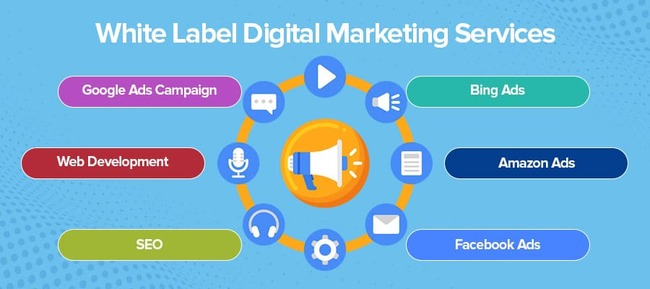
Most white label providers offer a wide range of services, including:
Search Engine Optimization (SEO)
SEO helps websites rank higher in search engine results, bringing more organic traffic.
Typical services include:
- Keyword research
- Technical audits
- On-page optimization
- Backlink building
- Performance tracking
Pay-Per-Click Advertising (PPC)
PPC campaigns allow businesses to appear instantly in search results or social media feeds. White label providers manage:
- Google Ads campaigns
- Budget optimization
- Ad creative testing
- Performance reporting
Content Marketing
Content marketing builds trust and authority through valuable information. Services may include:
- Blog writing
- Website content
- Email newsletters
- Lead magnets
Social Media Management
Social media is essential for modern brands. White label services often handle:
- Post scheduling
- Community engagement
- Campaign management
- Analytics and reporting
How to Choose the Right White Label Marketing Partner
Not all providers deliver the same quality. Businesses should consider several factors before choosing a partner.
-
Experience and Portfolio
Look for providers with proven results and strong case studies.
-
Transparency and Communication
Good partners provide clear reporting and regular updates.
-
Scalability
Choose a provider that can grow alongside your business.
-
Branding Flexibility
Ensure the provider allows full white labeling so services appear completely under your brand.
Challenges of White Label Marketing for Small businesses and Startups

While white labelling offers a “shortcut” to scaling, it isn’t without its hurdles, especially for smaller players with thinner margins and less brand equity. For startups and small businesses, the risks often shift from operational to reputational.
Key Challenges to Navigate
- Quality Control & Consistency: When you aren’t the one clicking the buttons or writing the code, you lose direct oversight. If a partner delivers a subpar SEO audit or a buggy website, it’s your brand’s reputation on the line, not theirs.
- Narrow Profit Margins: White label providers charge a wholesale fee. For a small business to remain competitive, they must markup that fee. If the market is saturated, finding a “sweet spot” that covers your overhead while remaining attractive to clients can be difficult.
- Communication Lag: Acting as the “middleman” can create a game of telephone. A client request must go to you, then to the provider, then back to you, and finally to the client. This can lead to slower response times and potential misunderstandings.
- Lack of Deep Product Knowledge: If a client asks a highly technical, “in-the-weeds” question during a sales call, your team might struggle to answer if they aren’t the ones building the product. This can sometimes undermine your authority as an “expert.”
- Dependency Risks: If your white label partner goes out of business, changes their pricing, or suffers a service outage, your entire service line is effectively paralyzed until you find a replacement.
Comparison of Internal vs. White Label Challenges
| Challenge | Small In-House Team | White Label Partner |
| Primary Risk | Burnout & limited skill sets | Loss of quality control |
| Communication | Instant & direct | Delayed (Middleman effect) |
| Flexibility | High (Pivot on the fly) | Low (Bound by partner’s scope) |
| Scalability | Slow & expensive | Fast but margin-heavy |
Strategic Mitigation
To overcome these, many startups use a Hybrid Model: they keep high-level strategy and client communication in-house while white labeling the repetitive “execution” tasks (like backlink building or standard reporting). While white label solutions offer many advantages, businesses should also understand potential challenges.
Quality Control
Agencies must ensure the provider maintains consistent quality.
Dependency Risk
Relying heavily on a single provider can create operational risk.
Client Communication
Businesses must effectively translate technical marketing results into clear explanations for clients. Despite these challenges, the benefits often outweigh the risks when the right partner is chosen.
Future of White Label Digital Marketing
The future of white-label digital marketing is moving away from simple “task fulfillment” toward strategic, AI-integrated partnerships. As we move into 2026 and 2027, the focus is shifting from simply saving time to providing high-level expertise and hyper-personalized results that small in-house teams can’t replicate.
Emerging Trends for 2026-2027
- AI-Native Fulfillment: White-label providers are no longer just using human labor; they are deploying “Supervised Automation.” This includes Generative Engine Optimization (GEO), optimizing content specifically to appear in AI-generated answers like ChatGPT and Gemini, and using AI agents for real-time campaign adjustments.
- Hyper-Personalization at Scale: Future services will leverage real-time data to create “one-to-one” marketing experiences. Instead of broad segments, white-label partners will provide the tech to tailor ads and content based on individual browsing behaviour, location, and even local weather patterns.
- Performance-Based Models: The industry is moving away from flat monthly retainers. Future contracts are increasingly outcome-driven, where the provider’s pay is tied to specific KPIs like lead quality or revenue growth, rather than just “number of posts published.”
- Blockchain for Transparency: To combat the “middleman” trust issue, blockchain is being integrated to provide immutable, real-time reporting. This allows you to show your clients verified proof of ad spend and traffic authenticity, eliminating concerns about “fake clicks” or hidden markups.
The Evolution of the Agency Role
| Feature | Traditional White Label | Future White Label (2026+) |
| Primary Value | Cost-cutting / Extra hands | Access to cutting-edge Tech & AI |
| Output | Generic reports & tasks | Predictive analytics & ROI insights |
| Specialization | Generalist Resellers | Deep Niche Experts (e.g., HIPAA-compliant marketing) |
| Integration | Separate workflows | Seamless API & CRM synchronization |
Key Takeaway: The “one-stop-shop” model is being replaced by niche specialization. Instead of one partner for everything, agencies are building “stacks” of specialized white-label partners who excel in specific areas like technical audits or multilingual content.
The digital marketing industry continues to expand rapidly. As competition grows and marketing technologies evolve, more companies are recognizing the benefits of outsourcing specialized tasks.
Industry experts predict that white label partnerships will become even more common in the coming years. This shift will allow small companies to compete with larger agencies while maintaining lean business structures.
Frequently Asked Questions (FAQs)
-
What is a white label digital marketing service?
A white label digital marketing service is when a provider delivers marketing services that another company sells under its own brand name.
-
Why are startups using white label marketing?
Startups use white label marketing because it allows them to offer professional services without hiring expensive internal teams.
-
Is white label marketing profitable?
Yes. Agencies can mark up services and earn profit while the white label provider handles the technical work.
-
What services can be white labeled?
Common services include SEO, PPC advertising, content marketing, social media management, web design, and email marketing.
-
Is white label marketing safe for clients?
Yes. When done correctly, clients receive the same quality services while interacting with the agency they hired.
-
Can small agencies compete with large agencies using white label solutions?
Absolutely. White label partnerships allow small agencies to offer a wide range of services similar to large marketing firms.
Conclusion
The reason small businesses and startups are moving towards white label digital marketing solutions is simple: efficiency, scalability, and expertise. Instead of building large internal teams, companies can leverage specialized providers to deliver high-quality marketing services while focusing on growth and client relationships.
This model reduces operational costs, accelerates service delivery, and allows businesses to expand their offerings quickly. As digital competition continues to intensify, white label marketing will likely become an essential strategy for startups and small agencies looking to scale successfully in the digital age.
