
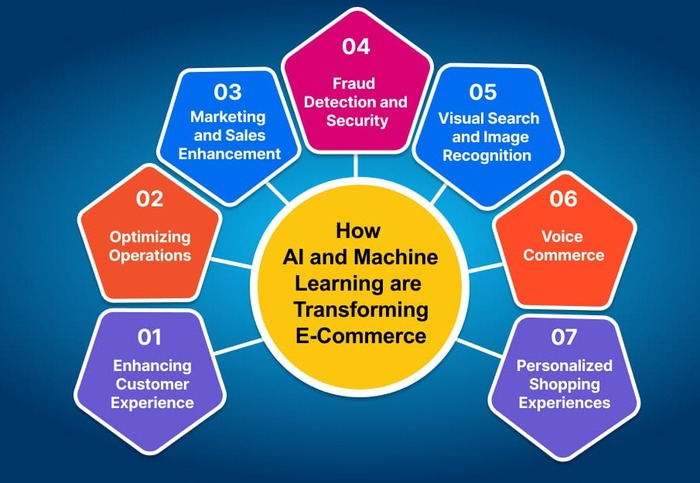
The most impactful methods of ecommerce marketing in the era of AI are changing how online businesses attract, engage, and convert their customers. Artificial Intelligence has moved beyond being a concept of the future; it’s present and rapidly transforming the digital marketplace.
From tailored product suggestions to predictive analytics and chatbots powered by AI, ecommerce brands now have access to tools that were once thought to be impossible. However, there’s a critical point: merely utilizing AI is not sufficient. It is essential to implement it thoughtfully. In this comprehensive guide, we will examine the most powerful ecommerce marketing techniques in the age of AI, outlining effective tactics that yield genuine results.
Whether you’re a startup founder, marketing director, or an expanding brand, these strategies will aid you in remaining competitive and prepared for the future.
Ways of Ecommerce Marketing Through AI
-
AI-Powered Personalization: The Heart of Modern Ecommerce
Personalization is no longer optional, it’s expected. In 2026, personalized experiences powered by AI have evolved from being a competitive edge to a basic requirement in contemporary e-commerce.
It leverages machine learning and real-time data to advance past simple “customers also purchased” recommendations, instead creating tailored “segment of one” experiences in which every element of a storefront, from the design of the homepage to pricing, is customized for each individual shopper.
Key Drivers of Modern Personalization
- Hyper-Personalized Discovery: AI analyzes real-time signals like dwell time, scroll depth, and even local weather to predict intent. For example, a shopper in London might see raincoats and waterproof boots on their homepage, while a user in Madrid sees lightweight linen and sunglasses.
- Dynamic Pricing & Offers: Businesses now use AI to adjust prices and discounts in real-time based on demand, inventory levels, and a customer’s specific loyalty tier, ensuring the best possible margin while increasing the likelihood of a sale.
- Agentic Commerce: AI shopping assistants have evolved into “digital partners” that remember preferences across sessions, help with virtual try-ons using computer vision, and can even autonomously reorder household essentials before they run out.
Measurable Business Impact
Modern retailers leveraging these technologies typically see:
- 15–20% lift in conversion rates as shoppers find what they need faster.
- 20% increase in Average Order Value (AOV) through smarter, context-aware upselling.
- Significant reduction in churn by identifying “at-risk” customers through predictive analytics and intervening with personalized retention offers.
AI analyzes browsing history, purchase patterns, and behaviour data to deliver hyper-targeted experiences. When customers feel understood, they’re more likely to buy.
How AI Personalization Works:
- Recommends products based on past purchases
- Displays dynamic homepage content
- Sends personalized email offers
- Suggests complementary items at checkout
Why It Works:
- Increases average order value
- Boosts customer retention
- Reduces bounce rate
Platforms like Shopify and BigCommerce now integrate AI personalization tools directly into their systems, making implementation easier than ever.
-
Predictive Analytics for Smarter Decision-Making
AI doesn’t just analyze past data, it predicts future behaviour. In 2026, predictive analytics has transformed from a tool for retrospective reporting into the proactive nervous system of contemporary e-commerce.
It leverages historical trends and current environmental cues to foresee market changes before they happen, enabling companies to adjust with exacting accuracy.
High-Impact Decision Pillars
- Intelligent Inventory Forecasting: Beyond simple seasonal trends, AI now integrates macro-signals like social media sentiment, local weather events, and global supply chain fluctuations. This minimizes “dead stock” and reduces stockouts by up to 20%, ensuring capital is always tied to high-demand SKUs.
- Algorithmic Pricing & Markdown Optimization: Predictive models simulate hundreds of “what-if” scenarios to find the optimal price point. Instead of reactive discounting, AI predicts the exact moment a product’s demand will dip, triggering micro-markdowns that protect margins while accelerating turnover.
- Predictive Churn & Lifetime Value (LTV): By identifying “weak signals”—such as a subtle decrease in app open frequency or a shift in browsing categories—AI flags at-risk customers weeks before they churn. This allows for automated, high-value interventions that are far more cost-effective than acquiring new users.
The ROI of Foresight
| Metric | Impact of Predictive Decision-Making |
| Inventory Turnover | 10–15% improvement via demand-aligned stocking |
| Operational Costs | ~35% reduction through automated fulfillment logic |
| Customer Retention | 5–10% lift by preempting churn signals |
Strategic Insight: In 2026, the most successful brands are moving toward “Zero-Click Commerce,” where predictive analytics is so accurate that essentials are automatically reordered and shipped before the customer even realizes they are running low.
Predictive analytics helps ecommerce brands anticipate:
- Which products will trend
- Which customers are likely to churn
- When to launch promotions
- Optimal inventory levels
Instead of guessing, you’re making data-driven decisions. That’s powerful.
-
AI Chatbots & Conversational Commerce
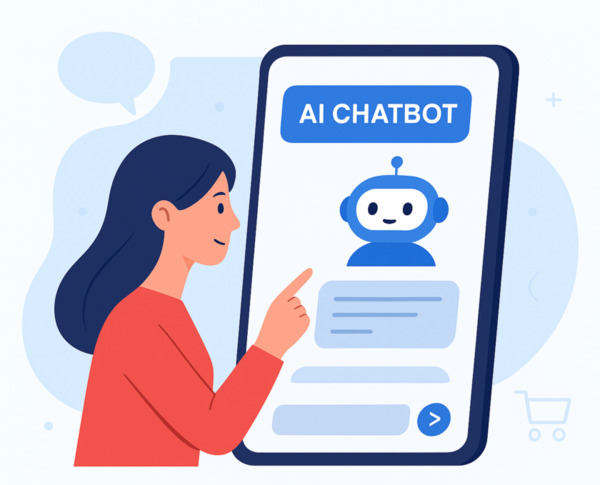
Customers want instant answers. AI chatbots provide 24/7 support without increasing labour costs. Modern AI bots can:
- Handle FAQs
- Recommend products
- Track orders
- Process returns
Advanced tools like Drift and Intercom use machine learning to continuously improve conversations. And here’s the best part, AI chatbots increase conversion rates because they reduce hesitation during the buying journey.
-
Voice Search Optimization
“Hey Alexa, find me running shoes under $100.”
Voice search is rising rapidly thanks to devices like Amazon Alexa and Google Assistant. Ecommerce brands must optimize content for conversational keywords and natural language.
Optimization Tips:
- Use question-based keywords
- Write in conversational tone
- Create FAQ sections
- Focus on local SEO
Voice commerce is expected to grow significantly, and early adopters will dominate.
-
AI-Driven Email Marketing Automation
AI-driven email marketing automation marks a transition from simple scheduled blasts to a sophisticated, self-optimizing ecosystem. In 2026, it is no longer just about efficiency; it’s about “intelligent relevance” that treats every subscriber as an audience of one.
Key Aspects of the 2026 Landscape
- Hyper-Personalization at Scale: Beyond just using a recipient’s name, AI now dynamically adjusts email layouts, product recommendations, and even the tone of the copy in real-time based on the user’s most recent browsing behavior and purchase intent.
- Predictive Send-Time & Frequency: Sophisticated algorithms analyze individual engagement patterns to determine not only the exact minute a person is most likely to open an email but also how many emails they should receive per week to prevent “inbox fatigue.”
- Generative Co-pilots: Marketers use AI “co-pilots” to rapidly spin up A/B/C testing variants. These tools can brainstorm subject lines, draft body copy that matches a specific brand voice, and even generate personalized images or short video clips for each recipient.
- Autonomous Journey Orchestration: Modern systems act as “invisible engines,” triggering omnichannel responses—such as a follow-up SMS or a personalized ad—based on how a user interacts with a specific email link or a website’s AI chatbot.
- Intelligent Inbox Navigation: As providers like Google and Apple deploy AI gatekeepers to summarize or prioritize mail, AI-driven automation helps brands maintain “high-intent” signals to ensure their messages land in the primary tab rather than being filtered out.
Pro Tip: In 2026, the goal of automation is to “use AI for efficiency, but humans for empathy.” Ensure your automated flows are audited regularly to keep the brand voice feeling authentic and grounded. Email marketing isn’t dead, it’s smarter.
AI enhances email campaigns by:
- Predicting best send times
- Personalizing subject lines
- Segmenting audiences dynamically
- Recommending products automatically
Tools like Mailchimp and Klaviyo use AI to maximize open and click-through rates. The result? Higher ROI with less manual effort.
-
Smart Retargeting with Machine Learning
Have you ever noticed ads following you around online? That’s retargeting, but AI makes it smarter. Machine learning:
- Identifies high-intent users
- Adjusts ad creatives automatically
- Optimizes bidding strategies in real-time
- Prevents ad fatigue
Platforms like Google Ads and Meta Ads Manager use AI-based algorithms to improve campaign performance.
-
Dynamic eCommerce Product Pricing Strategies
In 2026, Dynamic Pricing has evolved from simple rule-based adjustments to high-frequency, AI-orchestrated systems that balance profitability with customer lifetime value (CLV). Rather than just “racing to the bottom” to beat competitors, modern retailers use deep learning to find the optimal price point for every SKU in real-time.
Core Strategies for 2026
- Elasticity-Based Pricing: AI models calculate price elasticity for individual products, automatically raising prices when demand is inelastic (low sensitivity) and dropping them to capture volume when sensitivity is high.
- Inventory-Aware Adjustments: Systems sync directly with supply chain data. If a particular item is overstocked or nearing its “sell-by” date, the AI triggers incremental discounts to clear inventory without eroding brand equity.
- Predictive Competitive Intelligence: Using “look-ahead” algorithms, retailers don’t just react to a competitor’s price drop; they predict it based on historical patterns and market signals, adjusting their own margins preemptively.
- Contextual Trigger Pricing: Prices fluctuate based on external environmental factors. For example, a home goods retailer might programmatically increase the visibility and price of emergency supplies or weather-specific gear during localized climate events.
- Value-Based Personalization: Sophisticated platforms offer “personalized incentives” (like unique coupons or loyalty rewards) rather than changing the public-facing MSRP. This protects the perceived value of the product while still securing the conversion.
AI analyzes competitor pricing, demand trends, and customer behaviour to adjust product prices in real-time. This strategy:
- Maximizes profit margins
- Increases competitiveness
- Responds instantly to market changes
Amazon is a master of dynamic pricing and smaller ecommerce brands can now leverage similar technology.
-
AI-Powered Social Media Marketing
Social media marketing has evolved dramatically with AI tools. AI can:
- Suggest optimal posting times
- Generate captions
- Analyze audience sentiment
- Identify trending topics
- Predict viral potential
Platforms like Hootsuite and Buffer integrate AI features that enhance performance tracking and automation. Additionally, AI-powered content tools help brands produce high-quality visuals and videos at scale.
-
Customer Segmentation Using Deep Learning
Not all customers are the same. AI clusters users into meaningful segments based on behaviour patterns. Examples:
- High-value repeat buyers
- Seasonal shoppers
- Discount-sensitive customers
- Brand-loyal advocates
This allows targeted campaigns instead of generic promotions. The more precise your segmentation, the more effective your marketing becomes.
-
AI-Generated Content for Scale
Creating content at scale is one of the most effective ways of ecommerce marketing in the age of AI.
AI writing tools assist with:
- Product descriptions
- Blog posts
- Ad copy
- SEO meta descriptions
While human oversight remains crucial, AI significantly speeds up production. However, always prioritize authenticity and brand voice consistency.
-
Advanced SEO with AI Insights
AI-powered SEO tools analyze:
- Keyword trends
- Competitor strategies
- Content gaps
- Search intent
Tools like SEMrush and Ahrefs integrate AI-driven insights that refine optimization strategies. SEO is evolving, and AI ensures you stay ahead of algorithm changes.
-
Visual Search Technology
Customers can now upload images to find similar products. Platforms like Pinterest Lens and Google Lens use AI-powered image recognition to drive ecommerce discovery.
Benefits:
- Improves user experience
- Increases impulse buying
- Reduces search friction
Visual search bridges the gap between inspiration and purchase.
-
AI Video Marketing & Personalization
AI tools generate:
- Personalized product videos
- Dynamic ad creatives
- Automated editing
- Voiceovers
Video boosts engagement dramatically, and AI makes production affordable. Short-form videos on platforms like TikTok and Instagram Reels benefit greatly from AI insights.
- Fraud Detection & Secure Transactions
Trust is essential in ecommerce. AI detects suspicious activity by analyzing transaction patterns in real time. This:
- Reduces chargebacks
- Protects customer data
- Builds brand credibility
Customers are more likely to buy from brands that prioritize security.
-
Omnichannel Marketing Powered by AI
Customers move between devices seamlessly. AI tracks behaviour across:
- Websites
- Mobile apps
- Social media
- Paid ads
This creates a unified customer journey. The result? Consistent messaging, improved engagement, and stronger brand loyalty.
FAQs About the Most Effective Ways of Ecommerce Marketing in the Age of AI
-
Is AI marketing expensive for small ecommerce businesses?
Not necessarily. Many platforms offer affordable AI tools integrated into existing ecommerce systems.
-
Does AI replace human marketers?
No. AI enhances efficiency but human creativity and strategy remain essential.
-
What is the biggest benefit of AI in ecommerce marketing?
Personalization and predictive insights are the most impactful benefits.
-
How can I start using AI in ecommerce marketing?
Begin with email automation, chatbots, and AI-powered analytics tools.
-
Is AI safe for customer data?
Yes, when implemented responsibly with strong data protection policies.
-
Will AI continue evolving in ecommerce?
Absolutely. AI capabilities are expanding rapidly, making continuous adaptation crucial.
In Conclusion :
The most effective ways of ecommerce marketing in the age of AI revolve around personalization, automation, predictive insights, and intelligent customer engagement. AI is not just a tool, it’s a competitive advantage. Brands that embrace AI strategically will:
- Increase conversions
- Improve customer loyalty
- Reduce operational costs
- Make smarter decisions
- Scale faster
But remember, AI works best when paired with human creativity and ethical responsibility. The future of ecommerce belongs to those who innovate boldly, adapt quickly, and put customers at the centre of every AI-driven strategy.