
Introduction to AI Brand Citations
In the evolving landscape of Generative Engine Optimization (GEO), AI brand citations have emerged as the “new backlinks.” They occur when an AI model, such as ChatGPT, Claude, or Perplexity, directly references your brand’s content as a source to support its generated answer.
Unlike a simple brand mention, which is just a name-drop, a citation typically includes a footnote, link, or clear attribution, signalling that the AI views your data as a primary, trusted authority.
Key Characteristics of AI Citations
- Verification: They serve as digital proof, allowing users to verify facts via a clickable source or “source card.”
- Trust Signal: Being cited indicates that the AI’s retrieval system has cross-referenced your information and found it more credible than competing data.
- Zero-Click Visibility: Even if a user doesn’t click through, the citation builds “mindshare” by positioning your brand as the definitive expert behind the answer.
Why Citations Matter in 2026?
By 2026, brand visibility is increasingly defined by AI inclusion rather than traditional search rankings. Research shows that brands with high topical authority and consistent messaging across the web are cited significantly more often.
For businesses, earning these citations is critical for staying relevant in a world where AI-generated summaries often replace the need to browse multiple websites.
Comparison: Mentions vs. Citations
| Feature | AI Brand Mention | AI Brand Citation |
| Definition | Brand name appears in the response body. | AI links to your content as a source. |
| Primary Goal | Brand awareness & recognition. | Authority, trust, and referral traffic. |
| User Impact | Puts you on the buyer’s “shortlist.” | Provides proof of expertise. |
| Strategy | PR, reviews, and community presence. | Original research, schema, and deep guides. |
To optimize for these citations, you should focus on creating “answer-first” content, structured, factual, and data-rich pages that AI crawlers can easily parse and credit.
What Are AI Brand Citations?
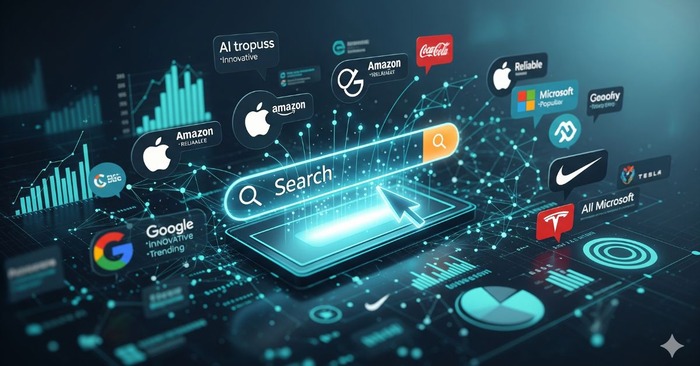
In today’s digital landscape, growing AI brand citations on different AI platforms has become a vital strategy for businesses aiming to stay competitive. AI brand citations refer to mentions of your brand across AI-driven systems such as chatbots, voice assistants, and AI search engines.
Unlike traditional backlinks, these citations don’t always include clickable links. Instead, they focus on how frequently and accurately your brand is referenced in AI-generated responses.
Why AI Platforms Matter for Brand Visibility?
AI platforms are quickly replacing traditional search engines as primary sources of information. When users ask questions, AI tools generate answers based on trusted data sources. If your brand appears in those answers, your visibility skyrockets. This shift means brands must now optimize not just for search engines, but for AI ecosystems as well.
Evolution of Search: From SEO to AI Discovery
Role of AI Assistants in Information Retrieval
AI assistants are designed to deliver direct, conversational answers. They don’t just list links, they summarize and recommend.
This fundamentally changes how users interact with information. Instead of browsing multiple websites, users rely on a single AI-generated response.
Shift from Keywords to Contextual Mentions
Traditional SEO focused heavily on keywords. But AI systems prioritize context, relevance, and authority.
That means your brand needs to be:
- Mentioned in authoritative sources
- Associated with relevant topics
- Consistently referenced across platforms
Key AI Platforms for Brand Citations
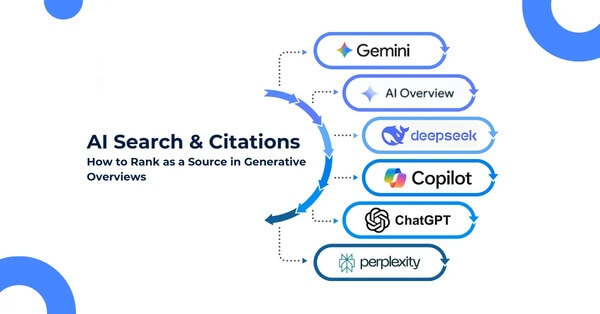
In 2026, the AI platform landscape has matured into a “Big Three” dominance, with several specialized challengers carving out high-value niches. To grow your citations, you must optimize for the specific “retrieval logic” of each platform.
Here are the key AI platforms driving brand visibility today:
1. The “Big Three” (Primary Discovery)
-
ChatGPT Search (OpenAI): The market leader with over 60% share of AI chatbot referrals. It prioritizes “Share of Model”—how frequently your brand appears near relevant topics in its vast training data. Citations here often appear as clickable “Sources” cards.
-
Google AI Overviews (AIO): Integrated into standard search for over 40% of US queries. Unlike traditional SEO, 40% of its cited sources rank outside the top 10 blue links. It heavily favors structured data and “Answer-First” content.
-
Perplexity AI: Positioned as the “Truth Engine,” it has the highest quality referral traffic. It is citation-first, meaning every claim is linked to a source. It tends to cite “Seed Sources” like Reddit, industry journals, and deep technical documentation.
2. Specialized & Emerging Platforms
| Platform | Primary Focus | Best For… |
| Microsoft Copilot | Enterprise & B2B | B2B SaaS and professional services; it cites SharePoint data and LinkedIn. |
| Apple Intelligence | On-Device “Edge AI” | Local services and consumer apps; it relies on “Privacy-First” retrieval. |
| Claude (Anthropic) | Professional/Technical | Complex analysis and coding; cites long-form whitepapers and documentation. |
| Grok (xAI) | Real-Time Sentiment | Breaking news and trending products; pulls directly from X (formerly Twitter). |
3. Platform-Specific Citation Drivers
To be cited effectively across these platforms, you must feed them the specific “currency” they value:
-
For Perplexity: Focus on Topical Authority. It looks for the most “credible” source for a niche fact. If you have the most detailed guide on Solar Inverter Efficiency in 45°C Heat, Perplexity will find and cite it.
-
For ChatGPT: Focus on Brand Mentions. It values “Consensus.” If 50 different credible websites mention your brand as a leader in Digital Marketing for Solar, ChatGPT’s model “learns” this association.
-
For Google AIO: Focus on Technical SEO & Freshness. Ensure your site uses Schema Markup and is updated at least quarterly, as Google’s AI has a strong recency bias.
The “Zero-Click” Reality
In early 2026, 65–70% of Google searches result in no click because the AI Overview provides the answer. However, being the cited source in that overview is what builds the “algorithmic trust” necessary to be recommended in the first place.
Chatbots and Conversational AI
Chatbots are one of the most influential AI platforms today. They generate responses based on large datasets and trusted content.
Examples of Popular AI Platforms
- AI chat assistants
- Customer support bots
- Knowledge-based AI systems
AI Search Engines
AI-powered search tools summarize information instead of listing results. They rely heavily on:
- Structured data
- Authoritative mentions
- Content clarity
Voice Assistants
Voice search is growing rapidly. Devices respond with one answer, making citations even more critical.
Benefits of Growing AI Brand Citations
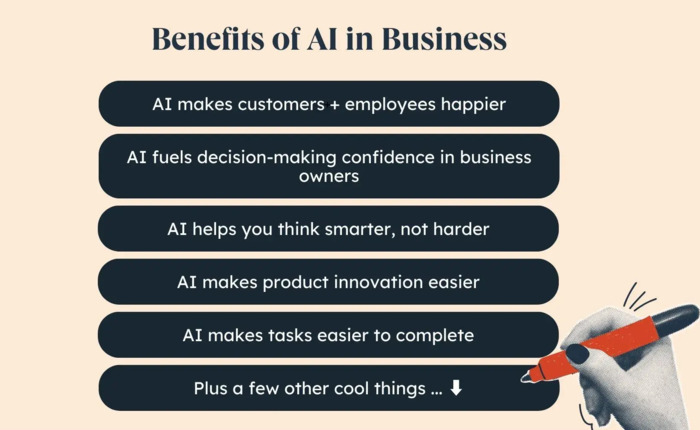
Growing your AI Brand Citations is no longer just a “nice-to-have” SEO tactic; in 2026, it is a fundamental survival strategy for digital visibility. As search engines evolve into “answer engines,” being cited by an AI model acts as a powerful endorsement of your brand’s authority.
Here are the primary benefits of increasing your AI citations:
-
Increased “Share of Model” Visibility
Traditional SEO tracks your rank on a list; AI optimization tracks your presence within the answer itself. By earning citations in tools like ChatGPT, Claude, and Google AI Overviews, you capture the “zero-click” audience who gets their information directly from the summary without ever visiting a website.
-
Compounding Trust & Authority
AI models are programmed to favour sources that demonstrate E-E-A-T (Experience, Expertise, Authoritativeness, and Trustworthiness). When an AI consistently cites your content, it reinforces a “virtuous cycle”:
- Verification: Users see your brand as a verified fact-checker for the AI’s claims.
- Consensus: The more often you are cited across different models, the more “algorithmic trust” you build, making it more likely you’ll be recommended for future high-intent queries.
-
Higher Conversion Quality
While AI summaries may reduce overall site traffic, the traffic that does click through is significantly more qualified. Research from 2026 shows that users arriving via an AI citation have already been “pre-sold” on your brand’s expertise by the assistant, leading to higher conversion rates and faster sales cycles.
Key Benefits at a Glance
| Benefit | Impact on Brand |
| Referral Traffic | Higher intent; users are looking for the “source of truth.” |
| Brand Recognition | Passive awareness even if the user doesn’t click. |
| Competitive Edge | If you are cited and your competitor isn’t, you become the “default” choice. |
| Future-Proofing | Protects your visibility as traditional search volume declines. |
Pro-Tip: In 2026, brands cited in three or more independent, high-authority sources see a 44% higher likelihood of being the primary recommendation in conversational AI prompts.
Increased Brand Authority
When AI platforms frequently mention your brand, it signals authority. This builds trust with both users and algorithms.
Enhanced Organic Reach
AI citations can expose your brand to new audiences without traditional advertising.
Trust and Credibility Signals
Consistent mentions across multiple platforms strengthen your brand’s credibility.
Strategies to Grow AI Brand Citations
To grow your AI brand citations in 2026, you must shift from a “ranking” mindset to a “citiability” mindset. AI models don’t just look for the most popular page; they look for the most extractable and verifiable data.
The following strategies are proven to increase the likelihood of being cited by engines like ChatGPT, Perplexity, and Google AI Overviews.
-
Adopt an “Answer-First” Content Structure
AI models typically extract information from the first 30% of a page. To become a primary source, you should:
- Lead with the Answer: Start sections with a direct, one-sentence answer to the target question before expanding into nuance.
- Use “Snippable” Formatting: Use bulleted lists, numbered steps, and tables. AI models prefer structured data because it is easier to synthesize into a summary.
- Define Terms Clearly: Include a “What is [Topic]?” section with a concise 40–60 word definition to capture “definitional” citations.
-
Build a “Source Ecosystem” (Off-Site PR)
In 2026, AI models often trust third-party validation more than your own website.
- Prioritize Earned Media: A mention in a high-authority publication (like Forbes or a niche industry journal) often carries more weight for an AI model than 100 traditional backlinks.
- Engage with “Seed Sites”: AI models heavily crawl Reddit, Quora, and Wikipedia. Actively participating in these communities helps the AI associate your brand with specific expert topics.
- Secure Listicle Placements: Ensure your brand appears in “Best of” lists and comparison articles on external sites, as AI frequently uses these to build its own recommendations.
-
Implement Advanced Technical Signals
- Semantic Schema Markup: Beyond basic SEO, use FAQ, HowTo, and Organization schema to help AI identify your brand as a distinct “Entity” with specific expertise.
- Maintain “Data Freshness”: AI models exhibit a “recency bias.” Content updated within the last 3 months is significantly more likely to be cited than “evergreen” content from a year ago.
- Optimize for Speed: Slow server response times can cause AI retrieval agents to skip your page entirely. Aim for a Time to First Byte (TTFB) of under 200ms.
-
Focus on Original Data and Research
AI models are hungry for “ground truth” to avoid hallucinations.
- Publish Proprietary Statistics: Conduct surveys or analyze your own internal data to produce unique stats.
- Expert Quotes: Include attributed quotes from your internal experts. AI models often lift these directly to provide “expert perspective” in their answers.
Strategy Comparison: Traditional SEO vs. GEO (2026)
| Feature | Traditional SEO | Generative Engine Optimization (GEO) |
| Primary Goal | Rank #1 on Page 1 | Be the cited source in the AI answer |
| Success Metric | Click-Through Rate (CTR) | AI Citation Share & Brand Mentions |
| Content Focus | Keyword density & Length | Factual density & Extractability |
| Linking | Quantity of Backlinks | Quality of Third-Party Mentions |
Create High-Quality, Authoritative Content
Content remains king, even in AI ecosystems.
Focus on E-E-A-T Principles
Ensure your content demonstrates:
- Experience
- Expertise
- Authority
- Trustworthiness
Use:
- Data-backed insights
- Expert opinions
- Clear explanations
Optimize for AI-Friendly Content
AI prefers content that is:
- Structured
- Easy to understand
- Context-rich
Best practices include:
- Using headings and subheadings
- Writing concise paragraphs
- Including FAQs
Leverage Structured Data
Structured data helps AI understand your content better. Use schema markup to:
- Highlight key information
- Improve content clarity
- Increase chances of citation
Build Strong Digital Footprints
Your brand should exist across multiple platforms:
- Websites
- Blogs
- Forums
- News outlets
The more places your brand appears, the more likely AI will recognize it.
Leveraging Content Distribution Channels
Guest Posting and PR Mentions
Publishing on authoritative websites increases your chances of being cited. Example resource: https://www.forbes.com (external link for high-authority content reference)
Social Media Amplification
Social signals help reinforce your brand presence. Share content consistently to increase visibility.
Community Engagement
Participate in forums and Q&A platforms. AI systems often pull data from these discussions.
Importance of Consistent Brand Mentions
Consistent brand mentions are the “connective tissue” that helps AI models understand exactly who you are and what you do. In 2026, algorithmic consensus is the primary way AI validates information; if a model sees your brand associated with a specific topic across multiple high-authority sites, it transitions from “guessing” to “knowing” your brand is an authority.
Here is why consistency is the backbone of your AI visibility:
-
Building a “Single Source of Truth”
AI models aggregate data from billions of fragments. If your brand name, mission, and core offerings vary across LinkedIn, your website, and press releases, the AI may treat them as separate entities or, worse, conclude that your information is unreliable.
- Unified Identity: Consistency ensures the AI builds a stable Knowledge Graph entry for your brand.
- Reduced Hallucination: Clear, consistent mentions reduce the chance of an AI misattributing your products or services to a competitor.
-
Establishing Topical Authority
To be cited as an expert, you must be mentioned consistently in the context of specific keywords.
- Frequency vs. Context: It’s not just about how often you are mentioned, but how consistently you appear alongside your core industry terms (e.g., “Solar Inverters” or “Digital Marketing Strategy”).
- The “Echo Chamber” Effect: When an AI encounters your brand mentioned by multiple independent sources (news sites, forums, and reviews) for the same expertise, it marks you as a “consensus leader.”
-
Strengthening Entity Recognition
In 2026, search has moved from “strings” (keywords) to “entities” (concepts).
- NAP Consistency: Just as Name, Address, and Phone number were critical for local SEO, “Entity Consistency” is critical for AI.
- Cross-Platform Synchronization: Consistent mentions across social media, podcasts, and technical documentation help AI models “triangulate” your brand’s relevance, making it more likely to show up in conversational prompts.
The Consistency Checklist
| Element | Why it Matters for AI |
| Brand Name | Prevents “Entity Fragmentation” (e.g., “SolarCo” vs. “SolarCo Intl”). |
| Key Messaging | Helps AI summarize your “Value Proposition” accurately. |
| Expert Bios | Links your leadership team’s names to your brand entity. |
| Data Points | Ensures the AI cites the correct and latest stats about your company. |
Bottom Line: Consistency turns “noise” into a “signal.” Without it, you are just another data point; with it, you become a trusted source.
Brand Name Consistency Across Platforms
Always use the same:
- Brand name
- Tone
- Messaging
Inconsistency can confuse AI systems.
Semantic Relevance and Context
Your brand should be associated with specific topics. This helps AI understand what your brand represents.
Using Data and Analytics to Improve Citations
Tracking AI Mentions
Monitor where and how your brand is being referenced.
Tools for Monitoring Brand Presence
Use tools like:
- Brand monitoring software
- AI analytics platforms
- SEO tracking tools
Common Mistakes to Avoid While Growing Brand Mentions in AI Overview
Growing brand mentions for AI Overviews (AIOs) in 2026 requires a departure from traditional SEO. Because AI models prioritize consistency, extractability, and verification, common mistakes can lead to your brand being “hallucinated” out of existence or replaced by a competitor.
To ensure your brand remains a primary source, avoid these critical pitfalls:
-
The “Content Flood” (Quantity Over Quality)
The most common mistake in 2026 is using AI to mass-produce unedited articles.
- The Pitfall: Flooding your site with generic, AI-written content that lacks original data or a unique perspective.
- The Consequence: AI models are trained to avoid redundancy. If your content sounds like a “rehash” of what’s already in their training data, they will skip you in favour of sources that offer primary research or expert commentary.
-
“Burying the Lede” in Content Structure
AI crawlers don’t “read” like humans; they “extract.”
- The Pitfall: Using creative, flowery introductions or “storytelling” before getting to the facts.
- The Consequence: If the direct answer to a user’s query is buried in the middle of a paragraph, the AI may fail to identify your page as a relevant source. Recommendation: Put the “Answer-First” (a 2-3 sentence summary) at the very top of each section.
-
Ignoring “Off-Site” Sentiment & Forums
AI models heavily weigh third-party validation from “community hubs” like Reddit, Quora, and niche industry forums.
- The Pitfall: Focusing exclusively on your own website while ignoring what people say about you elsewhere.
- The Consequence: If Reddit threads or reviews are overwhelmingly negative or outdated, the AI Overview may synthesize that “consensus” as a fact (e.g., “Brand X is often cited for poor customer service”).
-
Technical “Blind Spots” (Bot Blocking)
Many brands inadvertently hide their best content from the very engines they want to attract.
- The Pitfall: Using heavy JavaScript, “click-to-reveal” accordions, or blocking AI crawlers in robots.txt (common with some CDN default settings like Cloudflare).
- The Consequence: If the content is behind a “user interaction” (like a slider or tab), the AI crawler cannot “see” it. If it’s not in the raw HTML, it doesn’t exist for the AI.
-
Stale Data & “Recency Bias”
AI models in 2026 exhibit a massive bias toward freshness.
- The Pitfall: Treating high-performing content as “evergreen” and never updating it.
- The Consequence: Statistics show that pages not updated quarterly are 3x more likely to lose their AI citations. Even a 6-month-old “definitive guide” can be replaced by a newer, slightly less authoritative source simply because the date is more recent.
Summary Table: Pitfalls vs. Fixes
| Mistake | Why AI Hates It | The 2026 Fix |
| Thin/Generic Content | High redundancy; no value add. | Add proprietary stats & expert quotes. |
| Complex Formatting | Hard to parse and “chunk.” | Use H2/H3 hierarchy and Bullet Points. |
| Fragmented Brand Name | Confuses “Entity” recognition. | Maintain 100% NAP consistency everywhere. |
| Inconsistent Messaging | Lowers “Confidence Score.” | Ensure your LinkedIn, Website, and PR match. |
Warning: AI Overviews rarely cite brands that have “Entity Contradictions.” If your website says you are a “Solar Manufacturer” but your LinkedIn says you are a “Energy Consultant,” the AI may drop you to avoid a “low-confidence” recommendation.
Over-Optimization
Stuffing content with keywords can harm your credibility.
Ignoring Contextual Relevance
Mentions must be meaningful, not random.
Future Trends in AI Brand Citations in AI Platforms
The landscape of AI brand citations is shifting rapidly in 2026. As AI moves from being a “search tool” to an “autonomous agent,” the way your brand is credited is becoming more structured, competitive, and multimodal.
Here are the key future trends shaping AI brand citations:
-
The Rise of “Agentic” Discovery
By late 2026, AI is evolving from passive assistants into autonomous agents that don’t just answer questions, they complete tasks (like booking a flight or purchasing software).
- The Trend: AI agents are becoming the “new customers.” They crawl and evaluate your content long before a human ever sees it.
- The Impact: Citations will no longer just be for information; they will be used as “functional endorsements” where the AI selects a brand as the best tool to perform a specific action.
-
Multi-Platform GEO (Generative Engine Optimization)
Optimization is moving beyond Google. Brands are now optimizing for a fragmented ecosystem including ChatGPT Search, Perplexity, Claude, and Apple Intelligence.
- Citation Rotation: Data shows that 40–60% of cited sources in AI Overviews now rotate monthly.
- Freshness Mandate: In 2026, “evergreen” content is a myth. To maintain a citation, pages must be refreshed at least quarterly to satisfy the AI’s bias toward real-time accuracy.
-
Multimodal & Audio Citations
With the rise of “screenless” search via AI wearables and voice modes, citations are moving beyond text.
- Audio Attribution: AI assistants are increasingly giving verbal credit (e.g., “According to a report by [Brand]…”) during conversational interactions.
- Visual Citations: AI models are now citing specific infographics, video transcripts, and annotated diagrams as primary sources for complex data queries.
-
Algorithmic Consensus & “Dual-Signal” Visibility
AI models are prioritizing “Consensus” (what the internet agrees on) over simple “Authority” (backlinks).
- The 2026 Benchmark: Brands that have both a mention (name-drop) and a citation (link) in the same AI response are 40% more likely to remain visible in subsequent queries.
- Third-Party Validation: Approximately 85% of brand citations now originate from third-party sites (Reddit, industry journals, YouTube) rather than the brand’s own domain.
Future Visibility Matrix (2026–2027)
| Trend | Strategic Shift | Success Metric |
| Agentic AI | Optimize for “Actionability” | Agent Referral Rate |
| Multimodal Search | Transcribe all Video/Audio | Visual Citation Share |
| Consensus Building | Heavy focus on Reddit/Forums | Sentiment Accuracy |
| Real-Time Data | Use RAG-friendly data feeds | Data Freshness Score |
Key Prediction: By 2027, the “homepage” will be secondary to the “AI Knowledge Graph.” Your brand’s survival will depend on how accurately an AI can summarize your value proposition without needing to visit your site.
AI-Driven Search Ecosystems
Search will continue evolving toward AI-first experiences.
Rise of Generative AI Influence
Generative AI will play a bigger role in shaping brand perception.
FAQs About Growing AI Brand Citations
-
What are AI brand citations?
AI brand citations are mentions of your brand in AI-generated responses across platforms.
-
Why are AI citations important?
They increase visibility, authority, and trust in AI-driven search environments.
-
How can I improve my AI citations?
Focus on high-quality content, structured data, and consistent brand presence.
-
Do AI citations replace backlinks?
No, but they complement traditional SEO strategies.
-
Which platforms matter most?
Chatbots, AI search engines, and voice assistants are key.
-
How long does it take to see results?
It depends on your strategy, but consistent effort yields long-term benefits.
Conclusion
Growing AI brand citations on different AI platforms is no longer optional, it’s essential. As AI continues to reshape how users discover information, brands must adapt their strategies to stay visible and relevant. By focusing on quality content, consistent mentions, and AI-friendly optimization, you can position your brand as a trusted authority in the evolving digital ecosystem.