Introduction to Digital Marketing as a Lead Generation Engine
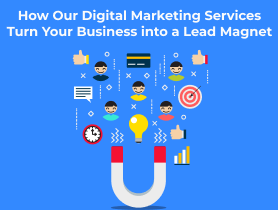
In the fast-moving online landscape of today, companies need to do more than merely survive; they must consistently draw in, engage, and convert customers. This is where our digital marketing services transform your business into an irresistible lead magnet, making a significant difference.
With the appropriate strategies, your brand can attract high-quality leads as effectively as a magnet draws in metal. Digital marketing has transformed how businesses engage with their audience. In contrast to traditional marketing, it facilitates targeted outreach, real-time analytics, and quantifiable outcomes. Whether you are a new startup or a well-established brand, utilizing digital channels can significantly enhance your growth.
Why Lead Generation Matters for Business Growth?
Lead generation is the engine of business growth because it transforms passive interest into a pipeline of predictable revenue. Without a steady stream of high-quality leads, even the best products risk stagnation in a crowded market.
Here is why it remains a top priority for successful companies:
- Fuels the Sales Funnel: It ensures your sales team spends their time closing deals with qualified prospects rather than searching for anyone who will listen.
- Increases Brand Authority: The process of capturing leads often involves providing value through content, which builds trust and positions your business as an industry leader.
- Data-Driven Scaling: Lead generation provides measurable insights into who your customers are and what they want, allowing you to scale your marketing efforts with mathematical precision.
Ultimately, it moves a business from a “hope-based” growth strategy to a proactive system of customer acquisition.
Lead generation is the lifeline of any business. Without a steady stream of potential customers, growth becomes stagnant. Digital marketing ensures:
- Continuous flow of qualified leads
- Better conversion opportunities
- Increased brand awareness
- Higher return on investment (ROI)
The Shift from Traditional to Digital Marketing
Gone are the days when billboards and newspaper ads ruled the marketing world. Today, consumers live online. Businesses must meet them where they are on, search engines,
social media, and email platforms.
The shift from traditional to digital marketing has completely changed how businesses connect with people. Earlier, companies relied on newspapers, TV ads, and billboards, hoping their message would reach the right audience. Today, everything feels more personal and immediate. Brands can talk directly to their customers through social media, emails, and search engines, almost like having a real conversation.
What makes digital marketing special is how it listens as much as it speaks. Businesses can understand what people like, what they need, and how they behave online. This means marketing is no longer just about selling—it’s about building relationships, trust, and meaningful connections in a world where everyone is just a click away.
Understanding Your Target Audience
Understanding your target audience is the difference between shouting into a void and having a meaningful conversation. It’s the process of identifying the specific group of people most likely to buy your product or service, then tailoring every aspect of your business to meet their needs.
Here is why this foundation is non-negotiable for success:
-
Resource Efficiency
When you know exactly who you are talking to, you stop wasting money on broad, “spray-and-pray” marketing. You can focus your budget on the specific platforms, keywords, and communities where your audience actually spends their time.
-
Message Resonance
People don’t buy products; they buy solutions to their problems. Understanding your audience allows you to speak their language and address their specific pain points. When a customer feels like you “get” them, brand loyalty follows naturally.
-
Product Development
A deep understanding of your audience informs your roadmap. Instead of guessing which features to add next, you can look at the data and feedback from your core demographic to build what they actually value.
How to Define Them?
To move beyond basic demographics, consider these three pillars:
- Demographics: The “Who” (Age, location, job title, income).
- Psychographics: The “Why” (Values, hobbies, lifestyle, personality traits).
- Behavioural: The “How” (Buying habits, brand loyalty, product usage frequency).
Before attracting leads, you must know who they are. Our digital marketing services focus on identifying and understanding your ideal customers.
Creating Buyer Personas
A buyer persona is a semi-fictional representation of your ideal customer. It includes:
- Age, gender, and location
- Interests and behaviours
- Buying motivations
Identifying Customer Pain Points
Identifying customer pain points is all about truly understanding what your customers are struggling with. It goes beyond just knowing what they want, it’s about uncovering the problems, frustrations, or challenges that make them look for a solution in the first place. When you take the time to listen to your audience, whether through feedback, reviews, or simple conversations, you begin to see patterns in what bothers them the most.
These pain points could be anything from high prices and poor service to lack of convenience or confusion about a product. Once you identify these issues, you can position your business as the solution they’ve been searching for. It makes your messaging more relatable and your offerings more valuable.
In the end, customers don’t just buy products, they choose brands that understand them and genuinely help solve their problems. Understanding what problems your audience faces helps tailor your messaging. When your content speaks directly to their needs, conversions increase naturally.
Audience Segmentation Strategies
Segmenting your audience allows personalized marketing. This leads to:
- Higher engagement rates
- Better customer experience
- Improved conversions
Search Engine Optimization (SEO) for Organic Leads
SEO is one of the most powerful tools in digital marketing. It helps your website rank higher on search engines, bringing in organic traffic.
On-Page SEO Techniques
These include optimizing:
- Meta titles and descriptions
- Headers and content structure
- Internal linking
Keyword Optimization & Content Strategy
Using the right keywords ensures your content reaches the right audience. Strategic placement boosts visibility and engagement.
Off-Page SEO and Link Building
Building high-quality backlinks increases your website’s authority. This improves rankings and drives more traffic.
Content Marketing That Attracts and Converts
Content is king and for good reason. High-quality content builds trust and drives action.
Blogging for Authority
Regular blog posts:
- Improve SEO rankings
- Educate your audience
- Establish your brand as an expert
Video and Visual Content Impact
Videos and infographics grab attention quickly. They’re highly shareable and increase engagement significantly.
Video and visual content have a powerful impact because they grab attention instantly and communicate messages much faster than text. In a world where people scroll quickly, a short video or an eye-catching image can stop someone in their tracks and spark interest within seconds. It makes information easier to understand, more engaging, and often more memorable.
What truly sets visual content apart is its ability to create an emotional connection. A well-crafted video can tell a story, show real experiences, and bring a brand to life in a way words alone often can’t. Whether it’s a product demo, a behind-the-scenes clip, or a simple infographic, visual content helps build trust and keeps your audience coming back for more.
Social Media Marketing for Engagement
Social media platforms are powerful tools for connecting with your audience. Social media marketing for engagement is all about building real connections with your audience rather than just promoting products. It’s not a one-way conversation anymore, people expect brands to interact, respond, and show personality.
When businesses share meaningful content, reply to comments, and actively participate in conversations, they create a sense of community that keeps followers interested and involved.
What makes social media so powerful is its ability to make your brand feel human. Whether it’s through stories, posts, or live videos, you can show the people behind the business and connect on a more personal level. Over time, this consistent engagement builds trust, strengthens relationships, and turns casual followers into loyal customers who genuinely care about your brand.
Choosing the Right Platforms
Not every platform suits every business. We identify where your audience spends time, whether it’s:
Building a Loyal Community
Consistency and interaction are key. Responding to comments, sharing valuable content, and engaging regularly builds trust.
Pay-Per-Click Advertising (PPC)
PPC campaigns deliver instant visibility and targeted traffic. Pay-Per-Click Advertising (PPC) is a fast and effective way to get your business in front of the right people at the right time.
Unlike organic methods that take time to build, PPC gives you instant visibility by placing your ads at the top of search results or across social media platforms. You only pay when someone actually clicks on your ad, which makes it a more controlled and measurable way to spend your marketing budget.
What makes PPC especially powerful is its precision. You can target specific audiences based on location, interests, behavior, and even the keywords they search for. This means your ads are shown to people who are already interested in what you offer. When done right, PPC doesn’t just bring traffic, it brings the kind of visitors who are more likely to take action, whether that’s signing up, making a purchase, or getting in touch.
Google Ads Strategy
With Google Ads, your business appears at the top of search results. This ensures immediate exposure.
Social Media Advertising
Platforms like Facebook and Instagram allow precise targeting based on user behaviour and interests.
Email Marketing Automation
Email remains one of the most effective marketing channels. Email marketing automation makes it easier for businesses to stay connected with their audience without having to send every message manually. Instead of one-size-fits-all emails, automation allows you to send the right message to the right person at the right time, based on their behavior, interests, or stage in the customer journey.
What makes it so effective is the personal touch it creates at scale. Whether it’s a welcome email, a reminder, or a special offer, automated emails feel timely and relevant. This not only saves time but also builds stronger relationships with customers. Over time, it helps turn curious visitors into loyal customers by consistently delivering value straight to their inbox.
Building an Email List
We help you grow a quality email list through:
- Lead magnets
- Sign-up forms
- Landing pages
Personalized Campaigns That Convert
Personalized emails increase open rates and conversions. Automation ensures timely communication.
Conversion Rate Optimization (CRO)
Getting traffic is only half the battle, converting it is the real goal. Conversion Rate Optimization (CRO) is all about turning visitors into customers. It focuses on improving your website or landing pages so that more people take action, whether that’s signing up, making a purchase, or filling out a form. Instead of just bringing in more traffic, CRO makes sure the traffic you already have is actually working for you.
What makes CRO so important is the small details. Things like clear headlines, easy navigation, fast loading speed, and strong call-to-action buttons can make a big difference. When everything feels simple and user-friendly, visitors are more likely to trust your brand and move forward. In the end, CRO helps you get better results without needing to spend more on advertising, it’s about working smarter, not harder.
Landing Page Optimization
Effective landing pages include:
- Clear headlines
- Strong calls-to-action (CTAs)
- Minimal distractions
A/B Testing Strategies
Testing different versions of your content helps identify what works best.
Analytics and Performance Tracking
Data drives success in digital marketing. Analytics and performance tracking help you understand what’s really working in your marketing and what’s not. Instead of guessing, you get clear insights into how people interact with your website, ads, and content. You can see where your visitors come from, what they click on, and how long they stay, which gives you a better picture of their behavior.
What makes this so valuable is the ability to make smarter decisions. By tracking key metrics like traffic, engagement, and conversions, you can adjust your strategy in real time. It’s like having a roadmap that guides your next move. Over time, this data-driven approach helps you improve results, reduce wasted effort, and grow your business with confidence.
Key Metrics to Monitor
- Website traffic
- Bounce rate
- Conversion rate
- Click-through rate (CTR)
Data-Driven Decision Making
Analyzing data helps refine strategies and improve results over time.
FAQs About Digital Marketing Lead Generation
-
How long does it take to see results from digital marketing?
Results vary, but SEO may take 3–6 months, while PPC can deliver immediate results.
-
What is the most effective digital marketing strategy?
A combination of SEO, content marketing, and paid ads works best.
-
Is digital marketing suitable for small businesses?
Yes, it’s cost-effective and scalable for businesses of all sizes.
-
How do you measure success in digital marketing?
Success is measured through KPIs like traffic, leads, and conversions.
-
Can digital marketing guarantee leads?
While no strategy guarantees leads, proven methods significantly increase your chances.
-
Why is content important in lead generation?
Content builds trust, educates users, and guides them toward making a purchase decision.
Conclusion
In a competitive digital landscape, standing out requires more than just a presence, it demands strategy, consistency, and innovation. That’s exactly how our digital marketing services turn your business into a lead magnet.
By combining SEO, content marketing, social media, and data-driven insights, we help your business attract, engage, and convert like never before. If you’re ready to transform your business into a powerful lead-generating machine, now’s the time to embrace digital marketing.