

Introduction to Meta Advertising Evolution
Meta advertising has undergone a massive transformation in recent years. The latest trends of meta ads and benefits highlight a clear shift from manual campaign management to AI-driven automation and performance-based marketing. The evolution of Meta advertising represents a profound transition from a manual, interest-based targeting system to a sophisticated, AI-first ecosystem.
In its earliest stages, advertisers relied heavily on granular demographics and specific user interests to find their audiences. However, the landscape shifted dramatically following the privacy updates of the early 2020s, which forced the platform to move away from individual tracking and toward predictive modelling.
Today, the era of “hacking” the algorithm through complex manual settings has been replaced by Advantage+ automation and the Meta Andromeda architecture. This modern system utilizes the creative asset itself as the primary targeting mechanism, using machine learning to identify the ideal customer based on how they interact with visual and text cues.
As a result, the role of the advertiser has evolved from technical media buying to high-level creative strategy. Success in the current landscape is no longer about finding the right “buttons” to click in the Ads Manager, but rather about feeding the AI high-quality, resonant content that can thrive in a broad, automated auction.
How has the shift toward automated targeting changed the way you approach your creative production?
What Are Meta Ads?
Meta Ads refer to advertising solutions offered across platforms like Facebook, Instagram, Messenger, and WhatsApp. These ads allow businesses to reach targeted audiences through highly customizable campaigns.
Why Meta Ads Still Dominate Digital Marketing?
Despite increasing competition, Meta continues to lead due to its massive user base and advanced advertising ecosystem. With billions of active users, businesses can reach diverse audiences effectively.
By 2026, Meta’s dominance in digital marketing has not just persisted; it has accelerated. For the first time, Meta’s annual ad revenue is projected to surpass Google’s, reaching approximately $243 billion.
This dominance is driven by a fundamental shift from search-based intent to AI-driven discovery. Here is why Meta remains the primary choice for global advertisers.
1. The Shift from “Search” to “Discovery”
While Google captures existing demand (people looking for a product), Meta creates demand. In 2026, users spend significantly more time in immersive social environments like Instagram Reels and Threads than they do on traditional search engines. Meta’s algorithm identifies what a user wants before they even think to search for it, making it the superior tool for brand building and new customer acquisition.
2. The Power of “Advantage+” Automation
Meta has successfully transitioned from a manual platform to an AI-managed one. The Advantage+ suite now handles bidding, placements, and even audience targeting with higher efficiency than human media buyers.
Performance: Advantage+ Shopping campaigns currently deliver an average ROAS of 4.52x, significantly outperforming traditional manual setups.
Reduced Friction: By removing complex targeting exclusions and interest-stacking, Meta has lowered the barrier to entry for small businesses while providing massive scale for enterprise brands.
3. Creative as the “New Targeting”
In the 2026 landscape, the ad creative itself does the targeting. Meta’s AI analyzes every frame of a video and every word of a caption to understand who should see the ad. This “creative-first” approach means that a single high-quality video can reach a more relevant audience than a thousand manual interest-based segments.
4. Dominance in Short-Form Video
With Reels now fully integrated across Facebook and Instagram, Meta owns the most valuable ad inventory in digital marketing. Short-form video drives the highest engagement signals, allowing Meta to gather deeper data on user preferences than text-based platforms.
5. Superior Cost Efficiency
Despite rising competition, Meta remains highly cost-effective for many verticals.
Average CPC: Meta’s average CPC for traffic campaigns hovers around $0.70, whereas Google Search averages $2.69 across industries.
Accessibility: Small-to-medium businesses (SMBs) can achieve significant reach with budgets that would be quickly exhausted in the high-competition auctions of Google Search.
Scrolling habits have changed. Attention spans have shortened. The Meta ads that worked just a year ago are now being ignored. In 2026, success on Meta’s platforms isn’t about spending more, it’s about spending smarter, creating better, and letting data lead the way.
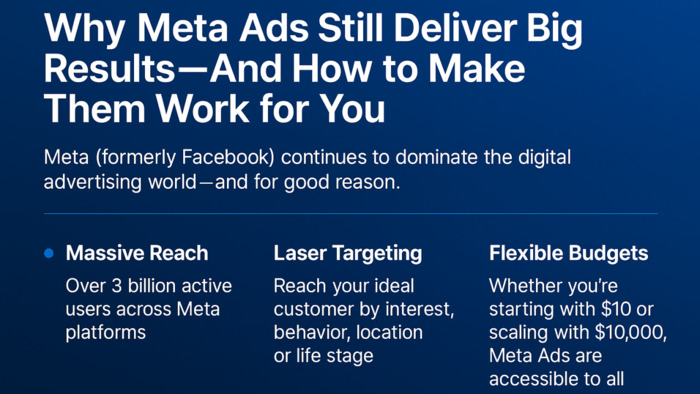
With 3.54 billion daily active users across Meta’s apps, the opportunity is enormous, but so is the competition. This blog unpacks exactly what’s working right now and the tangible business benefits each trend delivers.
Why Meta Ads Still Matter in 2026?
Before diving into trends, let’s establish the “why.” Despite the noise around newer platforms, Meta remains the single most powerful paid social channel for most businesses.
Here’s what makes it uniquely powerful. Meta’s advertising ecosystem, spanning Facebook, Instagram, WhatsApp, and Messenger, gives brands access to one of the most detailed behavioural datasets in the world.
Unlike search ads that capture people already looking, Meta ads shape desire and intent before the search ever happens. The platform’s ability to reach people at every stage of the funnel, from cold awareness to repeat purchase, is unmatched in social advertising.
“A modern Meta Ads strategy revolves around understanding audience intent, letting algorithms learn faster, and building trust through authentic messaging.”
The brands winning on Meta in 2026 are not the ones with the biggest budgets. They are the ones with the clearest understanding of their audience, the most compelling creative, and the willingness to trust automation intelligently. The trends below are not theoretical; they are the patterns delivering measurable results right now.
Top 10 Meta Ads Trends Working Right Now
These ten shifts are reshaping how advertisers build, run, and scale campaigns across Meta’s platforms in 2026.
Short-Form Video Dominance
Reels and Stories have firmly displaced static image ads as the top-performing format on Meta. Short-form video ads continue to outperform all other ad formats across Meta, users prefer quick, visually engaging content that delivers value within seconds.
The native, scroll-stopping quality of vertical video means higher watch rates and lower cost-per-engagement. Brands that invest in 6–15 second hooks, strong first frames, and subtitles are seeing dramatic improvements in click-through rate.
Benefit: Higher engagement, lower CPM
Broad Targeting Over Hyper-Segmentation
The era of stacking dozens of interest layers is over. Meta’s shift toward broad targeting allows algorithms to identify high-intent users more efficiently, this approach improves learning, reduces audience overlap, and often leads to lower costs with stable conversions.
Advertisers who let Meta’s machine learning do the heavy lifting are consistently outperforming those who over-constrain campaigns. The best practice now is to provide high-quality creative and let the algorithm find who it resonates with.
Benefit: Faster learning, reduced audience fatigue
AI-Driven Automated Campaigns (Advantage+)
Features like Advantage+ Audience and Advantage+ Campaigns help optimize placements, bids, and delivery using real-time signals, benefiting advertisers with faster optimization cycles, reduced manual effort, and improved scalability.
These tools essentially act as a perpetual A/B testing machine, continuously shifting budget to the best-performing combinations of audience, placement, and creative. For advertisers willing to let go of manual control, the results often speak for themselves.
Benefit: Scalability without proportional workload
UGC (User-Generated Content) Drives Conversions
Polished brand content is increasingly being tuned out. User-generated content feels authentic and relatable , incorporating real customer videos, reviews, and testimonials builds trust quickly, lowers resistance, increases engagement, and often encourages a positive purchasing decision.
Brands that partner with micro-creators or encourage customers to share their experiences are building social proof at scale, which is one of the most powerful conversion drivers in paid social.
Benefit: Lower CPC, higher purchase intent
Creative Quality as the Primary Performance Lever
With targeting becoming increasingly automated, creative is now the main variable advertisers can control. Clear messaging, strong hooks, and tailored visuals significantly influence engagement and conversions, ads that speak directly to audience pain points consistently outperform generic promotions, making creative testing crucial for success on Meta. A/B testing hooks, colour palettes, and calls to action is no longer optional; it’s the strategic core of campaign management in 2026.
Benefit: Direct impact on ROAS without increasing spend
Smarter, Layered Retargeting
As cold audience acquisition costs rise, brands are rediscovering the power of retargeting. A well-structured Meta Ads strategy focuses on re-engaging website visitors, video viewers, and past customers , this approach improves conversion rates while maximizing the value of prior ad interactions.
Sophisticated retargeting in 2026 means using multiple audience segments (e.g., 3-day window vs 30-day window, video watchers vs page visitors) with tailored messaging for each stage of intent.
Benefit: Higher ROI from warm audiences already in the funnel
Personalization at Scale with Dynamic Creatives
Meta enables advertisers to deliver personalized messaging without creating endless campaigns, dynamic creatives automatically adapt visuals, copy, and offers based on user behavior, allowing brands to stay relevant across large audiences while maintaining efficiency.
This technology ensures a user who viewed a product page sees that exact product in an ad, while a new cold audience sees a broader brand message, all managed automatically by the platform.
Benefit: Relevance at scale without manual campaign multiplication
Advantage+ Shopping Campaigns for E-Commerce
Meta’s Advantage+ Shopping Campaigns simplify advertising for e-commerce brands by automating audience selection, placements, and creative optimization, reducing complexity while delivering consistent sales performance.
For online retailers, these campaigns have effectively replaced manual shopping setups. They require a clean product catalogue, good creative assets, and patience during the learning phase, but once optimized, they consistently deliver results at scale.
Benefit: Consistent e-commerce ROAS with less management overhead
Click-to-WhatsApp Ads for Direct Conversion
Click-to-WhatsApp ads are gaining popularity for businesses that rely on direct communication, users prefer instant conversations over lengthy forms, especially for services and local businesses, helping build trust quickly, shorten the sales cycle, and create more personalized customer interactions.
For high-consideration purchases, service businesses, or markets where WhatsApp is the primary communication channel, these ads dramatically improve lead quality by initiating a real conversation instantly.
Dynamic, Performance-Responsive Budget Allocation
Advertisers are moving toward flexible budgeting models that respond to real-time performance, by monitoring key signals and adjusting spend dynamically, a strong Meta Ads strategy ensures budgets flow toward high-performing campaigns, improving efficiency and reducing wasted spend.
Campaign Budget Optimization (CBO) has become the default approach for scaling, while Ad Set Budget Optimization (ABO) is reserved for controlled testing phases before a winner is identified and scaled.</p>
Benefit: Optimal spend efficiency across the portfolio
The Core Benefits of a Modern Meta Ads Strategy
A modern Meta Ads strategy is all about working smarter, not just spending more. Platforms like Meta Platforms including Facebook and Instagram, now offer advanced tools that help businesses connect with the right audience in a more meaningful way.
One of the biggest benefits is precise targeting. You can reach people based on their interests, behaviors, and even past interactions with your brand, which means your ads are shown to those most likely to take action. This naturally improves your return on investment.
Another key advantage is automation and AI optimization. Modern Meta Ads use smart algorithms to automatically test creatives, placements, and audiences, helping you get better results without constant manual effort. This saves time while improving performance.
Creative flexibility is also a major strength. From short videos and reels to carousel ads and stories, businesses can present their message in engaging formats that feel natural to users, rather than intrusive. You also get clear and measurable insights. Meta provides detailed analytics so you can track what’s working, understand customer behavior, and continuously improve your campaigns.
Lastly, a modern strategy supports full-funnel marketing. Whether your goal is brand awareness, lead generation, or direct sales, Meta Ads allow you to guide potential customers through every stage of their journey.
In simple terms, a modern Meta Ads strategy helps you reach better audiences, create more engaging content, and achieve stronger, more measurable business results.
Understanding the trends is only half the picture. Here’s what adopting them actually delivers for your business.
Unmatched Audience Reach
With over 3.5 billion daily users, no other paid social platform comes close to Meta’s scale. You can reach virtually any demographic, geography, or behavioral segment in the world.
Intelligent Automation
Meta’s AI continuously learns from campaign data and optimizes delivery without manual intervention, freeing marketers to focus on strategy and creative rather than tactical bid adjustments.
Precise Audience Signals
Meta’s behavioural, interest, and lookalike data allows brands to find and replicate their best customers at scale, something keyword-based platforms fundamentally cannot
Full Funnel Coverage
From awareness Reels to retargeting carousels to WhatsApp conversion ads, Meta covers every stage of the buyer journey in a single platform with unified data and reporting.
Creative Flexibility
Video, image, carousel, collection, Stories, Meta supports a broader range of creative formats than any other social platform, letting brands tell their story in the most compelling way.
Measurable, Attributable Results
Meta’s conversion tracking, pixel data, and reporting suite give advertisers clear visibility into what’s working from impression to purchase, enabling confident data-driven decisions.
5 Practical Tips to Master These Trends
Let Algorithms Learn Before Intervening
Avoid over-optimizing campaigns too early. Allow enough time to exit the learning phase, Meta’s algorithm needs meaningful data before it can optimize effectively. Early changes reset the clock and limit performance.
Prioritize Creative Testing Over Audience Tweaks
Instead of endlessly adjusting targeting, channel that energy into testing creatives. Small variations in hooks, visuals, and calls to action often have dramatically larger performance impacts than audience refinements.
Choose Between CBO and ABO Strategically
Use Campaign Budget Optimization (CBO) for scaling proven winners , it distributes budget intelligently across ad sets. Use Ad Set Budget Optimization (ABO) during the testing phase when you need control over how much each hypothesis spends.
Build Structured, Multi-Layered Retargeting Funnels
Retargeting isn’t just “show an ad to everyone who visited your site.” Segment by recency (3-day, 7-day, 30-day), by depth of engagement (video watchers vs product page visitors), and tailor messaging to match their stage in the decision journey.
Track Business Outcomes, Not Vanity Metrics
Clicks and impressions feel good but don’t pay bills. Focus on cost per result, conversion quality, revenue attributed, and customer acquisition cost. These are the numbers that connect Meta Ads performance to actual business growth.
How to Choose Which Meta Ads Trends Are Right for Your Business?
Define your primary goal first— brand awareness, lead generation, or direct e-commerce sales each map to different trends.
Match your format to audience behaviour — if your audience is on Instagram and under 35, Reels and UGC should lead. If they’re decision-makers researching on desktop, carousel and lead ads may work better.
Check for audience overlap before launching multiple campaigns to the same pool , this wastes budget and inflates costs.
Test at small budgets before scaling — validate a trend works for your specific offer before committing significant spend.
Align creative format with the trend you’re adopting — running a WhatsApp conversion strategy with static image ads will underperform; pair the right format with the right intent.
Monitor consistently and refine based on real data — trends are starting points, not blueprints. Your data will tell you what to keep, cut, or double down on.
FAQs on Meta Ads Trends and Their Benefits
What are the latest trends of Meta Ads and benefits in 2026?
In 2026, Meta Ads are driven by AI automation, creative-first strategies, and short-form video content. Advertisers are focusing more on engaging visuals rather than manual targeting. At the same time, privacy-first tracking ensures campaigns remain effective while respecting user data. These trends make advertising more efficient and results-driven.
Are Meta Ads still effective in 2026?
Yes, Meta Ads remain highly effective. With advanced AI and a huge user base on Facebook and Instagram, businesses can still achieve strong ROI. When campaigns are optimized well, they continue to deliver consistent growth and conversions.
What is Advantage+ in Meta Ads?
Advantage+ is an AI-powered campaign type that automates targeting, placements, and optimization. It helps advertisers get better results with less manual effort by using data to find the right audience and improve performance in real time.
Why is creative important in Meta Ads?
Creative is now the key driver of success in Meta Ads. Since algorithms handle targeting, engaging and high-quality content is what grabs attention and drives clicks and conversions. Strong visuals and messaging make all the difference.
How does AI improve Meta Ads performance?
AI analyzes user behavior, predicts actions, and optimizes campaigns automatically. It adjusts targeting, budget, and delivery in real time, helping businesses get better results without constant manual changes.
What is the biggest benefit of Meta Ads?
The biggest benefit is the ability to reach a large audience with precise targeting at a cost-effective price. It allows businesses to connect with the right people and drive measurable results like leads and sales.
The Bottom Line: Adapt or Get Left Behind
Meta advertising in 2026 rewards brands that embrace automation intelligently, invest in creative quality relentlessly, and interpret data honestly. The gap between businesses treating Meta Ads as a set-and-forget spend and those using it as a strategic growth engine has never been wider.
The ten trends covered here are not hype; they are the patterns delivering measurable results for brands across industries right now.
The platforms will keep evolving. Algorithms will keep improving. But the foundation remains constant: understand your audience, communicate genuine value, and let performance data guide every decision. Start with one or two trends most relevant to your goals, test rigorously, and scale what works.
The latest trends of meta ads and benefits clearly show that the future of advertising is driven by AI, automation, and creativity. Businesses that adapt to these changes, by focusing on authentic content, leveraging automation tools, and using data effectively, will achieve better results and higher ROI. Meta Ads in 2026 are not just about reaching people, they’re about connecting with the right audience at the right time with the right message.