
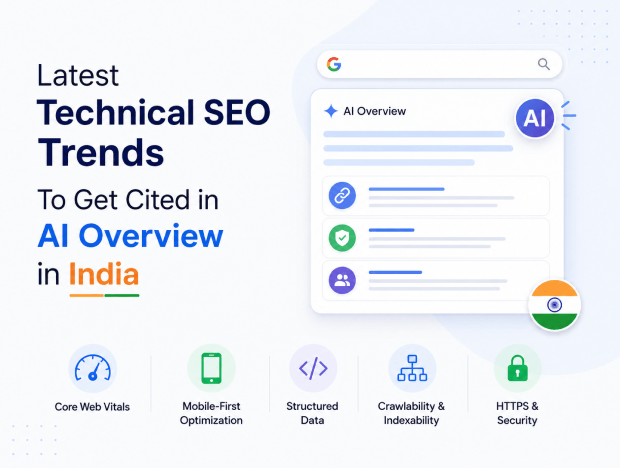
Search engine optimization is evolving faster than ever. Traditional SEO strategies focused heavily on ranking websites on the first page of search engines. However, with the rise of artificial intelligence in search, businesses now have a new goal: getting cited in AI-generated answers and AI Overviews.
Technical SEO continues to evolve as search engines and AI-powered search platforms become more sophisticated. Staying ahead of the latest trends is essential for maintaining visibility, improving website performance, and increasing the chances of being featured in both traditional search results and AI-generated answers.
AI Overviews are transforming how users find information online. Instead of clicking through multiple websites, users receive summarized answers directly within search results. These AI-generated responses often cite authoritative websites, making visibility in AI Overviews a powerful opportunity for businesses, publishers, and marketers.
To earn citations in AI-generated results, websites must go beyond basic SEO practices. Technical SEO has become a critical factor in helping search engines and AI systems understand, trust, and reference your content. In this guide, we’ll explore the latest technical SEO trends that can help your website get cited in AI Overviews, improve visibility, and attract more qualified organic traffic.
The latest technical SEO trends show a clear shift toward creating websites that are fast, accessible, trustworthy, and easily understood by both search engines and AI systems. Businesses that embrace these changes will be better positioned to improve visibility, earn AI citations, and succeed in the future of search.
What Is AI Overview?
An AI Overview is an AI-generated summary that appears at the top of certain search results, providing users with a quick and comprehensive answer to their query. Instead of requiring users to visit multiple websites to gather information, AI Overview combines insights from various trusted sources and presents them in a clear, conversational format.
Powered by advanced artificial intelligence and large language models, AI Overviews are designed to help users find information faster by summarizing key points, answering complex questions, and offering relevant context. These summaries often include links to the original sources, allowing users to explore topics in greater detail if needed.
For businesses and website owners, AI Overviews represent a significant shift in how content is discovered online. Rather than focusing solely on traditional search rankings, brands now need to create high-quality, authoritative content that AI systems can easily understand and reference. Factors such as content accuracy, topical expertise, structured data, and strong technical SEO can increase the likelihood of being cited within AI-generated results.
As search continues to evolve, AI Overviews are changing the way users interact with information, making it more important than ever for websites to optimize not just for search engines, but also for AI-powered search experiences.
AI Overview is a search feature that uses artificial intelligence to generate summarized answers to user queries. Instead of displaying only traditional search results, AI systems analyze multiple authoritative sources and present concise responses.
When your website is cited in an AI Overview, it gains:
- Increased brand visibility
- Higher trust and authority
- More qualified traffic
- Better click-through opportunities
- Competitive advantage over traditional rankings
Since AI systems rely heavily on trusted and technically optimized content, implementing modern technical SEO practices is essential.
Why Technical SEO Matters for AI Citations
As AI-powered search tools and assistants become a primary way people discover information online, earning AI citations is becoming increasingly important for brands and websites. However, great content alone isn’t enough. Technical SEO plays a crucial role in helping AI systems find, understand, and trust your content.
Technical SEO ensures that your website is easily crawlable, properly indexed, and structured in a way that search engines and AI models can interpret accurately. When pages load quickly, follow a clear site architecture, use structured data, and eliminate technical issues, AI systems can access and process information more efficiently.
AI models rely on trustworthy and accessible sources when generating answers. If your website has broken links, duplicate content, poor mobile performance, or blocked pages, valuable information may be overlooked, even if the content itself is excellent. On the other hand, a technically optimized website increases the likelihood that AI tools will recognize your content as reliable and reference it in their responses.
In simple terms, technical SEO creates the foundation that allows AI to discover, understand, and confidently cite your content. As search continues to evolve beyond traditional rankings, businesses that invest in strong technical SEO are better positioned to gain visibility, authority, and valuable AI-driven citations.
AI search engines do not simply rank websites based on keywords. They evaluate:
- Website structure
- Content accessibility
- Page performance
- Crawlability
- Semantic relationships
- Structured data
- User experience
A technically optimized website makes it easier for AI systems to understand your content and use it as a reliable source for generating answers.
Latest Technical SEO Trends for AI Overview Success
1. Structured Data and Schema Markup
Structured data remains one of the most important technical SEO factors. Schema markup helps search engines understand the context of your content. AI systems use structured information to identify entities, topics, FAQs, reviews, products, and services.
Popular Schema Types
- Article Schema
- FAQ Schema
- Organization Schema
- Local Business Schema
- Product Schema
- How-To Schema
- Breadcrumb Schema
Benefits
- Improves content understanding
- Enhances search visibility
- Supports AI content extraction
- Increases eligibility for rich results
Businesses using comprehensive schema markup often provide clearer signals to AI models, improving citation opportunities.
2. Entity-Based SEO Optimization
Modern AI systems focus on entities rather than just keywords. An entity can be:
- A person
- A business
- A product
- A location
- A service
Instead of targeting isolated keywords, websites should build strong topical authority around recognized entities.
Best Practices
- Create detailed About pages
- Establish author profiles
- Link related topics together
- Use consistent business information
- Build entity relationships across content
Benefits
- Improved semantic relevance
- Stronger topical authority
- Better AI recognition
- Increased trust signals
AI systems prefer citing sources that clearly demonstrate expertise within a specific subject area.
3. Core Web Vitals Optimization
Website performance remains a major ranking and citation factor. Google’s Core Web Vitals measure user experience through:
Largest Contentful Paint (LCP)
Measures loading speed.
Interaction to Next Paint (INP)
Measures responsiveness.
Cumulative Layout Shift (CLS)
Measures visual stability.
Benefits
- Faster user experience
- Better crawl efficiency
- Improved engagement metrics
- Increased trust for AI systems
Websites that load quickly and perform smoothly provide better user experiences, making them stronger candidates for AI-generated citations.
4. Crawl Budget Optimization
AI search systems depend on efficient crawling. Large websites often waste crawl budgets on:
- Duplicate pages
- Parameter URLs
- Broken links
- Thin content
Optimization Techniques
- Use XML sitemaps
- Fix crawl errors
- Eliminate duplicate pages
- Improve internal linking
- Implement canonical tags
Benefits
- Faster indexing
- Better content discovery
- Improved website efficiency
- Enhanced AI accessibility
When AI systems can easily access and understand your pages, citation opportunities increase.
5. Semantic HTML Structure
Search engines increasingly rely on semantic HTML elements to understand content hierarchy. Use:
- Header tags (H1-H6)
- Article tags
- Section tags
- Navigation tags
- Footer tags
Benefits
- Better content organization
- Improved accessibility
- Enhanced AI interpretation
- Stronger topical relevance
Well-structured pages provide clearer context to AI algorithms.
6. Advanced Internal Linking Architecture
Internal linking has become more important than ever. AI systems analyze how pages connect to understand topic clusters and content relationships.
Effective Strategies
- Create topic hubs
- Use contextual anchor text
- Link supporting content
- Build content silos
- Maintain logical hierarchy
Benefits
- Improved page authority flow
- Better crawlability
- Stronger topical expertise
- Increased AI understanding
A strong internal linking strategy helps AI identify your most important content.
7. AI-Friendly Content Delivery
Technical SEO now includes making content easy for AI systems to process.
Best Practices
- Use clear headings
- Include bullet points
- Add concise summaries
- Create FAQ sections
- Write direct answers
Benefits
- Easier content extraction
- Better AI comprehension
- Improved user experience
- Increased citation potential
AI models often prefer content that presents information clearly and logically.
8. JavaScript SEO Optimization
Many websites rely heavily on JavaScript frameworks. However, poorly implemented JavaScript can create indexing issues.
Recommendations
- Implement server-side rendering (SSR)
- Use dynamic rendering when needed
- Test rendered HTML
- Ensure critical content is accessible
Benefits
- Better indexing
- Improved crawlability
- Enhanced visibility
- Greater AI accessibility
AI systems cannot cite content they cannot properly access.
9. E-E-A-T Signal Enhancement
Experience, Expertise, Authoritativeness, and Trustworthiness (E-E-A-T) have become critical for AI citations.
Technical Enhancements
- Author schema markup
- Expert bios
- Trust badges
- Secure HTTPS implementation
- Contact information visibility
Benefits
- Increased credibility
- Better trust signals
- Stronger authority
- Improved AI confidence
AI systems prioritize trustworthy sources when generating answers.
10. Knowledge Graph Optimization
Knowledge Graph optimization helps search engines understand your brand as an entity.
Key Actions
- Create consistent business profiles
- Maintain NAP consistency
- Use organization schema
- Build authoritative citations
- Connect social profiles
Benefits
- Stronger entity recognition
- Improved brand authority
- Better AI understanding
- Increased citation opportunities
Brands with strong knowledge graph signals are more likely to appear in AI-generated responses.
11. XML Sitemap Optimization
XML sitemaps continue to play a vital role in content discovery.
Modern Sitemap Practices
- Include only indexable pages
- Update regularly
- Segment large sitemaps
- Monitor errors
Benefits
- Improved indexing
- Faster content discovery
- Better crawl management
- Enhanced AI accessibility
Fresh and accurate sitemaps help AI systems discover important content efficiently.
12. Mobile-First Technical SEO
Most searches now occur on mobile devices. AI systems often evaluate mobile usability when assessing content quality.
Optimization Areas
- Responsive design
- Fast mobile loading
- Touch-friendly interfaces
- Optimized images
Benefits
- Better user experience
- Improved engagement
- Higher rankings
- Increased AI trust
Mobile-friendly websites provide stronger signals for AI-generated search experiences.
Features of Technical SEO That Support AI Overview Citations
Modern technical SEO includes several powerful features:
Structured Data Integration
Helps AI understand content context.
Entity Recognition
Builds topical authority and semantic relevance.
Fast Website Performance
Enhances user experience and crawl efficiency.
Intelligent Internal Linking
Creates strong content relationships.
Crawl Optimization
Improves content accessibility.
Mobile Responsiveness
Supports modern search behaviour.
Knowledge Graph Alignment
Strengthens brand recognition.
Enhanced Security
Builds trust through HTTPS implementation.
Benefits of Getting Cited in AI Overviews
Increased Brand Visibility
Your website becomes visible directly within AI-generated answers.
Higher Organic Traffic Quality
Users arriving through AI citations often have stronger intent and engagement.
Improved Authority
Being referenced by AI systems signals credibility and expertise.
Greater Competitive Advantage
AI citations can outperform traditional ranking positions in visibility.
Better User Trust
Users tend to trust sources cited within AI-generated responses.
Long-Term SEO Growth
Technical optimization strengthens both traditional SEO and AI search visibility.
Common Technical SEO Mistakes to Avoid
Many websites miss AI citation opportunities due to avoidable issues.
Common Mistakes
- Missing schema markup
- Slow loading pages
- Poor mobile experience
- Broken internal links
- Duplicate content
- Weak site architecture
- JavaScript rendering problems
- Lack of author credibility signals
Fixing these issues can significantly improve AI visibility.
The Future of Technical SEO for AI Search
The way people search for information is changing rapidly. Instead of scrolling through pages of search results, users are increasingly turning to AI-powered search engines and conversational assistants that provide direct answers. As a result, the future of technical SEO is no longer just about helping websites rank, it’s about helping AI systems discover, understand, and trust your content.
In the coming years, technical SEO will play an even bigger role in how content is surfaced in AI-generated responses. Websites will need to focus on clean site structures, fast loading speeds, accurate indexing, and structured data that clearly communicates information to both search engines and AI models. These technical foundations will help AI systems interpret content more effectively and determine which sources deserve citations.
Trust and accessibility will become key ranking factors in AI search. Search engines and AI platforms will increasingly favour websites that provide reliable information, maintain strong technical performance, and offer a seamless user experience across devices.
Features such as schema markup, content organization, entity optimization, and crawl efficiency are expected to become more important as AI systems continue to evolve.
The future of technical SEO is about building websites that are not only optimized for algorithms but also designed to be easily understood by intelligent systems. Businesses that adapt early will have a greater opportunity to earn AI citations, strengthen their online authority, and remain visible in an increasingly AI-driven search landscape.
As AI-powered search continues to evolve, technical SEO will become even more important. Future trends may include:
- Enhanced entity optimization
- AI-focused structured data formats
- Real-time content indexing
- Voice search integration
- Advanced semantic analysis
- Personalized AI search experiences
Businesses that invest in technical SEO today will be better positioned to benefit from future AI search innovations.
Conclusion
AI Overviews are changing the way users interact with search engines. While content quality remains essential, technical SEO has become the foundation for helping AI systems understand, trust, and cite your website.
By implementing modern strategies such as structured data, entity optimization, Core Web Vitals improvements, crawl optimization, semantic HTML, internal linking, and E-E-A-T enhancements, businesses can significantly increase their chances of appearing in AI-generated responses.
The websites that combine excellent content with strong technical SEO will be the ones that gain the greatest visibility in the future of AI-powered search. Investing in these latest technical SEO trends today can help your business build authority, improve search performance, and secure valuable citations in AI Overviews for years to come.