
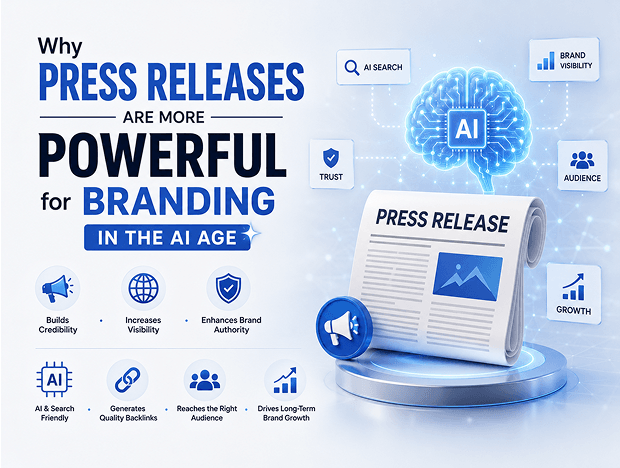
Businesses and Organizations are vying for attention more than ever. The advent of Artificial Intelligence has transformed how individuals search for data, how content is prioritized, and how brands are found online. Although social media fads quickly fade, one marketing asset remains effective for long-term brand development: the press release.
Many businesses believe that press releases are a thing of the past, but the truth is quite the contrary. In the era of AI, press releases have gained even more significance as they offer structured, reliable, and easily searchable information that can be comprehended by both people and AI systems alike.
Regardless of whether you manage a startup, a renewable energy firm, a real estate agency, or a digital marketing company, press releases can assist you in establishing authority, enhancing visibility, and fortifying your brand’s reputation online.
What Is a Press Release?
A press release is an official, concise statement sent to members of the media to provide information, make an announcement, or serve as a public record. It is written in a structured, journalistic format and is designed to give reporters everything they need to quickly turn the information into a news story.
Historically distributed via wire services or fax, modern press releases are a core tool of public relations (PR) and digital marketing, helping organizations build brand authority, manage public perception, and earn media coverage.
Core Structure of a Press Release
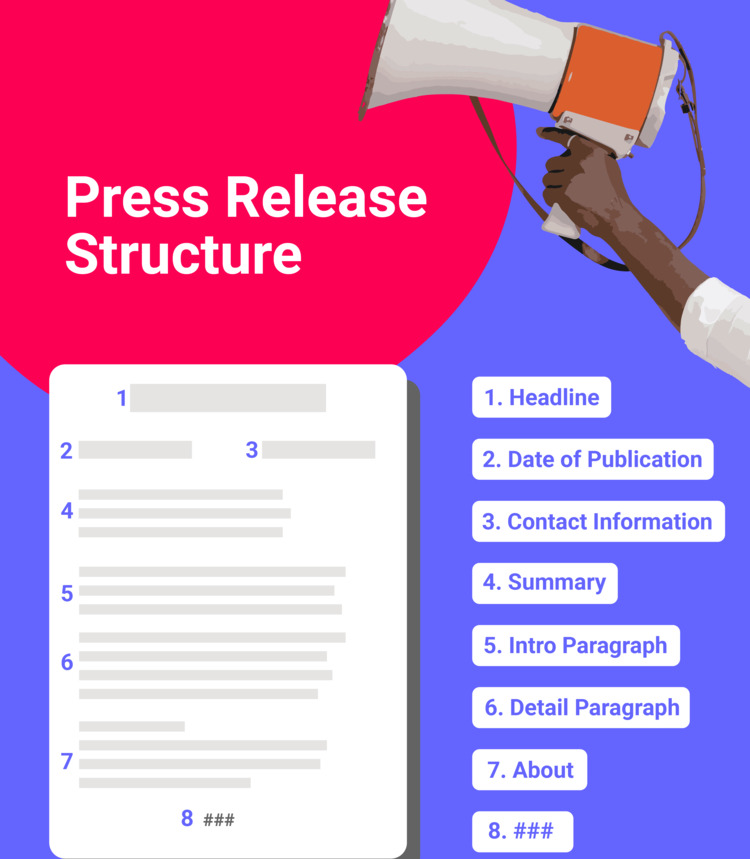
Reporters receive hundreds of pitches a day. To stand out and ensure clarity, an effective press release strictly follows the inverted pyramid structure, putting the most important information at the top.
- The Headline: A compelling, action-oriented title that grabs attention and summarizes the news in one sentence.
- The Dateline: The location and date of the announcement (e.g., NEW YORK, NY – May 25, 2026).
- The Lead Paragraph: The opening 2–3 sentences that answer the core 5 Ws (Who, What, When, Where, and Why).
- The Body: 2–3 paragraphs providing supporting details, context, and data. This section almost always includes a direct, authoritative quote from a key stakeholder (like a CEO or project lead).
- The Boilerplate: A short “About Us” paragraph that outlines what the company or organization does.
- Media Contact Info: The name, email, and phone number of the PR representative reporters can reach for follow-up questions or interviews.
Common Types of Press Releases
Organizations issue press releases for events that are genuinely newsworthy. The most frequent types include:
- Product Launches: Announcing a new product, service, or major feature upgrade, highlighting what makes it unique.
- Mergers and Acquisitions (M&A): Formal announcements of corporate changes, organizational restructuring, or major funding rounds.
- Events: Inviting the media to cover a grand opening, a major conference, or a charity initiative.
- Grand Openings / Relocations: Announcing a new office, storefront, or manufacturing facility opening to establish local presence.
- Crisis Management: Official statements issued to clarify an organization’s stance, take accountability, or mitigate reputational damage during a public issue.
The PR vs. Marketing Distinction: A press release is not a sales pitch or an advertisement. If it reads like marketing copy, journalists will ignore it. Its primary goal is to provide objective, factual value to a reporter’s audience.
A press release is an official news-style announcement shared by a company to communicate important updates. These updates may include:
- Product launches
- Business partnerships
- Company achievements
- Awards and recognition
- New services
- Industry insights
- Event announcements
- Funding news
- Expansion updates
Traditionally, press releases were written mainly for journalists and media outlets. Today, they serve a much larger purpose. They help search engines, AI platforms, news
aggregators, and online audiences understand your brand credibility.
Why Branding Matters More in the AI Era?
In the AI era, content has become infinitely scalable and incredibly cheap to produce. Because anyone can generate a 2,000-word blog post, a social media campaign, or a video script in seconds, the internet is facing an unprecedented surge of text and media.
When information is infinite, trust becomes the ultimate currency. This is why branding, the distinct identity, reputation, and human connection behind a name, matters more now than ever before.
The Death of Content Monopolies
For years, digital marketing relied on standard Search Engine Optimization (SEO) mechanics: identify keywords, build a structured piece of content, earn some backlinks, and rank on page one.
AI models have completely levelled this playing field. Because search engines and answer engines can easily synthesize factual information, generic “how-to” articles or basic industry definitions no longer create a competitive advantage. When the answer is everywhere, the user’s focus shifts from “What is the answer?” to “Who is saying it, and why should I trust them?”
The Rise of “Answer Engine Optimization” (AEO)
Search engines are rapidly shifting from lists of links to direct answers powered by LLMs (Large Language Models). AI engines like Google Overviews, OpenAI, and Perplexity don’t just pull raw data; they pull from sources they deem highly authoritative.
To be cited as a trusted source by an AI, a brand needs a footprint that goes beyond keywords. AI models look for signals of real-world authority, including:
- Original data and proprietary research.
- Strong, consistent brand mentions across reputable industry publications.
- Deep expertise tied to verified authors (E-E-A-T: Experience, Expertise, Authoritativeness, and Trustworthiness).
Cutting Through the “AI Hallucination” Noise
Users are becoming increasingly skeptical of unverified online information due to the risk of AI hallucinations or generic, recycled advice. A strong brand serves as a trust filter.
When a customer recognizes a brand name they respect, they know the insights are vetted, the data is real, and there is actual human accountability behind the curtain. B2B buyers and consumers alike will actively seek out known brands to save time and mitigate risk.
Distinct Opinion and Human Storytelling
AI is excellent at finding patterns and summarizing existing knowledge, but it lacks personal experience, proprietary case studies, and authentic opinions.
Branding allows organizations to inject distinct perspectives into their market. A powerful brand voice stands out precisely because it doesn’t sound like a smoothed-over, algorithmic consensus. It shares real stories of failure, unique methodologies, and strong industry stances that AI cannot replicate.
The New Marketing Reality: In the AI era, you cannot out-publish the machines. The goal is no longer just to be found; the goal is to be remembered. A robust, recognizable brand is the only asset that AI cannot commoditize.
Artificial Intelligence is transforming how users interact with online content. AI-powered search engines and recommendation systems now prioritize:
- Trusted sources
- Brand authority
- Consistent online mentions
- High-quality information
- Verified company data
- Media coverage
This means branding is no longer just about logos and advertisements. Your digital reputation now directly impacts your visibility online. When AI systems repeatedly see your business mentioned across reputable websites and media platforms, they begin recognizing your brand as trustworthy and relevant. This is exactly where press releases become valuable.
How Press Releases Help Brands Grow in the AI Age

In the AI age, press releases have become more powerful than ever for brand growth. Search engines, AI tools, and news platforms constantly scan trusted online sources for accurate information, and a well-written press release helps your brand appear in those results. It gives businesses a chance to control their story, build credibility, and reach a wider audience without relying only on ads.
Press releases also help brands improve online visibility, strengthen SEO, and gain media attention. When your company shares product launches, achievements, partnerships, or industry insights through press releases, it creates trust with customers and positions your brand as an authority in the market. In today’s digital world, where AI-driven platforms value authentic and reliable content, press releases help businesses stay visible, relevant, and competitive.
Press Releases Build Online Authority
AI systems and search engines rely heavily on authority signals when ranking businesses. A professionally written press release published on reputable news platforms increases your brand credibility instantly.
When your company appears on multiple trusted media websites, it creates strong trust signals that influence:
- Google rankings
- AI search summaries
- Brand recognition
- Consumer confidence
The more authoritative mentions your company receives, the stronger your digital footprint becomes.
AI Search Engines Prefer Structured Content
AI tools process information differently than humans. They prefer content that is:
- Structured
- Fact-based
- Clear
- Organized
- Easy to summarize
Press releases naturally follow this format.
A good press release contains:
- A headline
- Company details
- Key announcements
- Quotes
- Facts and statistics
- Contact information
This structured format makes it easier for AI systems to understand and reference your business information accurately.
Press Releases Improve Brand Visibility Across Multiple Platforms
Unlike social media posts that disappear quickly, press releases stay indexed online for years. A single press release can appear on:
- News websites
- Search engines
- Google News
- AI search platforms
- Business directories
- Industry publications
This gives your brand continuous exposure long after publication. Over time, multiple press releases create a strong digital presence that helps customers discover your business organically.
They Create Trust and Credibility
Consumers are becoming more cautious about online businesses. Fake ads, AI-generated spam, and misleading content have reduced trust in generic marketing messages.
Press releases help solve this problem because they appear more professional and factual than promotional advertisements.
When potential customers see your company featured on respected media platforms, they view your business as more credible and established. This is especially important for industries like:
- Renewable energy
- Real estate
- Finance
- Healthcare
- Technology
- Legal services
Press Releases Support SEO in a Natural Way
Search engine optimization has changed significantly in recent years. AI-powered algorithms now focus more on authority and topical relevance rather than keyword stuffing. Press releases contribute to SEO by:
- Generating branded search signals
- Creating high-authority backlinks
- Increasing online mentions
- Supporting entity recognition
- Improving keyword relevance naturally
For example, if a solar company regularly publishes press releases about new projects, partnerships, and innovations, search engines start associating that brand with the solar industry more strongly. This helps improve long-term organic rankings.
They Strengthen Brand Storytelling
People connect with stories, not just advertisements. Press releases give brands an opportunity to share:
- Their mission
- Company growth journey
- Customer success stories
- Innovation updates
- Community impact
In the AI age, authentic storytelling matters because audiences are overwhelmed with automated content. A well-written press release helps brands sound human, trustworthy, and relatable.
Press Releases Increase Media Opportunities
Journalists, bloggers, and industry websites still rely on press releases for finding newsworthy stories. If your press release contains valuable information, it may lead to:
- Interviews
- News coverage
- Podcast invitations
- Guest articles
- Industry mentions
These additional media opportunities further strengthen your branding efforts.
They Help Businesses Control Their Narrative
AI systems collect information from many online sources. If your company does not publish official content, search engines may rely on incomplete or inaccurate information from third-party websites. Press releases allow businesses to control how their story is presented online. You decide:
- What information gets published
- How your company is positioned
- Which keywords are associated with your brand
- What achievements are highlighted
This level of control is extremely valuable in the AI era.
Why Press Releases Work Better Than Traditional Ads?
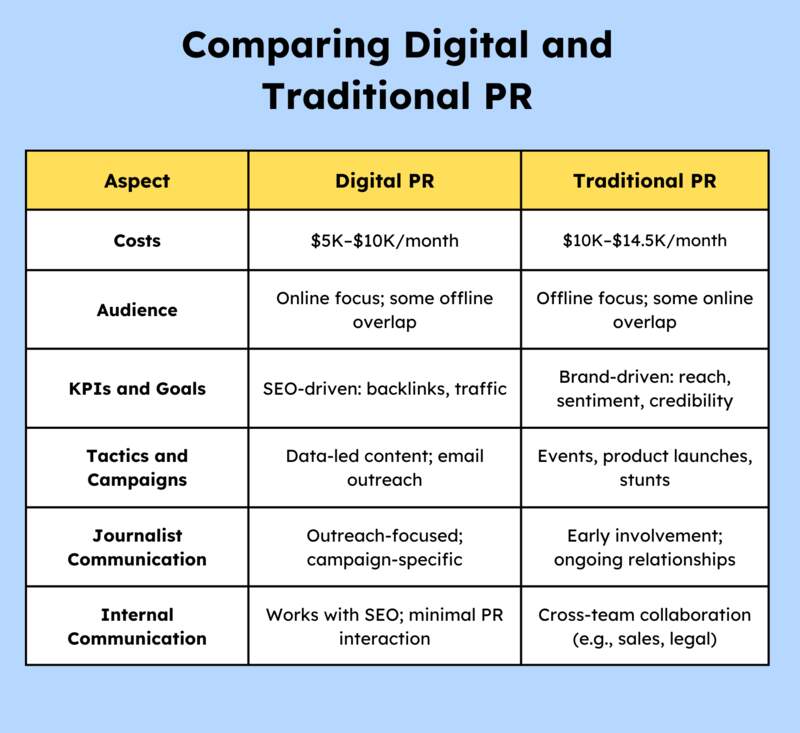
Press releases work better than traditional ads because they build trust instead of simply trying to sell. People today are more likely to believe a news story or media mention than a paid advertisement. When your brand appears in trusted publications, it creates credibility and makes your business look more authentic.
Unlike traditional ads that stop working when the budget ends, a press release can continue bringing visibility for months through online articles, search engine results, and media coverage. It also helps improve SEO, increases brand awareness, and reaches a wider audience organically.
Another reason press releases are powerful is that they tell a story. Instead of pushing promotions, they share company achievements, product launches, industry insights, or success stories in a natural and engaging way. This makes audiences more interested and connected to the brand.
In the AI age, where consumers are constantly exposed to ads everywhere, press releases feel more genuine and informative. They help businesses stand out by earning attention rather than buying it. Traditional ads are often temporary and expensive. Once the budget ends, visibility disappears.
Press releases offer long-term branding benefits because:
- They stay indexed online
- They support SEO
- They build authority
- They increase brand trust
- They improve discoverability
In many cases, a strong press release campaign delivers better long-term branding value than short-term paid advertising alone.
Industries That Benefit Most from Press Releases
Almost every industry can benefit from press releases, but they are especially powerful for:
Technology Companies
AI startups and software companies use press releases to establish innovation leadership.
Renewable Energy Businesses
Solar and clean energy companies use media coverage to build trust and educate consumers.
Real Estate Companies
Press releases help showcase projects, partnerships, and market expertise.
Healthcare Brands
Medical organizations use press releases to communicate credibility and expertise.
Digital Marketing Agencies
Agencies use press releases to strengthen authority and attract business clients.
Best Practices for Writing Powerful Press Releases
A powerful press release starts with a strong and attention-grabbing headline that clearly explains the main news. The headline should be interesting enough to encourage readers, journalists, and media platforms to continue reading the full story. A clear and professional headline creates the first impression of your brand and increases the chances of media coverage.
The content of a press release should always focus on real and meaningful news rather than direct promotion. Readers are more interested in announcements such as new product launches, company achievements, partnerships, events, awards, or industry developments. When the information provides genuine value, the press release feels more trustworthy and engaging.
The opening paragraph plays a very important role because it gives readers a quick overview of the story. A strong introduction should naturally answer important questions like who, what, when, where, and why. This helps journalists and readers quickly understand the importance of the announcement without searching for details.
Using simple, clear, and human-friendly language makes a press release easier to read and understand. Avoid using complicated technical terms or overly promotional sentences. A natural writing style helps the audience connect with the message and builds stronger credibility for the brand.
Adding quotes from company leaders, founders, or industry experts can make the press release feel more authentic and personal. Quotes help bring emotion and personality into the content while also giving readers insights directly from the people behind the announcement.
Including relevant keywords naturally throughout the press release can improve search engine visibility and help the content appear in online searches. This not only increases media exposure but also supports long-term digital marketing and SEO efforts.
Facts, statistics, and real examples can make a press release more informative and convincing. Supporting information helps readers trust the announcement and gives journalists stronger reasons to publish the story on their platforms.
A strong press release should also include a clear call-to-action that guides readers on what to do next. This may encourage them to visit a website, contact the company, explore a product, or attend an event. A proper call-to-action helps turn reader interest into real engagement.
Professional formatting is another important practice when creating a press release. Using short paragraphs, proper headings, and organized content makes the information easier to scan and read. Media professionals prefer press releases that are clean, direct, and well-structured.
Finally, distributing the press release through the right channels is essential for maximum reach. Sharing it through PR platforms, media networks, company websites, and social media can help the news reach a wider audience and improve brand visibility. A well-written and properly distributed press release can create long-lasting impact and stronger public trust for any business.
To maximize branding impact, businesses should follow these best practices:
Focus on Real News
Avoid overly promotional language. Share information that genuinely matters.
Use a Strong Headline
Your headline should immediately explain the key announcement.
Add Statistics and Facts
Data increases credibility and improves media interest.
Include Quotes
Executive quotes add personality and authenticity.
Optimize for SEO
Use relevant industry keywords naturally throughout the content.
Publish Consistently
Brand authority grows over time with regular media exposure.
The Future of Press Releases in the AI Era
For decades, the humble press release followed a predictable path: write a structured announcement, push it out over a wire service, and hope a human journalist turns it into an article.
The AI era has completely upended this distribution funnel. Because generative AI tools allow teams to push out thousands of automated pitches daily, human journalists are facing an unprecedented volume of inbox noise. At the same time, platforms like Google AI Overviews, ChatGPT, and Perplexity are completely changing how audiences discover news.
In this landscape, the press release is far from dead—but its primary target audience has shifted. Today, a press release must be written for dual discovery: compelling enough for a human reporter, but structured perfectly to serve as training data and a trusted citation for AI engines.
1. From SEO Keywords to “Machine-Cited” Authority
Traditional press releases focused heavily on keyword density to rank on Google’s organic blue links. In the current search landscape, over 65% of informational queries resolve as “zero-click” searches, meaning the user gets their answer directly inside an AI-generated summary without ever clicking through to a website.
Because of this, the new objective for a press release is Generative Engine Optimization (GEO). Modern PR teams write press releases with the explicit intent of being machine-cited.
The AI Trust Filter: Large Language Models (LLMs) weigh credibility through a concept called co-citation. When an AI engine synthesizes an answer about an industry trend, it crawls trusted news wires and media outlets to find verified facts.
The Citation Battleground: A press release distributed to authoritative, high-tier media sites serves as a permanent, verified data point. If an AI engine pulls from an article that references your press release, your brand is highly likely to be named, linked, or cited as the primary source in the user’s AI chat window.
2. The Premium on Proprietary Data & First-Hand Insights
AI is incredibly efficient at recycling existing web knowledge, but it cannot generate new facts, conduct original experiments, or break news. This limitation defines the true value of a modern press release.
Generic announcements (“Company X Launches New Software Upgrade”) are easily ignored by both algorithms and reporters. To break through automated triage systems, press releases must prioritize information gain, providing value that doesn’t exist anywhere else on the internet:
3. Hyper-Personalization Over Wire Blasting
The era of blasting an identical press release to a media list of 5,000 journalists is completely broken. Mass-distribution lists are caught instantly by automated email filters, and newsrooms use AI triage systems to flag generic, bot-written outreach.
Successful PR strategies use AI on the back-end to deeply analyze a reporter’s recent coverage, interests, and audience demographic. The press release then serves as a highly tailored foundation. Instead of mass distribution, the future relies on precision: pitching 15–20 highly relevant, specific journalists or niche newsletter creators with a customized angle that speaks directly to their subscriber base.
4. Direct-to-Consumer “Zero-Click” Formatting
Because users increasingly consume news via snippets, previews, and AI conversational interfaces, the internal structure of the press release must provide value immediately.
Narrative Headlines: Headlines can no longer be vague or mysterious to entice a click. They must state the entire core conclusion of the news upfront.
Modular Architecture: Formatting text with clear bullet points, bold key insights, and distinct takeaway sections makes it seamless for an LLM to accurately extract your announcement without “hallucinating” or misinterpreting the context.
The Structural Shift: The press release has evolved from a simple media pitch into a permanent pillar of Narrative Intelligence. Its ultimate job is to ensure that when a human—or an AI agent—asks a conversational prompt about your market, your official data is the foundation of the answer.
As AI continues transforming search and online discovery, trusted content sources will become even more valuable. Press releases are likely to play an even bigger role because they:
- Provide verified business information
- Help AI systems understand brands
- Strengthen online authority
- Improve discoverability
- Build long-term digital trust
Businesses that invest in consistent media visibility today will have a major advantage in the future.
Conclusion
Press releases are no longer just public relations tools. In the AI age, they have become powerful branding assets that help businesses build trust, authority, and online visibility. As AI-driven search engines continue prioritizing credible and structured information, companies that publish professional press releases will stand out more effectively in crowded digital markets.
From improving SEO and media coverage to strengthening brand reputation and AI recognition, press releases offer long-term branding benefits that few other marketing tools can match. For businesses looking to grow in the modern digital landscape, press releases are not optional anymore, they are a strategic branding investment.