
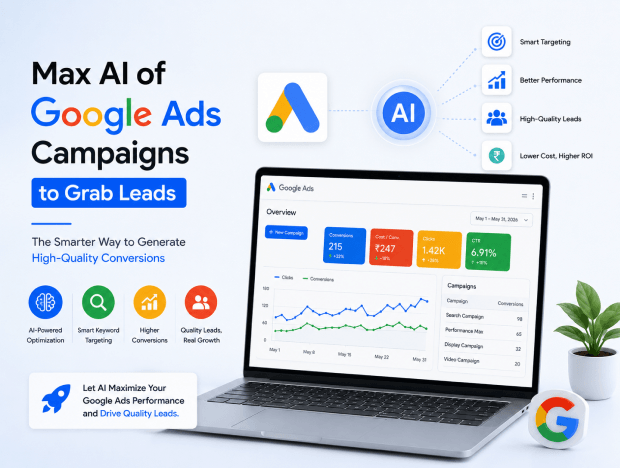
In today’s highly competitive digital marketplace, generating quality leads is no longer just about running advertisements and hoping for clicks. Businesses need intelligent advertising solutions that can identify potential customers, optimize campaigns in real-time, and maximize return on investment. This is where Google’s AI-powered advertising capabilities are changing the game.
Google Ads has evolved significantly over the years. With the introduction of advanced Artificial Intelligence (AI) and machine learning technologies, advertisers can now automate campaign optimization, audience targeting, bidding strategies, and creative testing like never before. These AI-powered features help businesses attract the right audience at the right time, resulting in more qualified leads and higher conversion rates.
Whether you’re a local service provider, healthcare professional, real estate company, eCommerce store, or B2B organization, leveraging the maximum potential of Google Ads AI can dramatically improve your lead generation efforts.
Understanding Google’s AI-Powered Advertising Ecosystem
Google AI works behind the scenes to analyze billions of search queries, user behaviors, device signals, demographics, browsing patterns, and conversion data. This information helps advertisers make smarter decisions without manually managing every aspect of a campaign.
Instead of relying on guesswork, AI continuously learns from user interactions and automatically adjusts campaigns to improve performance. Key AI-driven Google Ads solutions include:
- Smart Bidding
- Performance Max Campaigns
- Responsive Search Ads
- Dynamic Search Ads
- Predictive Audience Targeting
- Automated Budget Optimization
- AI-Powered Creative Recommendations
- Conversion Value Optimization
These tools help advertisers focus less on campaign management and more on business growth.
What Is Performance Max (PMax) and Why Is It Important?
Performance Max, often called PMax, is Google’s most advanced AI-driven campaign type. It allows advertisers to access all Google inventory from a single campaign, including:
- Google Search
- YouTube
- Display Network
- Gmail
- Google Maps
- Discover Feed
- Shopping Network
Instead of creating separate campaigns for each platform, Performance Max uses AI to identify where potential customers are most likely to convert and automatically allocates budget accordingly.
This means your ads can appear wherever your ideal customers are spending their time online.
How Google AI Helps Generate More Leads
Generating leads online has become more challenging as customer behavior continues to evolve. People now interact with multiple websites, devices, and platforms before making a purchasing decision.
This is where Google AI makes a significant difference. By using advanced machine learning and data analysis, Google AI helps businesses connect with potential customers more effectively and generate higher-quality leads.

Google AI continuously analyzes billions of search queries, user behaviors, browsing patterns, and engagement signals to understand what potential customers are looking for. Instead of relying solely on manual targeting and bidding, AI identifies users who are most likely to take action, whether that’s filling out a contact form, booking an appointment, requesting a quote, or making a purchase.
One of the biggest advantages of Google AI is its ability to optimize campaigns in real time. It automatically adjusts bids, audience targeting, ad placements, and budget allocation based on performance data. This means your ads are shown to the right people at the right moment, increasing the chances of generating valuable leads while reducing wasted ad spend.
Google AI also powers features such as Performance Max campaigns, Smart Bidding, and Responsive Search Ads. These tools help advertisers reach potential customers across Google Search, YouTube, Gmail, Display Network, Maps, and Discover from a single campaign. The AI continuously learns which channels, audiences, and ad combinations deliver the best results and shifts resources accordingly.
Another key benefit is predictive targeting. Google AI can identify patterns that indicate purchase intent, allowing businesses to reach prospects before competitors do. By understanding customer interests and behaviors, the system focuses advertising efforts on users who are more likely to convert into leads.
Additionally, AI-driven ad optimization improves messaging performance. It tests multiple headlines, descriptions, and creative assets to determine which combinations resonate most with your audience. This leads to higher click-through rates, stronger engagement, and ultimately more conversions.
For businesses looking to grow, Google AI removes much of the guesswork from digital advertising. It helps maximize campaign performance, improve lead quality, and achieve better returns on marketing investment.
By combining automation with intelligent data analysis, Google AI has become one of the most powerful tools for generating consistent and scalable leads in today’s competitive digital landscape.
1. Intelligent Audience Discovery
Traditional advertising often relies on predefined audience segments. Google AI goes beyond this by identifying users who show strong purchase intent based on their online behavior. The system evaluates factors such as:
- Recent searches
- Website visits
- Shopping behavior
- Video engagement
- Device usage
- Geographic location
- Time of activity
This allows businesses to reach prospects who are genuinely interested in their products or services.
2. Smart Bidding for Better Conversions
Manual bidding can be time-consuming and often inaccurate. Google’s Smart Bidding uses machine learning to adjust bids in real time based on the likelihood of conversion. Popular Smart Bidding strategies include:
Maximize Conversions
Automatically sets bids to generate the highest number of conversions within your budget.
Target CPA (Cost Per Acquisition)
Focuses on acquiring leads at a predefined cost.
Target ROAS (Return on Ad Spend)
Optimizes campaigns to achieve specific revenue goals.
Maximize Conversion Value
Prioritizes higher-value leads and conversions. This automation significantly improves campaign efficiency while reducing wasted ad spend.
3. AI-Powered Ad Copy Optimization
Creating effective ad copy often requires extensive testing. Google’s Responsive Search Ads simplify this process. Advertisers can provide multiple headlines and descriptions, and AI automatically tests different combinations to determine which versions perform best.
Benefits include:
- Higher click-through rates
- Better engagement
- Improved quality scores
- Increased lead generation
The system continuously learns and refines ad combinations based on user behavior.
Features of Google Ads AI That Drive Lead Generation
Google Ads AI is designed to help businesses attract more qualified leads while reducing the complexity of campaign management. By leveraging machine learning and automation, Google’s AI-powered features continuously optimize campaigns to improve performance and increase conversions. Here are some of the most powerful features that drive lead generation:
Smart Bidding Technology
Smart Bidding uses real-time data and machine learning to automatically adjust bids based on the likelihood of a conversion. It analyzes factors such as user behavior, device type, location, time of day, and search intent to place the most effective bid for every auction. This helps businesses maximize leads while maintaining better control over advertising costs.
Performance Max Campaigns
Performance Max campaigns allow advertisers to reach potential customers across all Google platforms, including Search, YouTube, Gmail, Display, Discover, and Maps. Google’s AI automatically determines where ads should appear and allocates budget to the channels that generate the best results. This broader reach creates more opportunities to capture high-intent leads.
Responsive Search Ads
Instead of creating a single ad variation, advertisers can provide multiple headlines and descriptions. Google AI then tests different combinations and displays the versions most likely to perform well. This continuous optimization improves click-through rates and increases the chances of turning visitors into leads.
Predictive Audience Targeting
Google AI analyzes user behavior and search patterns to identify people who are actively researching products or services similar to yours. By focusing on users with strong purchase intent, businesses can attract more qualified prospects and improve conversion rates.
Automated Budget Optimization
Managing advertising budgets manually can be challenging, especially for businesses running multiple campaigns. Google AI automatically distributes budget across campaigns and channels based on performance data, ensuring that advertising spend is directed toward the highest-converting opportunities.
Dynamic Search Ads
Dynamic Search Ads use website content to automatically generate relevant ads for search queries related to your products or services. This feature helps businesses capture additional leads from searches they may not have targeted with traditional keywords.
Real-Time Campaign Optimization
Google AI continuously monitors campaign performance and makes instant adjustments to improve results. It can modify bids, placements, audience targeting, and ad delivery based on changing market conditions and user behavior, helping businesses stay competitive and generate leads more efficiently.
Audience Signals and Customer Insights
AI-powered audience signals help Google understand your ideal customers by using data from website visitors, customer lists, and previous conversions. This enables the system to find similar users who are more likely to engage with your business and become leads.
Automated Creative Recommendations
Google AI provides recommendations for headlines, descriptions, images, and videos that can improve ad performance. By identifying the creative elements that resonate most with your audience, businesses can increase engagement and encourage more inquiries.
Conversion Tracking and Lead Optimization
Accurate conversion tracking allows Google AI to learn which actions matter most to your business. Whether it’s form submissions, phone calls, appointment bookings, or quote requests, the system uses this data to continuously refine targeting and focus on generating higher-quality leads.
Cross-Channel Customer Journey Analysis
Today’s customers often interact with multiple touchpoints before making a decision. Google AI tracks these interactions across devices and platforms, helping advertisers understand the customer journey and deliver more relevant ads throughout the buying process.
Automated Asset Creation
Google AI can generate ad assets based on website content, landing pages, and business information. This helps businesses:
- Launch campaigns faster
- Maintain messaging consistency
- Improve ad relevance
- Increase campaign coverage
Predictive Customer Intent Analysis
Google’s machine learning algorithms predict which users are most likely to convert before they even submit an inquiry. This predictive capability enables advertisers to focus on high-intent audiences and reduce wasted impressions.
Real-Time Campaign Optimization
Unlike manual campaign management, AI monitors performance continuously. It automatically adjusts:
- Bids
- Budgets
- Placements
- Audience targeting
- Ad delivery timing
These adjustments occur in real time, ensuring campaigns remain optimized throughout the day.
Cross-Channel Advertising Management
Consumers rarely convert after a single interaction. They may search on Google, watch YouTube videos, browse websites, and check Gmail before making a decision. Google AI tracks these customer journeys and delivers consistent messaging across multiple touchpoints. This improves brand recall and increases conversion opportunities.
Why These Features Matter
The true strength of Google Ads AI lies in its ability to combine automation, data analysis, and predictive intelligence. Rather than relying on manual adjustments and assumptions, businesses can leverage AI to reach the right audience, improve campaign efficiency, and generate a steady stream of high-quality leads.
As competition in digital advertising continues to grow, these AI-driven features provide a significant advantage for businesses looking to maximize their lead generation efforts and achieve better marketing results.
Benefits of Using Google AI for Lead Generation
Higher Quality Leads
AI focuses on users with stronger buying intent, resulting in better-quality inquiries and sales opportunities. Businesses often experience:
- More qualified leads
- Higher appointment bookings
- Increased sales conversations
- Better conversion rates
Improved Return on Investment
Since AI continuously optimizes campaigns, businesses can achieve more conversions without dramatically increasing advertising budgets. Benefits include:
- Lower acquisition costs
- Better budget utilization
- Reduced wasted clicks
- Increased profitability
Time Savings
Managing Google Ads manually can consume hours every week. AI automates many repetitive tasks, including:
- Bid adjustments
- Keyword management
- Audience optimization
- Ad testing
This allows marketing teams to focus on strategy rather than day-to-day campaign management.
Better Scalability
As businesses grow, campaign complexity increases. Google AI can manage large-scale advertising efforts across multiple locations, services, products, and audience segments without requiring proportional increases in management resources.
Best Practices to Maximize Google AI for Lead Generation
Set Up Accurate Conversion Tracking
AI performs best when it has access to quality data. Track important actions such as:
- Form submissions
- Phone calls
- Appointment bookings
- Quote requests
- Purchases
The more accurate your conversion data, the smarter Google’s algorithms become.
Use High-Quality Landing Pages
Even the best AI-driven campaigns cannot compensate for poor landing pages. Ensure your landing pages offer:
- Fast loading speeds
- Mobile responsiveness
- Clear calls-to-action
- Trust signals
- Easy-to-complete forms
A strong landing page improves conversion rates and helps AI optimize more effectively.
Provide Strong Audience Signals
Performance Max campaigns benefit from audience signals that guide Google’s machine learning. Examples include:
- Existing customer lists
- Website visitors
- Remarketing audiences
- Industry-specific interests
These signals help the algorithm learn faster and find similar prospects.
Allow Sufficient Learning Time
AI needs time to gather data and optimize performance. Avoid making frequent changes during the learning phase. Most campaigns require several weeks to stabilize and achieve optimal results.
Regularly Review Search Terms and Insights
Although AI automates much of the process, human oversight remains important. Review:
- Search term reports
- Audience insights
- Asset performance
- Conversion trends
These insights can reveal new opportunities for growth.
Industries Benefiting Most from Google AI Campaigns
Healthcare and Medical Practices
Doctors, dentists, physiotherapists, clinics, and hospitals can attract patients actively searching for healthcare services.
Real Estate
Property developers and real estate agents can generate inquiries from buyers and investors with high purchase intent.
Education
Colleges, coaching institutes, and training centers can increase admissions through targeted lead generation campaigns.
Home Services
Electricians, plumbers, interior designers, solar installers, and renovation companies can capture local service inquiries effectively.
B2B Companies
Manufacturers, software providers, consultants, and professional service firms can generate qualified business leads using advanced audience targeting.
Common Mistakes to Avoid
Relying Solely on Automation
While AI is powerful, strategic human guidance remains essential. Businesses should still monitor:
- Conversion quality
- Lead qualification
- Budget allocation
- Campaign objectives
Poor Conversion Tracking
Inaccurate tracking sends incorrect signals to Google’s algorithms, reducing optimization effectiveness.
Insufficient Budget
AI performs better when it has enough data to learn from. Extremely limited budgets may restrict learning opportunities.
Weak Creative Assets
High-quality images, videos, headlines, and descriptions help AI create more effective ad combinations.
The Future of AI-Powered Lead Generation
Artificial Intelligence is becoming increasingly sophisticated. Future Google Ads capabilities are expected to include:
- More advanced predictive targeting
- Enhanced customer journey analysis
- Improved creative generation
- Better lead quality scoring
- Deeper cross-platform integration
Businesses that embrace AI-powered advertising today will be better positioned to compete in tomorrow’s digital landscape.
Conclusion
Google’s AI-driven advertising technology has transformed how businesses generate leads online. Features such as Performance Max campaigns, Smart Bidding, Responsive Search Ads, predictive targeting, and automated optimization enable companies to reach highly qualified prospects while maximizing advertising efficiency.
The real power of Google AI lies in its ability to analyze massive amounts of data, identify conversion opportunities, and continuously improve campaign performance without constant manual intervention.
For businesses looking to increase lead volume, improve lead quality, and achieve better returns from their advertising investment, leveraging the full potential of Google Ads AI is no longer optional, it’s a competitive necessity.
By combining AI automation with strong strategy, compelling creative assets, accurate conversion tracking, and optimized landing pages, businesses can create a lead generation engine that consistently delivers measurable growth and long-term success.

