Lead generation is the lifeline of every business. Whether you run a startup, local service company, eCommerce store, B2B organization, or enterprise business, attracting qualified leads consistently is essential for growth. While organic marketing strategies provide long-term benefits, paid advertising platforms deliver faster and more measurable results when used correctly.
Today, businesses have access to numerous paid advertising channels such as Google Ads, Facebook Ads, Instagram Ads, LinkedIn Ads, YouTube Ads, X (Twitter) Ads, Pinterest Ads, and various programmatic advertising networks. However, many companies invest heavily in these platforms without fully utilizing their capabilities, resulting in wasted budgets and poor lead quality.
The key to successful lead generation is not simply spending money on ads but understanding how each platform works and leveraging its unique features effectively. In this guide, we will explore practical tips to maximize every paid platform for lead generation and achieve a better return on investment (ROI).
Why Paid Platforms Matter for Lead Generation
Paid platforms play a crucial role in lead generation because they help businesses reach the right audience faster and more effectively. Unlike organic methods, which can take time to build momentum, paid advertising allows brands to instantly connect with potential customers who are actively searching for products or services.
Platforms like Google Ads, Facebook Ads, LinkedIn Ads, and Instagram Ads offer advanced targeting options, enabling businesses to focus on specific demographics, interests, behaviors, and locations. This means your marketing budget is spent reaching people who are more likely to engage with your brand and convert into leads.
Another major advantage is scalability. Paid campaigns provide measurable results, allowing businesses to track performance, optimize strategies, and generate a consistent flow of qualified leads. Whether you’re looking to increase website traffic, collect inquiries, or drive sales, paid platforms offer the visibility and precision needed to achieve your goals.
In today’s competitive digital landscape, paid advertising is not just an option, it’s a powerful tool for accelerating growth and creating meaningful opportunities to connect with potential customers.
Paid advertising allows businesses to reach potential customers at every stage of the buying journey. Unlike organic marketing, which can take months to show results, paid campaigns can start generating leads almost immediately.
Benefits of Paid Lead Generation Platforms
- Faster lead acquisition
- Highly targeted audience reach
- Better brand visibility
- Measurable campaign performance
- Scalability for business growth
- Improved conversion opportunities
- Enhanced remarketing capabilities
- Better control over marketing budgets
Businesses that strategically use multiple paid platforms often experience higher lead quality and increased conversion rates compared to relying on a single marketing channel.
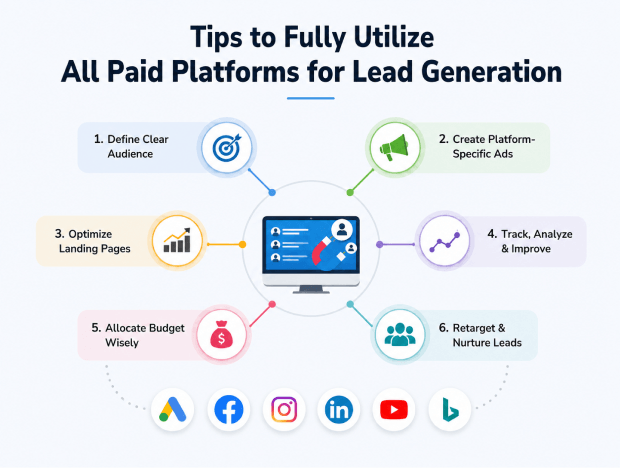
1. Understand Your Target Audience First
Before launching campaigns on any paid platform, define your ideal customer profile.
Ask yourself:
- Who is your ideal customer?
- What problems are they trying to solve?
- Which platforms do they spend time on?
- What demographics fit your target market?
- What motivates them to make a purchase?
The more detailed your audience research, the more effective your paid campaigns become.
Feature
Advanced audience targeting across platforms.
Benefit
You spend less on irrelevant clicks and attract higher-quality leads.
2. Choose the Right Paid Platform for Your Business
Not all paid platforms are suitable for every industry.
Google Ads
Best for:
- High-intent searches
- Local businesses
- Service providers
- eCommerce stores
Facebook & Instagram Ads
Best for:
- Brand awareness
- Consumer products
- Local businesses
- Lifestyle brands
LinkedIn Ads
Best for:
- B2B lead generation
- Professional services
- Corporate solutions
- Recruitment campaigns
YouTube Ads
Best for:
- Brand storytelling
- Product demonstrations
- Educational content
Pinterest Ads
Best for:
- Home décor
- Fashion
- Lifestyle products
- DIY industries
Choosing the right platform ensures your budget is invested where your audience already exists.
3. Create Dedicated Landing Pages
One of the biggest mistakes businesses make is sending ad traffic to their homepage. A dedicated landing page should:
- Focus on one offer
- Have a clear headline
- Include trust signals
- Feature testimonials
- Contain a simple lead form
- Include a strong call-to-action
Feature
Optimized lead capture experience.
Benefit
Higher conversion rates and lower cost per lead.
4. Utilize Advanced Audience Targeting
Modern advertising platforms provide sophisticated targeting options. Target users based on:
- Location
- Age
- Gender
- Interests
- Behaviours
- Job titles
- Income levels
- Purchase history
For B2B campaigns, LinkedIn’s professional targeting can be particularly valuable.
Feature
Precision audience segmentation.
Benefit
Improved lead quality and reduced ad waste.
5. Implement Retargeting Campaigns
Most visitors do not convert on their first interaction. Retargeting helps re-engage users who:
- Visited your website
- Watched videos
- Engaged with social media content
- Added products to carts
- Downloaded resources
Retargeting often delivers some of the highest conversion rates among paid advertising strategies.
Feature
Multi-touch lead nurturing.
Benefit
Increased conversions from previously interested prospects.
6. Leverage AI-Powered Campaign Features
Most advertising platforms now use artificial intelligence to optimize campaigns. Examples include:
- Smart Bidding in Google Ads
- Meta Advantage+ Campaigns
- LinkedIn Predictive Audiences
- Automated creative optimization
AI can identify patterns that human marketers might miss.
Feature
Automated campaign optimization.
Benefit
Better performance with less manual effort.
7. Test Multiple Ad Creatives
Never rely on a single advertisement. Test:
- Headlines
- Images
- Videos
- CTA buttons
- Ad copy
- Offers
A/B testing allows you to discover what resonates most with your audience.
Feature
Continuous creative optimization.
Benefit
Higher click-through rates and improved lead generation performance.
8. Use Video Advertising Effectively
Video content consistently generates strong engagement across paid platforms.
Popular video formats include:
- Product demonstrations
- Customer testimonials
- Explainer videos
- Educational tutorials
- Behind-the-scenes content
Platforms like YouTube, Facebook, Instagram, and LinkedIn all prioritize video content.
Feature
Enhanced audience engagement.
Benefit
Greater trust and improved lead conversions.
9. Track Every Conversion
Successful lead generation requires accurate tracking. Monitor:
- Form submissions
- Phone calls
- Downloads
- Booked appointments
- Purchases
- Email signups
Tools such as Google Analytics, Meta Pixel, LinkedIn Insight Tag, and Google Tag Manager help track campaign performance.
Feature
Comprehensive performance measurement.
Benefit
Data-driven decision making and budget optimization.
10. Build Lookalike and Similar Audiences
Once you generate quality leads, use that data to find similar prospects. Most platforms offer:
- Lookalike Audiences (Meta)
- Similar Segments (Google)
- Predictive Audiences (LinkedIn)
These audiences often perform better than broad targeting.
Feature
Expanded reach with qualified prospects.
Benefit
Scalable lead generation with better conversion potential.
11. Align Offers with Customer Intent
Different prospects are at different stages of the buying journey.
Top of Funnel
Offer:
- Guides
- Checklists
- Educational webinars
Middle of Funnel
Offer:
- Case studies
- Product comparisons
- Free consultations
Bottom of Funnel
Offer:
- Demos
- Trials
- Special discounts
Feature
Intent-based marketing strategy.
Benefit
Higher conversion rates throughout the sales funnel.
12. Optimize for Mobile Users
A large percentage of paid traffic now comes from mobile devices. Ensure:
- Fast loading pages
- Mobile-friendly forms
- Click-to-call functionality
- Responsive design
Feature
Mobile-optimized user experience.
Benefit
Reduced bounce rates and more leads.
13. Use Lead Forms Within Platforms
Platforms such as Facebook, Instagram, and LinkedIn offer native lead generation forms. These forms:
- Auto-fill user information
- Reduce friction
- Increase submission rates
Feature
Instant lead capture.
Benefit
More leads with fewer user actions.
14. Monitor Metrics Beyond Clicks
Many businesses focus only on clicks. More important metrics include:
- Cost Per Lead (CPL)
- Conversion Rate
- Lead Quality
- Customer Acquisition Cost (CAC)
- Return on Ad Spend (ROAS)
- Lifetime Customer Value (LTV)
Feature
Comprehensive campaign analysis.
Benefit
Improved profitability and smarter budget allocation.
15. Continuously Optimize Campaigns
Lead generation is not a one-time setup. Regularly review:
- Audience performance
- Ad creatives
- Keyword targeting
- Bid strategies
- Landing pages
- Conversion data
Small improvements over time often create significant gains.
Feature
Ongoing campaign refinement.
Benefit
Consistent growth and better long-term ROI.
Common Mistakes to Avoid
Many businesses lose valuable leads due to avoidable mistakes.
Avoid:
- Targeting overly broad audiences
- Ignoring mobile optimization
- Sending traffic to homepages
- Not tracking conversions
- Using outdated creatives
- Failing to retarget visitors
- Running campaigns without testing
Correcting these mistakes can significantly improve lead generation performance.
Future Trends in Paid Lead Generation
The future of paid lead generation is being shaped by smarter technology, changing consumer behaviour, and increased competition in the digital space. As businesses look for more efficient ways to attract high-quality leads, artificial intelligence (AI) and machine learning are becoming essential tools for optimizing campaigns, predicting customer behaviour, and improving ad performance in real time.
Personalization will continue to play a major role. Consumers expect relevant and tailored experiences, so advertisers will focus on delivering highly targeted messages based on user interests, online activity, and purchasing intent. This approach helps improve engagement and increases the likelihood of conversions.
Privacy regulations and the decline of third-party cookies are also influencing the future of lead generation. Businesses are shifting toward first-party data strategies, collecting information directly from customers through website interactions, forms, and subscriptions to create more reliable and compliant marketing campaigns.
Additionally, emerging platforms, video advertising, interactive content, and conversational marketing tools such as chatbots will become increasingly important for capturing and nurturing leads. Companies that embrace these innovations and adapt to evolving digital trends will be better positioned to generate quality leads and maintain a competitive advantage in the years ahead.
Paid advertising continues to evolve rapidly. Emerging trends include:
- AI-driven campaign management
- Predictive audience targeting
- Voice search advertising
- First-party data strategies
- Automated creative generation
- Omnichannel advertising campaigns
- Enhanced personalization
Businesses that adapt early to these trends will have a competitive advantage in acquiring leads.
Conclusion
Paid advertising platforms offer tremendous opportunities for businesses looking to generate consistent, high-quality leads. However, success comes from more than simply launching campaigns.
Understanding your audience, selecting the right platforms, creating compelling offers, implementing retargeting strategies, utilizing AI tools, and continuously optimizing performance are essential for maximizing results.
By fully utilizing the features available across Google Ads, Facebook, Instagram, LinkedIn, YouTube, and other paid channels, businesses can attract qualified prospects, improve conversion rates, and achieve sustainable growth.
When combined with proper tracking and data-driven decision-making, paid platforms become one of the most powerful lead generation tools available in modern digital marketing.
Organizations that invest time in mastering these strategies will not only generate more leads but also build stronger customer relationships and achieve greater marketing success in the years ahead.