In the current digital-centered environment, companies need to draw in, develop, and transform leads effectively. That’s when a robust Lead Generation Funnel Strategy utilizing AI Automation becomes essential. It enables companies to optimize their marketing strategies while providing tailored experiences to prospective clients.
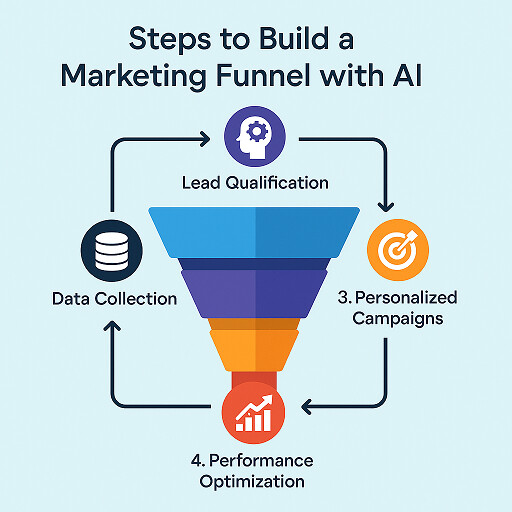
What is a Lead Generation Funnel?
A lead generation funnel is a structured process that guides potential customers from discovering your brand to making a purchase. It’s like a journey with multiple stages where prospects are gradually nurtured.
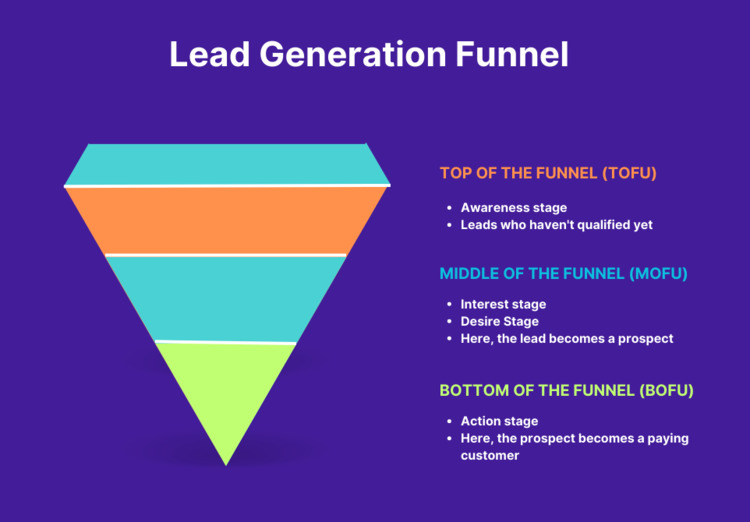
A lead generation funnel is a systematic framework designed to guide potential customers from their initial awareness of a brand to the point where they share their contact information. It acts as a filter, attracting a broad audience at the top and narrowing them down into qualified prospects through targeted content and engagement.
The process typically unfolds in three main stages:
- Top of Funnel (TOFU): Building awareness through SEO, social media, or ads to attract visitors.
- Middle of Funnel (MOFU): Educating and building trust with those visitors by offering valuable resources like e-books, webinars, or case studies.
- Bottom of Funnel (BOFU): Converting that interest into a “lead” by using a clear call-to-action (CTA) and a lead capture form.
Ultimately, a well-optimized funnel ensures that you aren’t just getting traffic, but capturing the right data to fuel your sales pipeline.
Why Funnels Are Essential for Modern Businesses?
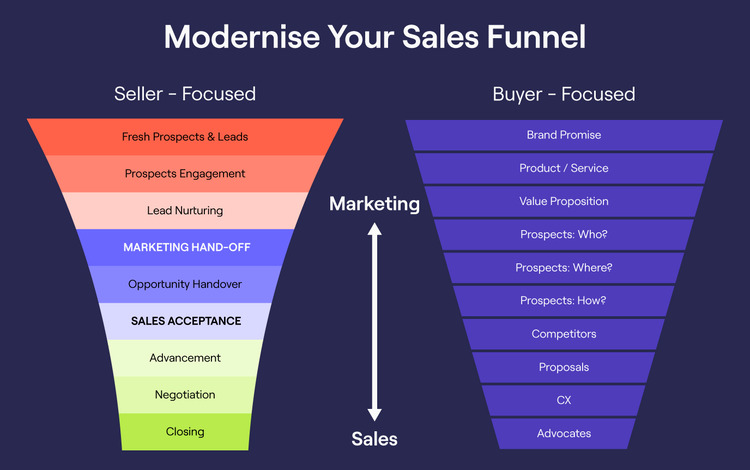
Modern businesses operate in a noisy digital landscape where consumers are often overwhelmed by choice. In this environment, a well-structured funnel is no longer a luxury, it’s the backbone of a sustainable growth strategy.
Here is why they are essential:
- Predictability and Scalability: Funnels turn marketing from a guessing game into a science. By understanding your conversion rates at each stage, you can accurately predict how much revenue a specific amount of traffic will generate, allowing you to scale your ad spend with confidence.
- Automated Nurturing: Not every visitor is ready to buy immediately. A funnel allows you to “warm up” cold prospects through automated email sequences and retargeting, ensuring your brand stays top-of-mind until they are ready to make a decision.
- Data-Driven Optimization: Without a funnel, it’s difficult to know why you aren’t getting sales. A funnel highlights exactly where people are “leaking” out, whether it’s a high bounce rate on a landing page or a drop-off at the checkout, so you can fix specific bottlenecks.
- Enhanced User Experience: By providing the right content at the right time (e.g., educational blogs for beginners and case studies for those ready to buy), you create a helpful, non-intrusive journey that builds genuine trust.
Key Benefits at a Glance
| Feature | Impact on Business |
| Efficiency | Stops you from wasting time on “unqualified” leads. |
| ROI | Maximizes the value of every dollar spent on traffic. |
| Consistency | Provides a steady stream of leads regardless of manual effort. |
Without a funnel, marketing becomes scattered and inefficient. Funnels help:
- Track customer behaviour
- Improve targeting
- Increase conversions
- Automate repetitive tasks
Understanding AI Automation in Marketing
In 2026, AI automation has shifted from being a “competitive edge” to the standard baseline for marketing operations. It represents a move away from rigid, rule-based systems (e.g., “if a user clicks X, send email Y”) toward learning-based systems that predict and adapt to human behaviour in real time.
Understanding this landscape involves looking at three core pillars:
The Shift to “Agentic” Marketing
Traditional automation follows a set script, but Agentic AI can plan and execute multi-step workflows autonomously.
- Execution vs. Judgment: Modern AI handles the “movement” (scheduling, data syncing, ad bidding) while humans focus on “meaning” (strategy, brand voice, and emotional resonance).
- Predictive Lead Scoring: Instead of just tracking clicks, AI now analyzes “online body language” to predict which prospects have an 80% or higher probability of converting, allowing sales teams to prioritize high-value targets instantly.
Hyper-Personalization at Scale
AI has moved beyond simply inserting a customer’s name into an email. In 2026, it enables context-aware experiences:
- Dynamic Websites: AI can reshape a website’s layout, imagery, and CTAs in real-time based on a visitor’s specific browsing history and current intent.
- Behavioural Triggers: Rather than broad “drip” campaigns, AI triggers specific messages based on micro-actions, such as a user lingering on a pricing page or engaging with a specific social media post.
Real-Time Optimization
The “set it and forget it” era of digital ads is over. AI now provides a continuous feedback loop:
- Smart Bidding & Allocation: Platforms like Google and Meta use AI to shift budgets instantly from underperforming ads to high-converting ones without human intervention.
- Creative Testing: AI platforms can run hundreds of simultaneous A/B tests on headlines and creatives, identifying winning combinations in hours rather than weeks.
AI Automation: Traditional vs. Modern (2026)
| Feature | Traditional Automation | AI-Driven Automation (2026) |
| Logic | “If-Then” Rules (Static) | Predictive & Probabilistic (Adaptive) |
| Content | Static templates | Generative & contextually unique |
| Decision Making | Manual review of weekly reports | Real-time adjustments via algorithms |
| Scaling | Requires more headcount to manage | Scales infinitely with current infrastructure |
Pro-Tip: The most successful teams in 2026 are those that automate execution but protect thinking time. Over-automating can lead to a “performance plateau” where content becomes consistent but loses its relevance to the audience.
Artificial Intelligence (AI) is revolutionizing how businesses handle marketing and lead generation.
What is AI Automation?
AI automation refers to using intelligent systems to perform tasks like:
- Data analysis
- Customer segmentation
- Content recommendations
- Lead scoring
Benefits of AI in Lead Generation
AI offers several advantages:
- Faster data processing
- Better customer insights
- Increased efficiency
- Higher ROI
Stages of a Lead Generation Funnel
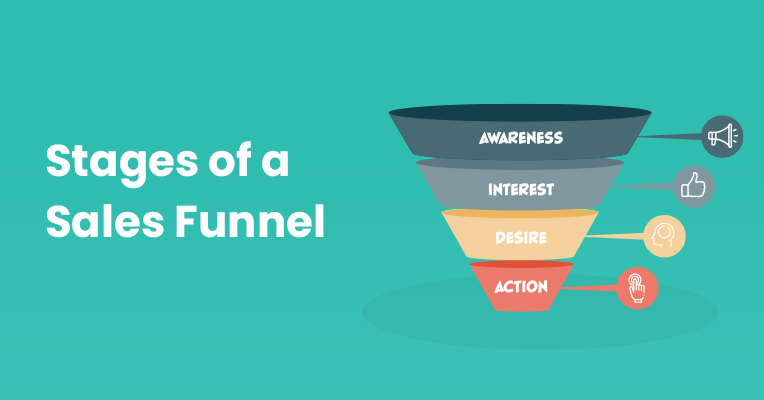
A lead generation funnel is typically categorized into three distinct stages, often referred to as TOFU, MOFU, and BOFU. Each stage serves a specific purpose in moving a stranger toward becoming a qualified lead.
Top of Funnel (TOFU): Awareness
The goal here is to attract as much relevant traffic as possible. At this stage, the audience is looking for answers, resources, or education—not necessarily a product.
- User Intent: “I have a problem or a question.”
- Key Activities:
- SEO & Blogging: Ranking for informative keywords to capture organic search.
- Social Media: Building brand visibility and engagement.
- Paid Ads: Targeted reach through Google or Meta to drive initial visits.
- The “Hook”: High-level educational content like “How-to” guides or industry trends.
Middle of Funnel (MOFU): Consideration
Once a visitor is on your site, the goal is to build trust and capture their information. This is where you transform an anonymous visitor into a “lead” by offering high-value solutions.
- User Intent: “I’m looking for the best way to solve my problem.”
- Key Activities:
- Lead Magnets: Offering e-books, checklists, or whitepapers in exchange for an email.
- Webinars: Providing deep-dive expertise to establish authority.
- Email Nurturing: Sending automated sequences that solve micro-problems for the user.
- The “Hook”: Specialized resources that prove your expertise and keep your brand top-of-mind.
Bottom of Funnel (BOFU): Conversion
At the bottom, the lead is ready to make a decision. Your job is to provide the final nudge that proves you are the right choice compared to competitors.
- User Intent: “Is this specific company/product right for me?”
- Key Activities:
- Case Studies: Showing real-world results and success stories.
- Product Demos/Consultations: Providing a direct taste of the service or product.
- Social Proof: Highlighting testimonials and reviews to reduce “buyer’s remorse” before it happens.
- The “Hook”: A strong, clear Call-to-Action (CTA) like “Get a Quote,” “Book a Free Audit,” or “Start Your Free Trial.”
Stage Comparison Table
| Stage | Goal | Content Type | Success Metric |
| TOFU | Awareness | Blogs, Social Posts, Ads | Traffic, Impressions |
| MOFU | Education | Lead Magnets, Webinars | Lead Volume, Opt-in Rate |
| BOFU | Conversion | Case Studies, Audits, Demos | Sales, Appointments |
Every effective funnel consists of four main stages.
Awareness Stage
This is where potential customers first discover your brand through:
- Social media
- Blogs
- Ads
Interest Stage
Here, users begin engaging with your content. They may:
- Subscribe to newsletters
- Download resources
- Follow your brand
Decision Stage
Leads evaluate your offering against competitors.
Action Stage
This is the final stage where leads convert into customers.
Role of AI in Each Lead Generation Funnel Stage
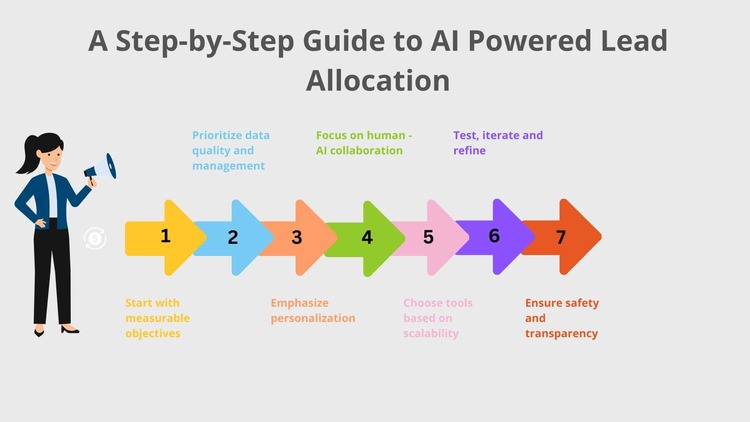
In 2026, the role of AI has shifted from being a simple assistant to becoming the operational engine of the marketing funnel. It no longer just helps you write faster; it predicts user intent, automates complex decision-making, and personalizes the journey for every individual visitor.
Here is the breakdown of AI’s specific role at each stage:
1. Awareness (TOFU): The Predictive Discovery Engine
At the top of the funnel, AI acts as a “talent scout,” finding the right audience before they even search for you.
Predictive Audience Modeling: Tools like Meta Advantage+ and Google Performance Max analyze millions of data points to find users whose behavior matches your ideal customer profile.
AI-Augmented SEO: Instead of just tracking keywords, AI tools (like Surfer SEO or MarketMuse) predict ranking difficulty and suggest “content clusters” to build topical authority in niche markets like solar energy or B2B tech.
Sentiment Analysis: AI monitors social conversations in real-time to identify emerging trends, allowing you to create “scroll-stopping” content that resonates with current public mood.
2. Consideration (MOFU): The Hyper-Personalization Layer
Once a visitor engages, AI takes over to nurture the relationship without manual intervention.
Agentic Chatbots: Modern AI agents (like Intercom Fin or Drift) don’t just follow scripts; they understand natural language to qualify leads, answer technical questions about your services, and book meetings.
Dynamic Content Injection: Platforms like Mutiny or Dynamic Yield change your website’s headlines, images, and CTAs in real-time based on the visitor’s industry or previous browsing behavior.
Predictive Lead Scoring: AI (via HubSpot Breeze or Salesforce Einstein) assigns a “propensity to buy” score to leads, ensuring you focus your energy only on prospects truly ready to move forward.
3. Conversion (BOFU): The Friction Remover
At the bottom of the funnel, AI’s role is to identify and eliminate any reason a lead might say “no.”
Autonomous A/B Testing: AI-driven CRO tools (like VWO or Optimizely) run hundreds of simultaneous variations of a landing page, automatically identifying and showing the highest-converting version to different user segments.
Intent-Based Retargeting: Instead of generic ads, AI triggers specific “nudge” messages, like a case study or a limited-time discount—based on the exact page a user abandoned (e.g., a pricing page vs. a service detail page).
Sales Intelligence: Tools like Gong or Chorus analyze sales calls to provide real-time suggestions to reps, helping them overcome objections and close deals faster.
4. Retention & Advocacy: The Loyalty Maximizer
The funnel doesn’t end at the sale; AI ensures the customer stays and refers others.
Churn Prediction: Machine learning models analyze usage patterns to flag customers who are likely to leave, allowing you to intervene with a proactive offer.
Predictive Upselling: AI identifies the “next best action” or product for a customer based on their history, increasing Lifetime Value (LTV) automatically.
AI Tool Stack Summary (2026)
| Stage | Goal | Top AI Tools |
| Awareness | Discovery | Google PMax, Meta Advantage+, Surfer SEO |
| Consideration | Nurturing | HubSpot Breeze, Jasper, Drift, ManyChat |
| Conversion | Closing | VWO, Optimizely, Gong, Mutiny |
| Retention | Loyalty | Klaviyo, Gainsight, Totango |
Pro-Tip: In 2026, the most successful funnels are “Full-Stack,” meaning the AI at the top (Ads) communicates directly with the AI at the bottom (CRM) to share data and optimize the entire journey as one ecosystem.
AI enhances every stage of the funnel.
AI in Awareness
AI helps in:
- Targeting the right audience
- Running optimized ads
- Predicting user behavior
AI in Engagement
AI tools can:
- Recommend content
- Personalize emails
- Use chatbots for interaction
AI in Conversion
AI boosts conversions by:
- Predicting purchase intent
- Offering personalized deals
- Automating follow-ups
Building an AI-Powered Funnel Strategy
Building an AI-powered funnel strategy means moving beyond static “if-this, then-that” automation and instead creating a system that learns from user behavior to optimize itself. In 2026, this is the standard for high-performance digital marketing.
Here is a step-by-step framework for building an intelligent funnel:
Phase 1: AI-Driven Awareness (TOFU)
At the top of the funnel, AI is used to identify and attract the highest-intent traffic without manual guesswork.
- Predictive Audience Modelling: Use AI to analyze your existing customer data and build “lookalike” audiences that are statistically more likely to convert.
- AI Content Generation (SEO): Rather than just writing blogs, use AI to analyze “search intent” gaps. This allows you to create highly relevant content for niche sectors, like solar energy or e-commerce that addresses specific pain points before your competitors do.
- Smart Bidding: Leverage automated bidding in Google and Meta Ads to focus your budget on users who exhibit “buying signals” rather than just high-volume traffic.
Phase 2: Dynamic Lead Capture (MOFU)
In the middle, AI ensures you aren’t showing the same message to everyone.
- Personalized Lead Magnets: Use “Agentic” AI to offer different resources based on the visitor’s source. (e.g., A visitor from a LinkedIn ad about solar ROI sees a “Solar Savings Calculator,” while a visitor from an e-commerce SEO blog sees a “Growth Audit Checklist”).
- Conversational AI (Chatbots): Deploy 24/7 AI agents that do more than answer FAQs. They should qualify leads in real-time by asking discovery questions and booking meetings directly into your calendar.
- Behavioural Triggers: Set up automation that triggers specific email sequences based on “micro-moments,” such as someone spending more than two minutes on a technical specification page.
Phase 3: Intelligent Conversion (BOFU)
The bottom of the funnel is where AI helps close the deal by removing friction.
- Lead Scoring 2.0: AI analyzes a lead’s interactions across your website and emails to assign a “propensity to buy” score. Your sales team (or your follow-up system) can then prioritize the “hottest” leads first.
- Dynamic Social Proof: Use AI to display the most relevant testimonials to a visitor. If the lead is from the solar industry, the website should automatically highlight solar-specific case studies.
- Automated Retargeting: Use AI to serve “reminder” ads that address the specific product or service the user viewed, rather than a generic brand ad.
Implementation Table: AI Funnel Framework
| Funnel Stage | AI Tool Category | Primary Goal |
| Awareness | Predictive Analytics | Reduce Cost Per Acquisition (CPA) |
| Consideration | Generative Content / Chatbots | Increase Lead Volume & Quality |
| Conversion | Lead Scoring / Dynamic Content | Shorten the Sales Cycle |
Strategic Note: The goal of an AI funnel is to provide a “Segment of One” experience. Every prospect should feel like the journey was designed specifically for their needs. Creating a successful Lead Generation Funnel Strategy with the help of AI Automation requires careful planning.
Defining Your Target Audience
Start by identifying:
- Demographics
- Interests
- Pain points
AI tools analyze large datasets to create accurate buyer personas.
Creating Smart Content
Content must be:
- Relevant
- Personalized
- Data-driven
AI can suggest topics and optimize content performance.
Automating Lead Capture
Use tools like:
- Landing pages
- Chatbots
- Forms
AI ensures real-time lead qualification.
Tools for AI Automation
Choosing the right tools is key to success.
CRM Automation Tools
These tools help manage leads efficiently by:
- Tracking interactions
- Scoring leads
- Automating workflows
Chatbots and Virtual Assistants
Chatbots:
- Engage visitors instantly
- Answer queries
- Capture leads
Email Marketing Automation
AI-powered email tools can:
- Segment audiences
- Personalize messages
- Optimize send times
Personalization Using AI
Personalization is the backbone of modern marketing.
Behavioral Tracking
AI tracks user actions like:
- Clicks
- Time spent
- Browsing patterns
Predictive Analytics
AI predicts:
- Future behavior
- Purchase likelihood
- Customer needs
Optimizing Funnel Performance
Optimizing a funnel is the process of identifying “leaks” where potential customers drop out and using data-driven adjustments to plug them. In 2026, optimization is no longer a monthly review; it’s a continuous, real-time cycle of testing and refinement.
Here is how to systematically optimize each layer of your funnel:
1. Identify the Bottlenecks (The “Leak” Test)
Before changing headlines or ad spend, you must find where the drop-off is most severe.
High Bounce Rate (TOFU): If people land on your page and leave immediately, your ad copy likely doesn’t match your landing page content, or your page load speed is too slow.
Low Opt-in Rate (MOFU): If traffic is high but leads are low, your “lead magnet” (e-book, webinar, etc.) isn’t valuable enough or your form has too many fields.
Low Appointment/Sale Rate (BOFU): If you have leads but no sales, your nurturing emails are failing to build trust, or your “Call to Action” is confusing.
2. Implementation of A/B Testing
Never guess what works; let the data tell you. In 2026, AI-driven testing allows you to run Multivariate Tests (testing multiple elements at once).
The Headline: Test “Save 30% on Solar” vs. “The Future of Energy for Your Home.”
The Offer: Compare a “Free Consultation” vs. a “15-Minute Rapid Audit.”
The Visuals: Test high-quality photography vs. custom illustrations or AI-generated graphics.
3. Personalization & Dynamic Funnels
A major optimization lever is ensuring the visitor feels “seen.”
Industry-Specific Paths: If a visitor comes from a solar-related search, every case study and testimonial they see on your site should be about solar.
Behavioral Triggers: If a user visits your pricing page three times but hasn’t converted, trigger an automated “limited-time discount” or a “Quick Question?” chatbot message.
4. Technical Optimization
Small technical wins often lead to the biggest ROI gains.
Core Web Vitals: Ensure your pages load in under 2 seconds. Every extra second of load time can decrease conversions by 7% to 10%.
Mobile-First Design: Since the majority of lead generation traffic in India and Australia now happens on mobile, your forms must be “thumb-friendly” and easy to navigate.
Funnel Optimization Checklist
| Metric to Track | Optimization Action | Target Goal |
| CTR (Click-Through Rate) | Refresh ad creatives and headlines. | > 2% (Industry dependent) |
| CVR (Conversion Rate) | Simplify landing page forms and CTAs. | 5% – 15% for Lead Magnets |
| CPL (Cost Per Lead) | Refine audience targeting and bidding. | Minimize while maintaining quality |
| LTV (Lifetime Value) | Upsell existing leads through email. | Maximize repeat business |
Pro-Tip: Focus on the Middle of the Funnel (MOFU) first. Often, a 1% increase in your lead capture rate is more profitable than a 20% increase in your total traffic.
Optimization ensures your funnel performs at its best.
A/B Testing with AI
AI can automatically test:
- Headlines
- CTAs
- Layouts
Conversion Rate Optimization
Improve conversions by:
- Reducing friction
- Improving UX
- Personalizing offers
Common Mistakes of Marketing Funnel to Avoid
Even in 2026, with all the AI and automation available, many businesses still struggle with the same fundamental errors. These mistakes often lead to “leaky” funnels where marketing spend is high, but actual revenue remains stagnant.
Here are the most common marketing funnel mistakes to avoid:
1. The “Single-Stage” Fallacy
Many businesses focus entirely on the Bottom of the Funnel (BOFU)—the “Buy Now” button—while ignoring the awareness and education stages.
The Mistake: Asking for a sale or a consultation on the very first visit before building any trust.
The Fix: Create a “Value-First” journey. Use blog posts or free tools (TOFU) to solve a small problem for the user before asking for their contact information or a purchase.
2. Poor “Message Match”
This occurs when there is a disconnect between your advertisement and your landing page.
The Mistake: An ad promises “The Best Solar ROI Calculator,” but the landing page is a generic “About Us” page.
The Fix: Ensure every ad leads to a dedicated landing page that delivers exactly what was promised in the headline. If the ad is about solar panels in Ahmedabad, the landing page should mention Ahmedabad specifically.
3. Over-Complicating the Lead Form
The more “friction” you create, the lower your conversion rate will be.
The Mistake: Asking for 10+ fields (Company size, annual revenue, job title) for a simple e-book download.
The Fix: Only ask for what is strictly necessary (e.g., Name and Email). Use Progressive Profiling (AI-driven forms that ask different questions over time) to gather more data as the relationship grows.
4. Ignoring the “Middle” (The Nurture Gap)
Capturing a lead is only half the battle. Many businesses fail to follow up effectively.
The Mistake: Letting a lead sit for days without a response or sending generic, “salesy” emails immediately.
The Fix: Implement an automated Email Nurture Sequence. Provide case studies, testimonials, and helpful tips over 5–7 days to keep your brand top-of-mind while the lead is in the consideration phase.
5. Tracking the Wrong Metrics (“Vanity” vs. “Value”)
Focusing on the wrong numbers can lead to poor strategic decisions.
The Mistake: Celebrating high website traffic (TOFU) while ignoring the fact that none of that traffic is converting into sales.
The Fix: Focus on Quality over Quantity. A funnel that brings in 100 high-intent leads is infinitely more valuable than one that brings in 10,000 “window shoppers.”
Mistake vs. Solution Summary
| Common Mistake | Immediate Solution |
| Leaking Traffic | Check page load speed and mobile responsiveness. |
| High CPL (Cost Per Lead) | Refine audience targeting to exclude “low-intent” users. |
| Low Appointment Rate | Add “Social Proof” (Reviews/Video Testimonials) to the BOFU page. |
| One-Size-Fits-All Content | Use AI to segment your email list by industry or interest. |
Pro-Tip: Don’t build a “linear” funnel. In 2026, customer journeys are “loops.” If someone drops out at the consideration stage, use Retargeting Ads to bring them back into the funnel at a different entry point.
Even the best strategies can fail if mistakes are made.
Over-Automation
Too much automation can make your brand feel robotic.
Ignoring Data Insights
Data is valuable, don’t ignore it. Use it to refine your strategy.
Future Trends in AI Lead Generation
In 2026, the transition from “automation” to “agency” is the defining shift in lead generation. We are moving away from tools that simply follow instructions toward AI systems that can plan, execute, and optimize entire workflows with minimal oversight.
Here are the four major trends shaping the future of AI lead generation:
1. The Rise of “Agentic” AI
Traditional automation follows a linear path (if A, then B). Agentic AI can reason and take autonomous action to reach a goal.
Autonomous Orchestration: AI agents can now manage a multi-step campaign, from identifying a high-value prospect on LinkedIn to drafting a personalized email and booking a meeting on your calendar, without you ever touching a dashboard.
Multi-Agent Teams: You can now deploy “teams” of specialized agents. For example, one agent focuses on Content Strategy, another on SEO Optimization, and a third on Lead Distribution, all communicating with each other to keep the funnel running 24/7.
2. Answer Engine Optimization (AEO)
As more users turn to AI assistants (like ChatGPT, Perplexity, or Google’s AI Overviews) for information, the goal of SEO is shifting from “ranking #1” to “being the cited answer.”
Entity-Rich Content: To be picked up by AI agents, content must be structured with clear schema markup and “machine-readable” signals.
Fact-Based Authority: AI search engines prioritize well-sourced, authoritative data. Being cited by an AI agent as a definitive source is becoming more valuable than a traditional backlink.
3. AI Voice Agents for Real-Time Qualification
The “Speed-to-Lead” gap is being closed by AI voice technology that is virtually indistinguishable from humans.
Sub-1-Second Latency: Modern voice agents (like AnveVoice or Aloware) can handle inbound or outbound calls with less than 700ms of latency, allowing for natural, fluid conversations.
24/7 Discovery: These agents can call a lead within seconds of a form submission, qualify them based on your specific criteria (budget, timeline, intent), and live-transfer “hot” leads directly to your sales team.
4. Hyper-Personalized “Segment of One”
Generic segmentation is dead. AI now enables “Hyper-Personalization” where the funnel adapts to every individual in real-time.
Dynamic Landing Pages: Using AI, your website can rewrite its own headlines and swap its case studies in milliseconds based on the visitor’s industry, past browsing history, and even their current local weather.
Predictive Lead Scoring 2.0: Instead of just looking at clicks, AI analyzes “digital body language”—such as how long someone pauses on a pricing table—to predict a conversion with over 90% accuracy before the user even submits a form.
Comparison: 2024 vs. 2026
| Feature | 2024 (Traditional) | 2026 (Future/Current) |
| Strategy | Broad Audience Segments | Segment of One (Individualized) |
| Interaction | Static Forms & Email Drips | Agentic Voice & Chatbot Agents |
| Search Goal | Ranking for Keywords | AEO (Being the AI’s Answer) |
| Effort | Manual Optimization | Autonomous Self-Correcting Funnels |
Pro-Tip: In 2027, the focus will shift toward Small Language Models (SLMs). These are highly specialized AI models trained on your specific business data (e.g., your past 50 successful solar projects) to provide more accurate and cost-effective lead generation than generic large models.
The future is exciting and full of innovation.
Hyper-Personalization
AI will deliver extremely personalized experiences.
Voice & Conversational AI
Voice assistants and chatbots will dominate customer interactions.
FAQs on Lead Generation Funnel Strategy
What is a Lead Generation Funnel Strategy with the help of AI Automation?
It is a structured approach that uses AI tools to attract, nurture, and convert leads automatically.
How does AI improve lead generation?
AI analyzes data, predicts behavior, and automates tasks, making lead generation faster and more effective.
What tools are used in AI automation?
Common tools include CRM systems, chatbots, and email marketing platforms.
Is AI automation expensive?
It depends on the tools, but many affordable options are available for small businesses.
Can AI replace human marketers?
No, AI supports marketers but cannot replace human creativity and strategy.
How do I start with AI lead generation?
Begin with simple tools like chatbots and email automation, then scale gradually.
Conclusion
A well-designed Lead Generation Funnel Strategy with the help of AI Automation can transform your business. It simplifies processes, enhances customer experience, and boosts conversions. By combining human creativity with AI efficiency, businesses can stay ahead in today’s competitive landscape.
The key is to start small, use the right tools, and continuously optimize your funnel using data insights. As AI continues to evolve, those who embrace it early will gain a significant competitive advantage.