
The Meta Ads New Algorithm and Creative Strategy for Small Businesses has completely transformed how advertising works on platforms like Facebook and Instagram. Gone are the days when advertisers could rely heavily on detailed audience targeting. Today, Meta’s system is driven by artificial intelligence, automation, and most importantly, creative performance.
Why Small Businesses Must Adapt Meta Ads Now?
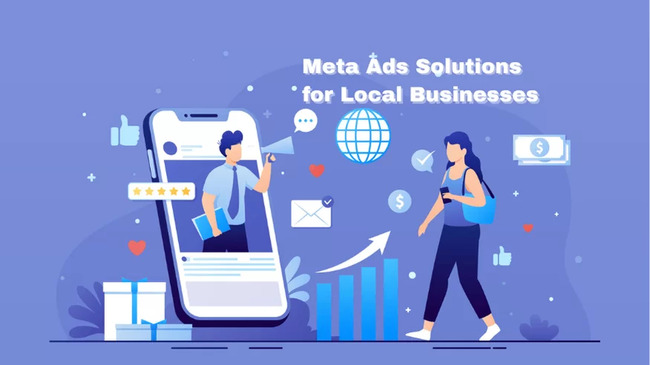
Small businesses can no longer compete by simply increasing budget. Instead, they must compete with better creative, faster testing, and smarter data signals. Meta has shifted its focus toward measurable outcomes like conversions and engagement, making it easier for small businesses to scale, if they follow the right strategy.
Adapting to Meta Ads in 2026 is no longer about “joining the conversation”, it is about survival in an environment where AI-driven automation and first-party data have completely redefined the competitive landscape.
For small businesses, the window to gain a low-cost advantage is closing as the platform shifts toward a “black-box” model where those with the best data and creative assets win.
-
The Era of “Hands-Off” AI Efficiency
By 2026, Meta has integrated Advantage+ AI Suite so deeply that it handles 90% of budget adjustments and audience targeting.
- Why now? Small businesses can now compete with large agencies because the “technical” barrier is gone. You no longer need to be a targeting expert; you need to be a creative strategist.
- The Benefit: Setup time has been reduced by nearly 60%, allowing owners to launch high-performing campaigns using only a product URL and basic brand inputs.
-
Creative is the New Targeting
With the near-extinction of third-party tracking (post-iOS 14.5 and subsequent privacy updates), manual interest layering is less effective.
- The Shift: Meta’s algorithm now uses your ad creative (video, reels, or images) to find your audience. The AI analyzes who “stops the scroll” and builds your target profile based on real-time behavior.
- The Urgency: Businesses failing to adopt short-form video and authentic, “native-feeling” content are seeing their reach plummet while competitors using AI-assisted creative tools are scaling faster.
-
Lowering the Entry Barrier with “Ad-to-Chat”
The integration of WhatsApp and Messenger into the core ad funnel has revolutionized small business ROI in 2026.
- Frictionless Conversion: Customers can now check prices, verify availability, and complete a purchase through Meta Business AI without ever leaving the app.
- 24/7 Sales: Small teams can use AI agents to handle 80% of customer queries, ensuring no lead is lost due to response delays.
-
Competitive Cost Dynamics in India
For local markets, the cost-effectiveness remains high, but volatility is increasing.
- Benchmarks: In 2026, average CPMs in India range from ₹80 to ₹350. However, during peak festival seasons (Q3–Q4), costs can spike by 40–80%.
- The Strategy: Adapting now allows businesses to season their Conversion API (CAPI) and pixel data during lower-cost periods, ensuring the algorithm is fully optimized before expensive high-traffic seasons.
Summary Table: Why Adapt Now?
| Feature | Old Strategy (Pre-2025) | New Reality (2026) |
| Targeting | Manual Interest & Demographics | AI-driven “Broad” targeting via Creatives |
| Setup | Complex dashboards & A/B testing | Advantage+ Automated campaigns |
| Tracking | Browser-based Pixels | Conversions API (CAPI) & First-party data |
| Sales Funnel | Website Clicks & Landing Pages | Ad-to-Chat (WhatsApp/Messenger) |
Pro Tip: Small businesses should prioritize CAPI (Server-side tracking) immediately. Without it, you are losing 15–35% of your conversion data to privacy filters, which directly handicaps Meta’s ability to optimize your ads.
The Shift from Targeting to Creative
Previously, success depended on precise targeting. Now, Meta’s AI finds the right audience automatically. What matters most is:
- The quality of your ad creative
- The engagement it generates
- The conversion signals you provide
Understanding Meta Ads New Algorithm
Meta’s new advertising algorithm is designed to simplify and automate how ads are delivered, using advanced AI and machine learning. Instead of relying heavily on manual inputs like detailed audience targeting and constant adjustments, the system now focuses on performance data and user behavior to decide who should see your ads.
At its core, the algorithm analyzes how people interact with your content, such as clicks, watch time, shares, and conversions. Based on this data, it quickly learns what’s working and automatically shows your ads to users who are more likely to engage or take action. This means the system improves over time without needing constant manual optimization.
One of the biggest changes is the shift from “targeting-first” to “creative-first.” Earlier, advertisers spent a lot of time narrowing down audiences. Now, Meta encourages broader targeting and lets the algorithm find the right people. Your ad creative, especially videos, messaging, and visuals—plays a much bigger role in performance.
The algorithm also supports automation tools like Advantage+, which handle campaign setup, audience selection, placements, and budget distribution. This reduces guesswork and allows even small businesses to run effective campaigns without deep technical expertise.
In simple terms, the new Meta Ads algorithm works like a smart assistant. You provide strong, engaging content and clear goals, and it takes care of finding the right audience and optimizing results. The better your creative connects with people, the better the algorithm performs.
AI-Driven Ad Delivery System
Meta’s algorithm is now powered by machine learning systems that analyze user behaviour in real time. These systems predict:
- Who is most likely to click
- Who is most likely to convert
- Which creative performs best
This shift means advertisers don’t control targeting as much, the algorithm does.
Role of Advantage+ Automation
Advantage+ campaigns automate:
- Audience selection
- Budget allocation
- Creative combinations
This automation allows small businesses to compete with larger brands without needing a big team.
Incremental Attribution & Data Signals in Meta Ads
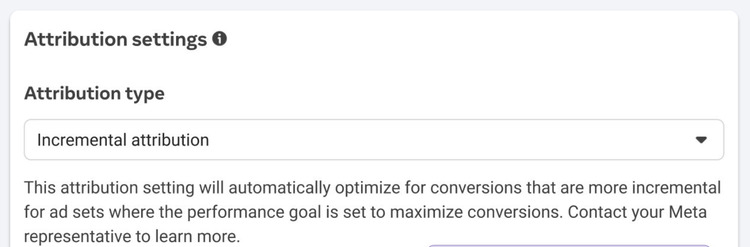
Incremental attribution in Meta Ads is about understanding what impact your ads actually had, beyond just clicks and conversions. Instead of assuming every sale came from your campaign, it helps you measure how many results were truly driven by your ads on platforms like Meta Platforms, including Facebook and Instagram.
At the same time, data signals like website activity, customer interactions, and conversion events, help Meta’s algorithm understand who is most likely to take action. The better your data signals, the smarter your targeting and optimization become.
In simple terms, it’s about cutting through the noise: knowing what’s truly working and feeding the system the right data so your ads perform better over time.
Meta now focuses on incremental attribution, meaning it measures the real impact of ads instead of just last-click conversions.
Opportunity Score & Predictive Optimization in Meta Ads
Meta’s “Opportunity Score” helps advertisers identify campaign weaknesses early and optimize them using AI predictions. Opportunity Score and Predictive Optimization in Meta Ads are designed to make your campaigns smarter and more efficient without constant manual effort.
Opportunity Score is a feature that shows how well your campaign is set up based on Meta Platforms best practices. It gives you a score and highlights what you can improve, like audience targeting, creatives, or budget allocation, so you can unlock better performance with simple adjustments on platforms like Facebook and Instagram.
Predictive Optimization goes a step further. It uses AI to analyze past performance, user behaviour, and real-time data signals to predict which users are more likely to convert. Based on this, Meta automatically adjusts your ad delivery, showing your ads to the people most likely to take action.
In simple terms, Opportunity Score tells you what to fix, and Predictive Optimization helps fix it automatically. Together, they help you get better results with less guesswork and more data-driven decisions.
Key Algorithm Changes in Meta Ads which Affecting Small Businesses
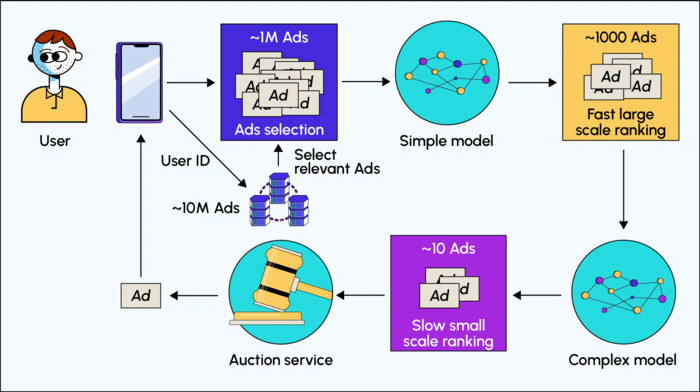
The Meta Ads algorithm has gone through major changes in recent years, and these shifts are directly impacting how small businesses get results on platforms like Meta Platforms, including Facebook and Instagram. Here’s a clear, humanized breakdown of the key changes and what they mean:
-
AI-First Algorithm (Less Control, More Automation)
Meta has moved heavily toward AI-driven ad delivery. Instead of advertisers manually choosing audiences and placements, the algorithm now decides most of it automatically.
Impact on small businesses: You spend less time managing campaigns, but you must rely more on good creatives and data, not manual targeting tricks.
-
Creative Is Now the Main Targeting Tool
Earlier, targeting was based on interests and demographics. Now, Meta’s algorithm reads your ad creative (text, video, visuals) to decide who should see it.
Impact: Even with a small budget, strong content can outperform complex targeting. Poor creatives, however, fail faster than before.
-
Shift to Outcome-Based Optimization
Meta has shifted from optimizing for clicks or traffic to focusing on real outcomes like conversions or purchases.
Impact: If your campaign isn’t set for conversions, performance may drop. Small businesses need clear goals and proper tracking.
-
Higher Importance of Data Signals
The algorithm now depends heavily on conversion data (like purchases or leads) to optimize campaigns effectively.
Impact: Small businesses with low data volume may struggle initially. Consistent tracking and enough events are crucial to scale.
-
Rise of AI-Generated & Dynamic Creatives
Meta now automatically creates multiple variations of your ads (different headlines, visuals, formats) using AI.
Impact: You don’t need a big creative team, but you do need clear messaging and multiple content ideas to feed the system.
-
Reduced Effectiveness of Detailed Targeting
Interest-based targeting is becoming less powerful, with broader audiences often performing better under AI optimization.
Impact: Small businesses no longer need to overcomplicate targeting. Simpler audience setups often work better.
-
Increased Competition & Rising Costs
With smarter algorithms, high-intent users are more competitive and expensive to reach. CPMs have increased in many cases.
Impact: Budget efficiency matters more. Poor campaigns waste money faster, while optimized ones scale better.
-
Content Format Shift (Short-Form Video Dominance)
Meta now prioritizes engaging formats like Reels and short-form videos over static or link-based ads.
Impact: Small businesses must adapt to video-first content to stay competitive.
For small businesses, the biggest change is this: Meta Ads is no longer about “hacking the system”, it’s about feeding the system. If you provide strong creatives, clear goals, and good data, the algorithm works in your favor. If not, even a high budget won’t save your campaigns.
Broad Targeting vs Detailed Targeting
Broad targeting is now preferred. Why? Because Meta’s AI performs better when it has more data. Over-restricting audiences limits performance.
Creative-Centric Optimization
Meta rewards:
- High engagement
- Authentic storytelling
- Consistent user interaction
In fact, authentic content often outperforms polished ads.
Engagement-Based Ranking Signals
The algorithm prioritizes ads that:
- Get clicks quickly
- Generate comments and shares
- Keep users engaged
Learning Phase & Creative Fatigue
Ads don’t “stop working”, they exhaust their audience. Winning ads often decline because they reach the same audience repeatedly.
Creative Strategy Framework for Meta Ads
In 2026, Creative is the Targeting. Because Meta’s “Andromeda” algorithm now handles audience discovery automatically, your creative assets are the only levers you have left to signal to the AI who your customer is.
A modern Meta Creative Strategy Framework is built on Diversity, Predictive Design, and Algorithmic Feedback.
-
The “Andromeda” Creative Framework
Instead of testing small tweaks (like button colors), you must test radically different Creative Archetypes. Meta recommends feeding the system 5–10 distinct “angles” to let the AI find the optimal audience match.
The 4 Essential Creative Archetypes
| Archetype | Format | Goal |
| The Problem/Solution | Lo-fi / UGC | Directly addresses a pain point in the first 1.5s. |
| The “Edutainment” | Tutorial / Listicle | Provides value or a “how-to” while featuring the product. |
| The Aesthetic Static | High-Quality Image | Clear, simple product shot with a bold text overlay. |
| The Social Proof | Testimonial / Mashup | Multiple customers sharing “raw” feedback to build trust. |
-
Predictive Creative (Design as Targeting)
Predictive creative uses visual cues to “repel” the wrong audience and “attract” the right one.
- Visual Filters: If you sell B2B software, use “boring” corporate aesthetics (spreadsheets, dashboards). A teenager will scroll past (negative signal), while a CFO will linger (positive signal).
- The 1.5-Second Hook: In 2026, the “3-second hook” is too slow. You must use high-contrast text overlays or motion within the first 1.5 seconds to capture attention before the “scroll-past” occurs.
- Accessibility First: 85% of users watch without sound. Captions are no longer optional—they must be “burnt-in” or stylized to be part of the creative design.
-
The “Creative-In, Data-Out” Workflow
Successful accounts in 2026 operate on a weekly cycle of Iterative Testing.
- Input: Launch 3–5 unique “Concept Tests” in a broad Advantage+ Shopping Campaign (ASC).
- Wait: Let them run for 7 days or until they reach 50 optimization events.
- Analyze (CPMr): Look at CPM-reach (CPMr). If CPMr is rising, your creative is fatiguing. If it’s low (<₹200-300 in many Indian niches), your creative is successfully “unlocking” new audience pockets.
- Iterate: Take the “winning” hook from a video and turn it into a static image. Take the “winning” copy from a static image and turn it into a Reel script.
-
Technical Guardrails for 2026
To maximize Meta’s AI, your creative must follow these technical standards:
- 9:16 Vertical Dominance: Over 90% of Meta’s inventory is now vertical. Build for Reels and Stories first, then let the AI crop for Feed.
- Safe Zones: Keep all text and logos in the center 60% of the frame to avoid being covered by UI elements (like the “Shop Now” button or profile icon).
- AI Disclosure: Since March 2026, any creative using Generative AI (background swaps, AI models) must be tagged in Ads Manager to avoid account flagging.
Hook, Story, Offer Model
Every successful ad follows this structure:
- Hook – Grab attention in the first 3 seconds
- Story – Build emotional connection
- Offer – Present clear value
UGC vs Studio Content
User-generated content (UGC) is dominating:
- Feels authentic
- Builds trust
- Drives engagement
Multi-Format Creative Testing
Meta prioritizes formats differently. For example: Dynamic catalogs and video formats often get more budget allocation than static images.
Creative Volume Strategy
Top advertisers launch:
- 5–10 creatives per week
- Refresh every 2–4 weeks
Technical Setup for High-Performance Meta Ads Campaigns
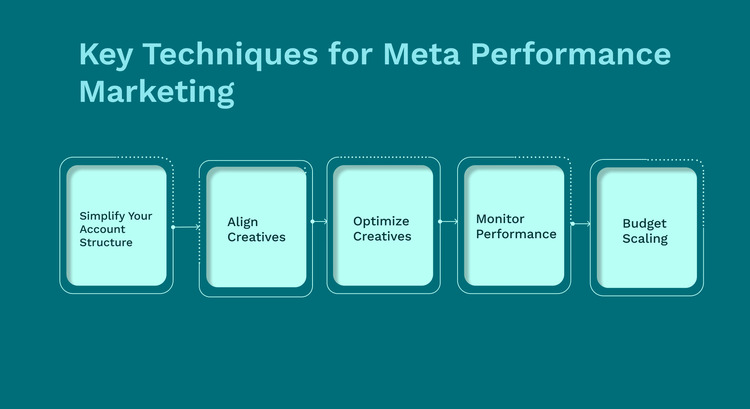
Running high-performing Meta Ads today is less about complex hacks and more about setting a strong technical foundation that allows the algorithm to learn and optimize effectively. If your backend setup is clean and structured, your campaigns will perform better with less manual effort.
The first step is proper tracking. Make sure the Meta Pixel is correctly installed on your website and is firing all key events like Page View, View Content, Add to Cart, and Purchase. Alongside this, integrating the Conversions API (CAPI) is highly recommended. It helps send data directly from your server to Meta, improving tracking accuracy, especially in a privacy-first environment where browser tracking is limited.
Next comes event prioritization. With aggregated event measurement, you should prioritize the most important conversion actions for your business. For example, if your goal is sales, “Purchase” should be at the top, followed by actions like “Add to Cart” or “Initiate Checkout.” This helps the algorithm understand what matters most and optimize accordingly.
Campaign structure also plays a crucial role. Instead of creating too many ad sets with narrow targeting, it’s better to keep things simplified. Use fewer campaigns, broader audiences, and allow the algorithm to learn faster. Over-segmentation can restrict performance and slow down optimization.
Budget allocation should be consistent and strategic. Avoid making frequent changes, as this can reset the learning phase. Whether you use Campaign Budget Optimization (CBO) or Advantage+ campaigns, the idea is to give Meta enough data and stability to find the best results.
Creative testing is another key technical element. Run multiple variations of ads within the same ad set, different hooks, visuals, and formats. This allows the algorithm to quickly identify top performers and scale them. Refresh creatives regularly to avoid ad fatigue and maintain engagement.
Lastly, ensure your landing page experience is optimized. Fast loading speed, mobile responsiveness, and clear messaging are essential. Even the best ad won’t convert if the landing page creates friction.
In simple terms, a high-performance Meta Ads setup is about combining accurate tracking, simplified structure, consistent budgets, and strong creatives. When everything is aligned, the algorithm can do its job efficiently and deliver better results over time.
Conversion API & Tracking Signals
Accurate data is critical. Use:
- Meta Pixel
- Conversion API
Better data = better optimization.
Campaign Structure Simplification
Modern structure:
- 1–2 campaigns
- Broad targeting
- Multiple creatives
Complex funnels are outdated.
Budget Allocation with AI
Let Meta decide where to spend budget. Manual control often reduces performance.
Case Studies: Real Results with Meta Ads
Case Study 1: Coaching Business in India
A coaching business invested ₹4,03,686 and achieved:
- 8,085 leads
- ₹50 cost per lead
- 10 million impressions
This proves Meta Ads can be highly cost-effective for small businesses.
Case Study 2: Creative Optimization Boosting ROAS
A brand improved results dramatically by changing creatives:
- 122% increase in ROAS
- 341% increase in lower-funnel ROAS
Key takeaway: Creative matters more than targeting.
Advanced Creative Testing Methods
A/B Testing vs AI Testing
Traditional A/B testing is slow.
AI testing:
- Tests multiple variables simultaneously
- Optimizes in real time
Creative Iteration Cycles
Winning brands:
- Analyze performance weekly
- Replace underperforming creatives quickly
Common Mistakes Small Businesses Make in Meta Ads
Over-Targeting Audience
Too many filters = poor performance.
Ignoring Creative Refresh
Failing to update creatives leads to:
- Ad fatigue
- Declining ROI
Future Trends in Meta Advertising
AI-Generated Ads
Meta is moving toward fully automated ad creation using AI tools.
Interactive & In-App Commerce
Users can now:
- Engage with ads
- Purchase without leaving the platform
FAQs on Meta Ads New Algorithm and Creative Strategy for Small Businesses
-
What is the Meta Ads New Algorithm and Creative Strategy for Small Businesses?
The new Meta Ads algorithm is heavily driven by artificial intelligence, and it has completely shifted how ads perform. Instead of relying on detailed manual targeting, the system now focuses more on how engaging and relevant your creative is.
In simple terms, your ad content, your visuals, videos, and messaging, plays a bigger role than ever before. For small businesses, this is actually a big opportunity. Even with a limited budget, a well-crafted, relatable ad can outperform larger competitors if it connects well with the audience.
-
Is targeting still important in Meta Ads?
Yes, targeting still matters, but it’s no longer the main driver of success. Meta’s AI has become smart enough to find the right audience even if you start with broader targeting.
Instead of narrowing down too much, businesses are now encouraged to give the algorithm more flexibility. This allows it to learn faster and deliver better results over time. So, while you should still define your ideal customer, over-restricting your audience can actually limit performance.
-
How often should I refresh ad creatives?
Refreshing your creatives every 2–4 weeks is a good rule of thumb. Over time, your audience gets used to seeing the same ads, which leads to “ad fatigue” and lower engagement.
By updating visuals, headlines, or formats regularly, you keep your campaigns fresh and maintain performance. Even small changes, like a new hook or a different video angle can make a noticeable difference.
-
What type of creatives perform best?
Today, authenticity wins. Ads that feel natural, relatable, and less “salesy” tend to perform much better. User-generated content (UGC), short-form videos, behind-the-scenes clips, and storytelling formats are especially effective.
People trust content that looks real and human rather than overly polished ads. If your creative feels like something they’d see from a friend or influencer, it’s more likely to grab attention and drive action.
-
Can small businesses compete with big brands?
Absolutely, and in many cases, small businesses have an advantage. Big brands often rely on large budgets, but small businesses can move faster, test more ideas, and create more personal content.
With the current algorithm favoring creativity over spend, a smart and engaging ad can easily outperform a high-budget campaign. Consistent testing, understanding your audience, and focusing on genuine messaging can help you compete effectively.
-
What is Advantage+ in Meta Ads?
Advantage+ is Meta’s AI-powered solution that simplifies campaign management. It automates key elements like audience targeting, ad placements, creative combinations, and even budget distribution.
This means you don’t have to manually adjust every setting. Instead, the system learns from data and continuously optimizes performance. For small businesses, it saves time, reduces guesswork, and often delivers better results by leveraging Meta’s advanced machine learning capabilities.
Conclusion
The Meta Ads New Algorithm and Creative Strategy for Small Businesses is no longer about hacking the system, it’s about working with it. AI handles targeting and optimization, but creative remains your biggest competitive advantage.
Small businesses that:
- Focus on creative quality
- Test consistently
- Use AI tools effectively
…will not only survive but thrive in this new advertising landscape.
The evolution of Meta Ads is clearly moving toward a more automated, creative-first ecosystem where success is no longer just about how well you target, but how well you connect.
For small businesses, this shift is not a limitation, it’s a powerful opportunity. With the new AI-driven algorithm handling much of the optimization, brands can focus more on what truly matters: creating authentic, engaging, and relatable content that resonates with their audience.
Instead of competing purely on budget, small businesses can now compete on ideas, storytelling, and consistency. By embracing broad targeting, leveraging tools like Advantage+, and regularly refreshing creatives, even smaller brands can achieve impressive results. The key lies in testing, learning, and adapting quickly.
In the end, Meta Ads in this new era reward businesses that understand their customers and communicate with them in a genuine way. Those who prioritize creativity, stay flexible, and trust the algorithm will be the ones who not only survive but thrive in this evolving digital landscape.