


Your digital marketing engine is regularly running, but is it running efficiently? Over time, campaigns can go stale, new platforms emerge, and performance can slip without anyone noticing until it hits the bottom line.
A full digital marketing audit is your chance to hit the pause button, take a deep, objective look at everything you’re doing online, and create an actionable roadmap for exponential growth.
It’s not just about finding flaws; it’s about discovering hidden prospects. Here is your step-by-step guide to conducting an all-inclusive digital marketing audit.
Steps for Conducting a Full Digital Marketing Audit
Step 1: Define Your Goals and Scope (The “Why”)
Before diving into data, you must know what achievement looks like for this audit. Auditing everything without an emphasis is a recipe for analysis paralysis.
- Set Clear Objectives: What is the chief goal of this audit?
- Example Goals: Progress organic lead generation by 25%, reduce paid advertising CPA by 8%, or increase email engagement rate.
- Establish Key Performance Indicators (KPIs): Outline the precise metrics you will use to measure achievement against your objectives.
- Example KPIs: Organic traffic, conversion rate, Cost Per Acquisition (CPA), email open rate, or social media engagement rate.
- Gather Access & Resources: Ensure you have login credentials for all tools and platforms: Google Analytics (GA4), Google Search Console, Social Media accounts, CRM, Email Service Provider, and all ad platforms.
Step 2: Website & Technical Audit (The Foundation)
Your website is the center of all your digital marketing efforts. If the groundwork is weak, every campaign you run will underperform.
- Technical Health Checklist
| Area to Check | Why It Matters | Actionable Insight |
|---|---|---|
| Site Speed | Affects user experience and search rankings. | Use tools like Google PageSpeed Insights. |
| Mobile-Friendliness | Most traffic is mobile; non-responsive sites lose traffic/sales. | Use Google’s Mobile-Friendly Test. |
| HTTPS/Security | Essential for trust and SEO ranking. | Ensure you have an active SSL certificate. |
| URL Structure | Should be simple, logical, and easy for search engines to crawl. | Check for unnecessary parameters or deep nesting. |
| Crawl Errors | Pages that search engines can’t access or index. | Review “Indexing” reports in Google Search Console. |
- User Experience (UX) & Conversion
| Area to Check | Why It Matters | Actionable Insight |
|---|---|---|
| Navigation | Visitors need to find information instantly. | Is your main menu simple, logical, and consistent across all pages? |
| Call-to-Action (CTAs) | Directs users to the next step (the conversion). | Are CTAs clear, prominent, and compelling on high-traffic pages? |
| Conversion Funnel | Where are users dropping off before converting? | Analyze goal flow reports in Google Analytics to find friction points. |
| Forms/Checkout | Any unnecessary steps or technical issues kill conversions. | Test all forms and checkout processes on multiple devices. |
Step 3: Search Engine Optimization (SEO) Audit (Organic Growth)
SEO is the engine for long-term, supportable traffic. This segment discovers your organic visibility.
On-Page SEO
- Keyword Performance: Figure out which keywords are driving traffic, which are disappointing, and discover new, high-potential opportunities.
- Content Quality: Review your top 10-20 landing pages/blog posts. Is the content up-to-date, all-inclusive, and truthfully answering the user’s search intent?
- Metadata: Check title tags and meta descriptions for precision, keyword inclusion, and compelling language to increase click-through rates (CTR).
- Internal Linking: Does high-authority content link to your key conversion pages to pass link equity?
Off-Page SEO
- Backlink Profile: Use a third-party tool (like Ahrefs or SEMrush) to analyze the quantity and quality of sites linking to you. Are you getting links from authoritative, relevant sources?
- Local SEO: If appropriate, confirm your Google Business Profile (GBP) is entirely optimized, consistent with your website information, and has fascinating positive reviews.
Step 4: Content Marketing Audit (Audience Value)
Content fuels all other digital channels. This audit emphasizes on efficiency and alignment.
- Content Inventory: List all noteworthy content pieces (blogs, videos, case studies, guides). Map each piece to a phase in the customer journey (Awareness, Consideration, Conversion).
- Performance Metrics: For your top content, analyze time on page, bounce rate, and social shares. Which topics resonate the most?
- Gaps & Overlap: Classify subjects you should be covering but aren’t (gaps), and content assets that cover similar topics redundantly (overlap).
- Brand Voice Consistency: Does the tone, style, and messaging persist reliably across the website, blog, and social channels?
Step 5: Paid Media (PPC/Display/Social Ads) Audit (Ad Spend Efficiency)
Paid advertising entails ruthless competence. The goal is to maximize ROI.
- Budget Allocation: Are you over-investing in channels with deprived ROI? Reallocate budget toward the highest-performing campaigns.
- Targeting & Audience: Are your ad groups too broad or too precise? Is your audience segmentation correct and up-to-date? Review demographics, interests, and past customer behavior.
- Ad Creative & Copy: Analyze the CTR and significance score for your top ads. Are the headlines, visuals, and CTAs compelling? Do they align flawlessly with the landing page message?
- Landing Page Alignment: Do users land on a page that straight addresses the potential of the ad? High ad performance with low landing page conversion is a waste of money.
- Negative Keywords (PPC): For search campaigns, confirm you’re filtering out inappropriate searches that are wasting your ad spend.
Step 6: Social Media & Email Marketing Audit (Engagement & Nurture)
These social channels are critical for building relationships and customer loyalty.
Social Media
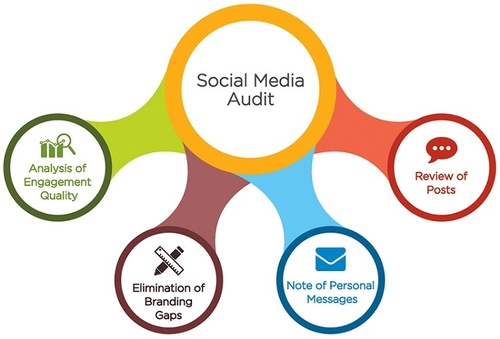
- Channel Effectiveness: Classify which platforms (Facebook, LinkedIn, Instagram, TikTok, etc.) carry the best engagement and traffic. Don’t waste energy on platforms that don’t influence your audience.
- Engagement Rate: Calculate the average engagement rate per post. Which content types (video, image, text) perform best?
- Audience Demographics: Does the audience on your social channels match your perfect customer profile?
- List Health: Analyse unsubscribe rates and bounce rates. Do you have a procedure for cleaning and segmenting your list?
- Key Metrics: Review Open Rates and Click-Through Rates (CTR) for diverse types of emails (newsletters vs. promotional vs. transactional).
- Automation/Flows: Are you utilizing automated email arrangements (welcome series, abandoned cart, re-engagement)? Are they performing as predictable?
Step 7: Competitive & Landscape Analysis
Your digital performance isn’t in an emptiness, it’s comparative to your competitors.
- Identify Top Competitors: List 3-5 main competitors in your digital space.
- Benchmark Visibility: Compare your website traffic, keyword rankings, and backlink profile against theirs.
- Analyze Their Strategy: What kind of contents are they creating? Which keywords are they dominating for? What types of ads are they running and on which platform? This discloses your opportunity gaps.
Step 8: Collect Insights and Create an Action Plan (The “What Now”)
Lastly, gather your findings into a clear, structured report. Your audit should accomplish with:
- A summary of strengths and weaknesses.
- Key insights from each channel.
- Recommendations for improvement.
- A prioritized action plan with timelines and responsibilities.
The audit is hopeless without a clear plan.
- Prioritize Findings: Group all findings into High, Medium, and Low Impact areas. Start with the uppermost impact items that necessitate the lowest effort (quick wins).
- Develop Recommendations: For each finding, create a detailed, measurable recommendation.
- Example Finding: High bounce rate on Blog Post X.
- Example Recommendation: Update the internal links on Blog Post X and add a new, more relevant CTA to advance the conversion path.
- Assign Ownership & Deadlines: Allocate a team member to each endorsement and set a firm deadline.
- Implement & Measure: Achieve the plan and, meaningly, track the new KPIs you established in Step 1 to measure the outcome of your changes.
Conclusion: The Never-Ending Process
A full digital marketing audit is not a one-time activity; it’s a significant part of continuous improvement. By conducting a thorough audit every 6-12 months, you settle your strategy stays nimble, your budget is optimized, and your digital engine is always running at its uppermost performance.
By following this step-by-step procedure, you’ll discover valuable insights, fix weaknesses, and identify new opportunities for growth. Stop operating on assumptions, start acting on data. When performed correctly, a digital marketing audit authorizes your business to make data-driven conclusions and maximize ROI across all channels.