
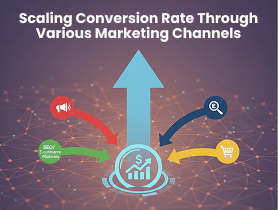
Understanding the Importance of Scaling Conversion Rate in Online Marketing
Scaling conversion rate through various methods on various marketing channels is one of the most impactful growth strategies any business can adopt. Conversions aren’t only about making a sale, they signify micro commitments across a customer’s journey. When these micro commitments are reinforced, overall profitability increases.
In today’s digital ecosystem, brands operate across numerous marketing channels: social media, email, paid ads, SEO, and more. Each touchpoint is an opportunity to turn a visitor into a buyer.
When your conversion rate scales upward across all these channels, revenue skyrockets without needing huge increases in traffic or ad spend.
What Conversion Scaling Really Means?
Conversion scaling isn’t just about increasing numbers; it’s about cultivating efficiency. When you scale conversion rates, you’re optimizing how efficiently your marketing channels persuade visitors to act. This might be buying a product, downloading a resource, or signing up for a newsletter.
Why Brands Need Higher Conversions to Grow Profitably?
Increasing traffic alone doesn’t guarantee more revenue. But when your conversion rate improves even slightly, profits grow exponentially. It’s the most cost-effective growth lever and one of the toughest performance multipliers a business can use.

Key Principles Behind an Effective Conversion Rate Optimization Strategy
An effective Conversion Rate Optimization (CRO) strategy is basically customer-centric, focusing on understanding user behaviour, pain points, and motivations through research and data analysis.
Key principles include implementing a difficult, ongoing A/B testing framework to validate hypotheses and make data-driven decisions, rather than relying on guesswork.
Importantly, the strategy must prioritize user experience (UX) by ensuring clear and compelling Calls to Action (CTAs), streamlining the conversion funnel, optimizing page load speed, and building trust with social proof and clear communication.
To scale conversion rate through various methods on various marketing channels, you must comprehend what drives user behaviour. The best strategies emphasise the customer, backed by meaningful data.
Data-Driven Decision Making
Data reveals what works and what doesn’t. Using analytics tools helps you classify bottlenecks, high-performing content, and areas for enhancement. A solid optimization strategy starts with data and endures with ongoing experimentation.
User-Centric Design and Messaging
Customers convert when messaging resonates. Clear value propositions, modest page layouts, strong calls to action, and convincing storytelling all play vigorous roles. Each channel must preserve the brand voice while adapting to user expectations.
Scaling Conversion Rate Through Multichannel Optimization
Scaling conversion rates through multichannel optimization emphases on creating a unified and cohesive customer journey across every touchpoint, from social media to email to your website.
This approach leverages diverse data from each platform to recognize customer behaviour and preferences, allowing for dynamic personalization and tailored content.
Scaling Conversion Rate Through Various Methods on Different Marketing Channels
By confirming steady messaging and brand experience across all channels, businesses can build trust, reduce friction, and efficiently guide prospects toward conversion, often resulting in advanced engagement and meaningfully improved ROI compared to single-channel efforts.
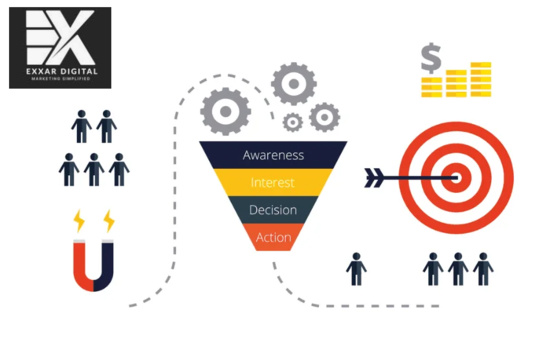
Scaling conversions across channels means creating a seamless experience for users wherever they interact with your brand.
Unified Customer Journey Mapping
Understanding how users move between channels, such as from Instagram to your website, then to your email list, is essential. Mapping their journey reveals friction points and opportunities to enhance conversions.
Personalization Across Touchpoints
People expect messages tailored to them. Personalization boosts trust, relevance, and engagement, making it a powerful lever for increasing conversions across all digital channels.
Proven Methods to Boost Conversion Rate on Social Media Marketing Channels
Boosting social media conversion rates relies on creating a unified, trustworthy user experience. This involves optimizing landing pages for mobile and speed, and ensuring a clear, compelling Call to Action (CTA) is existing on both social posts and the destination page.
Furthermore, leveraging social proof through user-generated content and testimonials builds credibility, while A/B testing different visuals and copy helps incessantly refine what drives the most desired actions.
Social media channels like Facebook, Instagram, TikTok, LinkedIn, and YouTube offer unmatched engagement potential.
Short-Form Video Content for Higher Engagement
Platforms like TikTok and Instagram Reels reward short, value-packed videos. These videos capture attention quickly, increasing engagement and raising the likelihood of conversions.
Optimized Social Ad Funnels and Retargeting
Retargeting is one of the most effective strategies. It brings back users who already showed interest. When paired with persuasive landing pages, conversions rise significantly.
Email Marketing Methods for Scaling Conversion Rate
Scaling email conversion rates relies profoundly on advanced segmentation and personalization, confirming each subscriber receives relevant, tailored content based on their behaviour and interests.

Importantly, implementing strategic email automation, such as abandoned cart sequences and welcome series, nurtures leads effectively and engages them at the right time.
Lastly, continuous A/B testing of subject lines, calls-to-action (CTAs), and mobile-optimized designs is vital for incrementally refining campaigns and maximizing the desired action. Email marketing remains one of the highest-ROI marketing channels.
Segmentation and Hyper-Personalization
Segmented emails generate more opens, clicks, and conversions. Personalized subject lines and content make readers feel seen and understood.
Automated Email Sequences That Convert
Automation allows businesses to nurture prospects 24/7. Welcome sequences, cart abandonment flows, and re-engagement campaigns build trust and drive sales.
Search Engine Optimization Techniques for Sustained Conversion Growth
Sustained conversion growth through SEO requires an integrated strategy that moves beyond simple ranking to emphasis strongly on the user experience (UX) and search intent.
Key techniques include optimizing content to flawlessly align with the user’s intent, be it informational, navigational, or transactional and creating dedicated, mobile-friendly landing pages with clear, compelling calls-to-action (CTAs).
Ongoing technical improvements, such as safeguarding fast page speed and spontaneous site navigation, reduce friction and prevent visitors from bouncing, while rigorous A/B testing of page elements, like CTAs and headlines, recurrently refines the user journey to maximize the rate at which organic traffic converts over time. SEO isn’t just for traffic, it’s a conversion powerhouse.
Topic Clusters and Search Intent Alignment
Organizing content into topic clusters helps search engines understand your authority. Matching keywords to search intent ensures readers find exactly what they’re looking for.
High-Converting On-Page Optimization
Elements like compelling headlines, optimized images, and internal linking keep users engaged and guide them toward conversion-friendly pages.
Paid Advertising Methods for Maximizing Conversions Across Channels
Maximizing conversions through paid advertising demands a full-funnel tactic, moving beyond modest clicks to focus on intent, value, and remarketing across platforms.
Effective methods comprise leveraging high-intent keywords in Paid Search (PPC) and combining them with hyper-segmented audiences on social media (e.g., Facebook, LinkedIn) to ensure ad relevance.
The conversion journey is accomplished by creating devoted, mobile-optimized landing pages that flawlessly match the ad’s message, while retargeting campaigns are vital for re-engaging users who formerly showed interest, using tailored creative to drive them to the final action. Paid ads offer immediate visibility and scalable results.
A/B Testing for Ad Creatives and Landing Pages
Split testing removes guesswork. Small tweaks like changing CTA colour or headline can dramatically improve conversions.
Conversion-Focused Keyword Targeting
Targeting purchase-intent keywords ensures ads reach users ready to buy. This reduces wasted ad spend and boosts ROI.
CRO Techniques for Websites & Landing Pages
Effective Conversion Rate Optimization (CRO) emphasises thoroughly improving website and landing page elements to reassure a higher percentage of visitors to take a desired action.
Key techniques involve A/B testing differences of headlines, copy, and Call-to-Action (CTA) buttons to regulate the highest-performing versions. Streamlining the user journey is critical, which includes streamlining form fields, ensuring fast page load speeds, and providing clear social proof (like testimonials or reviews) to build trust.
Moreover, conducting thorough user behaviour analysis via heatmaps and session recordings helps classify and eliminate points of friction or confusion that cause visitors to drop off. Your website is the core of all digital marketing.
Heatmaps, Session Recordings & UX Testing
Heatmap tools reveal where users click, scroll, and drop off. Session recordings expose pain points and poor user experience issues.
Fast Loading Speed & Mobile Responsiveness
Load time and mobile compatibility strongly influence conversions. A slow or poorly designed mobile experience can tank your metrics.
Measuring & Tracking Conversion Rate Improvements Across Channels
Measuring conversion improvements across channels necessitates implementing a combined attribution model that moves beyond modest last-click tracking to credit all relevant customer touchpoints (e.g., social ad, blog post, email) leading to a conversion.
Critical practices include segmenting data by traffic source, device, and audience to isolate true performance gains, and sensibly defining both macro-conversions (purchases) and micro-conversions (form fills, video views) to monitor funnel efficiency.
The use of vigorous analytics platforms and consistent UTM parameters safeguards data integrity, permitting marketers to precisely calculate key metrics like Cost Per Acquisition (CPA) and Return on Ad Spend (ROAS) by channel to drive informed budget allocation. Accurate measurement ensures sustainable growth.
Key KPIs for Multichannel Performance
Metrics include:
- CTR
- Bounce rate
- Landing page conversion rate
- Cost per conversion
- Customer lifetime value
Attribution Modelling for Better Insights
Attribution models help you understand which channel deserves credit for sales. This knowledge supports smarter budget allocation.
Common Mistakes to Avoid When Scaling Conversion Rates
When scaling conversion rates, a recurrent mistake is over-optimizing for small gains without considering the overall user experience or long-term strategy. Another mutual pitfall is neglecting continuous A/B testing and iteration once preliminary achievement is achieved; market conditions and user behaviour are regularly changing, so what worked yesterday may not work today.
Additionally, many companies make the error of ignoring the quality of traffic and focusing exclusively on quantity, leading to higher costs and stagnant conversion rates because the visitors aren’t the right fit for the product or service.
Lastly, failing to appropriately track and attribute conversions across the whole customer journey can lead to misinformed decisions about where to invest resources.
Over-Optimizing for One Channel Only
Focusing on a single platform limits your potential. Multichannel optimization widens your reach.
Ignoring Post-Purchase Customer Experience
Retention is just as important as acquisition. Happy customers return—and referral conversions are some of the highest quality.
Frequently Asked Questions About Scaling Conversion Rate
-
What is the fastest way to increase conversion rate?
A/B testing and improved messaging often deliver quick wins.
-
Which marketing channel has the highest conversions?
Email marketing typically leads, but results vary by industry.
-
How long does it take to see results?
Most businesses see measurable improvements within 30–60 days.
-
Should small businesses focus on conversion optimization?
Absolutely. It’s one of the most cost-effective strategies.
-
Does SEO really help conversions?
Yes. SEO attracts warm, intent-driven traffic that’s easier to convert.
-
What tools help improve conversions?
Hotjar, Google Analytics, Optimizely, and HubSpot are great starting points.
In Conclusion :
Scaling conversion rate through various methods on various marketing channels is a transformative strategy for any business aiming for sustainable growth.
By optimizing each channel, SEO, social media, email, paid ads, and your website, you build a powerful ecosystem that continuously attracts, engages, and converts customers.