
Every business wants to grow its customer base, and lead generation is at the heart of that growth. It bridges the gap between interest and action by attracting the right audience, engaging them meaningfully, and guiding them toward a purchase, ultimately delivering stronger marketing ROI.
Among the many approaches available, email marketing remains one of the most reliable and effective lead generation channels, with 78% of companies continuing to use email-based campaigns to generate leads.
In this blog, we’ll look at why modern businesses should invest in email marketing for lead generation, share 12 proven strategies and best practices, and highlight common mistakes to avoid along the way.
What is Email Marketing Lead Generation?
Email marketing lead generation involves using opt-in forms to capture contact details from potential customers. This typically includes names, addresses, and professional or personal email IDs.
Once this information is collected, it’s used to define and segment the audience more effectively. Marketers can then run targeted email campaigns with relevant, personalised content that connects with each segment, gradually nurturing leads and guiding them toward becoming paying customers.
Why You Should Have an Email Marketing Lead Generation Strategy?
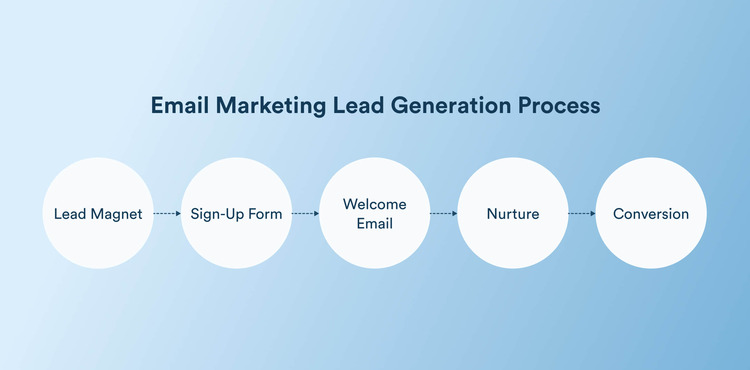
Email marketing for lead generation helps businesses grow their user base organically, and it’s proven to be up to 40 times more effective than social media and many other channels. One of its biggest advantages is control: unlike social platforms, email marketing isn’t at the mercy of changing algorithms or sudden policy updates.
By 2027, the number of global email users is expected to reach 4.48 billion. Add to that an impressive ROI of 3,600% and an average conversion rate of 2.8%, and it’s clear why email marketing remains such a powerful channel. What once felt outdated has now evolved rapidly.
With AI-driven insights, marketers can analyse customer data and behaviour to deliver content that aligns closely with user intent. Automation further simplifies the process, making it easy to build engagement sequences that nurture leads from the first interaction through the entire customer journey.
As advanced lead generation methods continue to flood the market, today’s customers have become more digitally savvy. They now expect personalised, value-driven interactions from brands. Email marketing, combined with smart lead generation strategies, continues to meet these expectations in a highly cost-effective way.
Through customer segmentation and targeted email campaigns, businesses can deliver relevant content that resonates at every stage of the buyer journey—nurturing prospects from the initial touchpoint and ultimately converting them into loyal, paying customers.
Benefits of Email Marketing for Lead Generation
Email marketing is a decidedly effective channel for lead generation, offering a direct and personal way to connect with possible customers. Its key benefits include cost-effectiveness compared to traditional advertising, the ability to nurture leads over time by providing respected content, and the high probability of a strong return on investment (ROI).
Furthermore, email permits for detailed segmentation and personalization, ensuring that targeted messages reach the right audience, which eventually drives higher conversion rates. Building an email marketing strategy with lead generation in mind is vital to the achievement of email campaigns. Here are some benefits:
High Return on Investment (ROI)
The average email marketing ROI is 26% for every 1$ spent, making it the most cost-effective lead generation tactic.
Direct Communication
Lead generation email marketing acts as a direct line of communication with prospects. 99% of email users check their email daily, almost 20 times a day. Dissimilar to social media or search ads, emails can establish a direct line of communication as they straight land in your possible prospect’s inbox.
Targeted Audience Engagement
The use of double opt-in forms safeguards that the email list comprises pre-qualified subscribers who are sincerely interested in receiving communication from your brand. Projecting segmentation can be used to design campaigns for a decidedly targeted audience.
Personalized Messaging
Emails can be personalized to encounter lead preferences and user intent by using data collected through segmentation. Personalized emails are more pertinent and have a higher chance of conversion.
Scalability and Automation Capabilities
Automating email journeys, drip campaigns, and workflows allows businesses to engage and educate prospects consistently, guiding them smoothly toward conversion. With a wide range of email marketing platforms and tools available today, email-based lead generation has become highly scalable and easier to manage than ever before.
Measurable Performance
Businesses track key performance indicators such as open rates, click-through rates, conversion rates, and bounce rates to measure the effectiveness of their email campaigns. Because these metrics are easy to monitor, marketers can continually refine and optimise their campaigns to achieve better results over time.
Seamless Integration
Email marketing platforms integrate seamlessly with CRM systems, landing pages, social media channels, and other marketing tools. This connected ecosystem enables a more consistent omnichannel experience, expands audience reach, and helps businesses generate more high-quality leads.
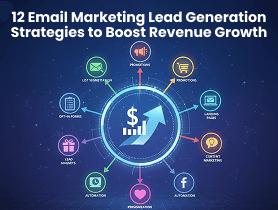
12 Ways to Create an Effective Email Marketing Lead Generation Strategy
An effective email lead generation strategy pivots on providing tempting value in exchange for an email address, often in the form of a lead magnet like a free guide or webinar.
Key steps include meticulously segmenting your audience to ensure personalized and relevant content, and designing a clean, mobile-friendly email with a compelling, single Call-to-Action (CTA).
Finally, leverage marketing automation for sensible welcome sequences and lead nurturing campaigns, and continuously A/B test all elements, from subject lines to CTAs, to optimize conversion rates. Let’s take a look at 12 strategies to implement for fruitful email marketing lead generation.
Build a High-Quality Email List
Building a high-quality list for email marketing lead generation necessitates targeting the right audience, using valuable lead magnets, and optimizing opt-in forms.
Target the Right Audience
To identify and target the right audience, start by building detailed buyer personas based on your ideal customer profile (ICP). For example, is your ideal customer more likely to download an ebook or attend an in-person webinar?
Use data analytics to segment your audience by demographics, behaviour, and engagement levels. This insight allows marketers to create and deliver relevant content that truly adds value. A high-quality email list should consist of subscribers who are genuinely interested in your offerings, as this significantly increases the chances of converting them into customers.
Use Lead Magnets
People rarely share their email addresses without a good reason, they expect something valuable in return. To create an effective opt-in offer, think about your ideal customer profile, their pain points, and the solutions they’re actively looking for. Then, package that value into compelling lead magnets that genuinely help your audience and motivate them to subscribe.
Provide the following lead magnets in exchange for email sign-ups:
- E-books
- Newsletters
- Guides and Reports
- Discounts
- Exclusive Webinars
Experiment with different options to optimize your email marketing and lead generation strategy.
Optimize Opt-In Forms
Prospects have short attention spans and are unlikely to spend much time filling out lengthy forms. To maximise engagement, place your opt-in forms on high-traffic pages where they’re more likely to be noticed.
Keep forms simple yet persuasive. Use clear, action-oriented copy that quickly communicates value and encourages sign-ups. Your calls to action should be easy to understand, visually distinct, and compelling enough to prompt immediate action.
User experience is key. Limit the number of form fields and ask only for essential details such as name and email address, adding a job title only if it’s truly necessary. Requesting too much information can overwhelm prospects and cause them to abandon the form altogether.
Utilize Squeeze Pages
Create dedicated email marketing landing pages designed specifically to capture email leads. Keep these pages free from distractions by removing unnecessary links and competing elements.
Drive targeted traffic to your squeeze pages through blog content, email newsletters, social media channels, and paid ads. To maximise conversions, A/B test different form placements, such as pop-ups, slide-ins, and embedded forms, to identify what works best for your audience.
Create Compelling Lead Generation Emails
Optimize subject lines, email body content, and design to brand the most out of email marketing and lead generation.
Write Relevant Subject Lines
Subject lines are powerful. 64% of people open emails based on the subject line. The subject line should be catchy and relevant to pique the recipient’s interest.
Follow these tips and examples to craft subject lines that increase email open rates. Create a sense of urgency by tapping into the fear of missing out (FOMO). Use action-driven words such as “Act Fast,” “Limited Time,” or “Last Chance” to prompt immediate attention.
Personalisation also plays a key role. Address recipients by name and reference their past interactions to make the message feel relevant, for example: “Hi [Name], we noticed you showed interest in our [Lead Magnet].”
Be clear about what’s in it for them. Highlight a strong benefit or incentive, such as “Get 60% off your first order today.”
Well-crafted, personalised abandoned cart email subject lines are especially powerful for re-engaging customers and recovering lost sales. When done right, they can significantly improve return visits and conversions. Learning how to build an effective abandoned cart email strategy is essential for maximising results.
Draft Value-Driven Email Content
Nurture prospects with concise, easy-to-read emails that focus on delivering real value. Share content that addresses their pain points, answers common questions, reflects their preferences, and guides them smoothly through the buyer’s journey.
Effective email segmentation makes it easier to create relevant content and significantly improves lead generation results.
Each email should include a clear and compelling call to action (CTA) that tells recipients exactly what to do next. Use strong, action-oriented words such as:
Discover, Download, Get Started, Learn More, Sign Up, Claim Your Offer
- Register Now
- Download for Free
- Redeem Coupon
Design Impactful Emails
Here are some practical tips to design high-performing lead generation emails and increase email marketing leads:
Design for mobile responsiveness: Nearly 50% of mobile users prefer receiving brand communications via email, making mobile-friendly design essential.
Use easy-to-read fonts: Choose clean, readable fonts that align with your brand identity and avoid styles that feel overly flashy or distracting.
Follow brand guidelines: Use visually appealing email templates that stay consistent with your brand while keeping the design simple and clutter-free.
Focus on formatting: Structure your content so it’s easy to scan. Use proper spacing, headings, and highlights to draw attention to key sections.
Incorporate interactive elements: Interactive emails powered by AMP can significantly boost engagement by allowing recipients to take actions, such as filling out forms, booking appointments, or making purchases, directly within the inbox.
Make an Impact with Segmentation and Personalization
Get high-quality email marketing leads by executing audience segmentation and running personalized campaigns.
Segment Target Audience
The target audience can be segmented as follows:
Demographic Segmentation: Based on age, income, gender, and education
Psychographic Segmentation: Based on lifestyle, personality, interests
Behavioural Segmentation: Based on past behaviour and interactions
Email marketing lead generation performs significantly better when segmentation is applied. Data shows that segmented and targeted email campaigns achieve up to 30% higher open rates and 50% higher click-through rates compared to non-segmented, generic emails.
Personalize Campaigns
Personalising email campaigns significantly increases the likelihood of prospects opening emails and clicking on links. Start with the subject line by including the recipient’s name and referencing any past interactions where relevant. Once your audience is segmented, you can tailor the email content to align closely with the intent and interests of each group.
In fact, a MarTech study found that personalised emails achieve an average open rate of 29% and a click-through rate of 41%, highlighting the clear impact of personalisation on engagement.
Utilize Automation and Drip Campaigns
Email lead generation efforts can be accompanied by email automation workflows and tools that automate drip campaigns and set up journeys based on behavioural triggers.
Personalize Email Campaigns for Better Engagement
Personalization significantly boosts the chances of prospects opening your emails and clicking on links. Start by including the recipient’s name in the subject line and referencing any past interactions when possible.
Once your audience is segmented, tailor the email content to match the intent and interests of each segment. According to a MarTech study, personalized emails achieve an average open rate of 29% and a click-through rate of 41%.
Nurture Leads Beyond the Signup
Email marketing lead generation doesn’t stop at capturing leads, you need to nurture them into paying customers. Not every lead is ready to buy immediately after signing up or showing interest.
Automated drip email sequences can gently guide prospects over time, providing consistent value and nudging them through the buyer’s journey without overwhelming them.
Leverage Behavioural Triggers for Timely Follow-Ups
Drip campaigns and follow-up emails become far more effective when triggered by specific user behaviours. By using behavioural triggers, marketers can send the right message at the right time, responding to actions and anticipating needs before the prospect even asks. This creates a more relevant, personalised experience that moves leads closer to conversion.
Set Up Drip Campaigns
The email marketing lead generation process doesn’t stop once businesses collect leads. The real value lies in nurturing those leads and guiding them toward becoming paying customers.
Not every prospect is ready to make a purchase immediately after signing up or showing interest. This is where automated drip email campaigns play an important role. These sequences allow marketers to nurture leads gradually, delivering timely and relevant messages that educate, build trust, and gently move prospects through the buyer journey, without overwhelming them.
Use Behavioural Triggers
Drip campaigns and follow-up emails are far more effective when guided by behavioural triggers. By monitoring specific actions, marketers can send the right follow-up message at just the right moment—anticipating a lead’s needs even before they ask.
Here are some common behavioural triggers and user actions that can inform your follow-up emails:
- Emailing list opt-in
- Email opens
- Link clicks
- Downloads
- Webinar registers
- Redeeming coupons
Leverage Email Marketing Platforms like CleverTap
Many email marketing platforms help marketers run effective lead generation campaigns, but the best ones combine automation, segmentation, and personalization, all in a single platform.
CleverTap brings all these capabilities together, offering an intuitive interface that makes lead generation easier and more efficient. From customizable templates to AI-powered insights, it equips marketers with everything they need to engage leads effectively.
Key Features:
- Drag-and-Drop Editor: Create visually appealing emails with ease, using a no-code editor or HTML. Leverage pre-built templates and include rich media like images, buttons, and more.
- AMP for Email: Add interactive elements like forms, carousels, and dynamic content, allowing recipients to engage directly within the email itself.
- Preview and A/B Testing: Optimize every email before sending. Test subject lines, content, and CTAs to see what resonates best with your audience.
- IntelliNode: CleverTap’s AI-driven IntelliNode automatically tests messages, channels, and sequences to guide users through the most effective journey paths in real time.
- Segmentation & Targeting: Use data on demographics, behavior, and preferences to deliver highly personalized campaigns.
- Real-time Personalization: Send dynamic content that adapts to each recipient’s interests. Clever.AI’s Scribe crafts emotionally intelligent AI-generated content that aligns with user intent, boosting opt-ins and engagement.
- Automated Workflows: Trigger timely, relevant emails based on user actions, such as app downloads or sign-ups, to nurture leads throughout their journey.
- Analytics and Reporting: Track key metrics like open rates, clicks, and conversions to measure performance and refine campaigns for better results.
CleverTap makes it easier than ever to run targeted, personalized, and high-performing lead generation email campaigns all from one platform.
Best Practices for Email Marketing Lead Generation
Follow these proven best practices to ensure your email lead generation campaigns are effective and deliverable:
Compliance and Permissions: Make sure your emails follow regulations like GDPR, CAN-SPAM, or CASL. Violating privacy laws can harm your brand reputation. Always obtain clear, explicit permission before adding someone to your email list—using double opt-in strategies is a reliable way to do this.
Testing and Optimization: Experiment with different subject lines, CTAs, and email content by running A/B tests. Identify the versions that perform best and use these insights to optimize your lead generation campaigns for higher engagement.
Maintaining List Health: Protect your sender reputation and improve deliverability by regularly auditing your email list. Remove inactive contacts and those who have unsubscribed to ensure your emails reach engaged recipients.
By following these best practices, you can boost your email campaign performance and generate higher-quality leads.
Measuring the Success of Email Marketing Lead Generation
A data-driven approach is essential for boosting email marketing lead generation. By tracking the right metrics and leveraging the right tools, you can measure success and continually improve your campaigns.
Key Metrics: Keep a close eye on performance indicators such as open rates, click-through rates, conversion rates, and unsubscribe rates to understand how your campaigns are performing.
Analytics Tools: Platforms like Google Analytics and CleverTap’s dashboards provide real-time insights into your email campaigns, helping you track engagement and measure ROI.
Adjusting Strategies: Use the data you gather to refine and optimize your campaigns. Insights from performance metrics and real-time analytics allow you to make informed decisions and improve results over time.
For a comprehensive guide, explore all the key email marketing metrics you should be tracking to maximize lead generation.
Common Pitfalls to Avoid
Email marketing lead generation delivers the best results when common pitfalls are avoided. Keep these points in mind when designing your strategy:
Sending Emails Without Proper Segmentation: Failing to segment your audience can lead to sending irrelevant content, which lowers engagement and reduces conversion rates.
Overloading Subscribers with Too Many Emails: Bombarding subscribers with excessive emails can overwhelm them, increasing the likelihood of unsubscribes.
Neglecting Mobile Optimization: Most users check emails on mobile devices. Ensuring your emails are mobile-friendly and properly formatted is essential for effective lead generation campaigns.
Ignoring Compliance Requirements: Overlooking privacy laws and compliance regulations can harm your brand reputation, lead to legal penalties, and negatively impact email deliverability.
By avoiding these pitfalls, you can improve engagement, maintain a healthy subscriber list, and maximize the effectiveness of your lead generation efforts.
Generate More Leads with Email Marketing
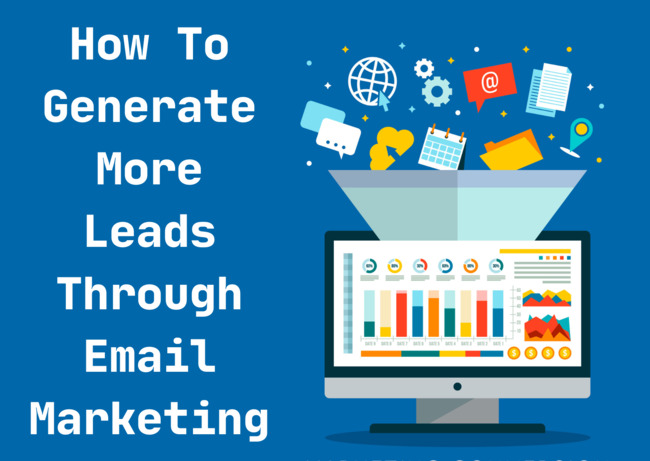
Email marketing lead generation remains a powerful tool for businesses, even as modern strategies like social media influencer marketing are added to the mix. What was once a traditional approach has now evolved, thanks to tools that allow audience segmentation, personalized campaigns, and automated email sequences.
Maximize conversions, follow the strategies and best practices outlined in this blog while avoiding common pitfalls.
Seasonal campaigns are particularly effective, often driving higher engagement and acting as strong lead magnets. For inspiration, consider campaigns tied to key events such as 4th of July, Halloween, Thanksgiving, Black Friday, Cyber Monday, Christmas, and other December holiday newsletters.