
Generative Engine Optimization (GEO) is transforming how businesses are discovered online as AI-powered search platforms become an essential part of the customer journey. Unlike traditional SEO, which focuses on improving rankings in search engine results, GEO helps your brand appear in AI-generated responses on platforms such as ChatGPT, Google AI Overviews, Gemini, Claude, and Perplexity. As more people rely on conversational AI to research products, services, and solutions, businesses need content that AI systems can easily understand, trust, and recommend.
The future of digital discovery is no longer limited to search engine rankings. It is about becoming a trusted source of information that AI platforms confidently reference when answering user queries.
Generative Engine Optimization achieves this by creating authoritative, well-structured, fact-based content supported by strong technical SEO, semantic optimization, and credible online signals. These strategies increase your brand’s visibility across both traditional search engines and AI-driven discovery platforms.
Whether you operate an eCommerce store, SaaS company, healthcare practice, educational institution, or local business, GEO helps you stay ahead of changing search behaviour.
By optimizing your website for AI visibility today, you can reach more qualified audiences, build greater brand authority, and secure a competitive advantage as AI-powered search continues to shape the future of online discovery.
This shift has introduced a new concept that marketers and businesses can no longer ignore: Generative Engine Optimization (GEO). If traditional SEO helped you get discovered, GEO ensures you stay visible in an AI-driven world.
Understanding Generative Engine Optimization (GEO)
Generative Engine Optimization is the practice of creating content that is specifically designed to be understood, selected, and presented by AI systems in their generated responses. Unlike traditional SEO, where the goal is to rank on the first page of search results, GEO focuses on something more powerful, being included directly in AI-generated answers.
Think about it this way:
- SEO brings users to your website
- GEO brings your content to the user
And in many cases today, users may never even visit a website, they trust the AI’s response instead. This makes GEO not just an option, but a necessity for brands that want to remain visible and competitive.
The Shift from Search Engines to Search Answer Engines
Search engines are gradually transforming into answer engines. The digital landscape is currently undergoing a “tectonic shift” from Search Engines to Search Answer Engines (often called Answer Engines or AI Overviews).
Key Characteristics of the Shift
- From “Search and Find” to “Ask and Receive”: Traditional search relies on keyword matching and redirects users to external websites. In contrast, answer engines use Large Language Models (LLMs) to parse natural language, understand intent, and deliver “zero-click” results directly on the search page.
- The Rise of AEO (Answer Engine Optimization): As users increasingly prioritize speed, SEO (Search Engine Optimization) is evolving into AEO. Brands are shifting focus from ranking for specific keywords to becoming the “citable source” that AI models use to build their answers.
- Predictive and Contextual: While search engines are reactive to specific terms, answer engines are predictive. They can infer meaning from a conversation’s context, handle multi-part questions, and offer personalized follow-ups.
Comparison at a Glance
| Feature | Traditional Search Engine | Search Answer Engine |
| Output | A list of ranked URLs (Blue Links) | A synthesized, natural language summary |
| User Effort | High (Click, scan, and extract info) | Low (Read a direct answer) |
| Primary Metric | Click-Through Rate (CTR) | AI Share of Voice / Citations |
| Technology | Indexing and Keyword Matching | Generative AI and Neural Networks |
This evolution is fundamentally changing web traffic; by 2026, it is estimated that zero-click searches (where the user gets their answer without leaving the search page) will account for over 60% of all queries, forcing businesses to rethink how they measure online success.
Previously, a user searching for “best digital marketing strategies” would see a list of links and choose which one to click. Now, AI tools generate a summarized answer instantly, pulling information from multiple sources. This transformation has changed user behaviour significantly:
- People expect quick, precise answers
- They rely more on AI summaries than individual websites
- They ask longer, conversational queries
As a result, the competition is no longer just about ranking, it’s about being selected as a trusted source.
Why AI Visibility Matters More Than Rankings?
Imagine your website ranks #1 on Google, but the AI-generated answer appears above it and fully satisfies the user’s query. The user may never scroll down to your link. This is the reality businesses are facing today.
In the age of generative search, the classic “race for page one” is being replaced by a race for AI Visibility. Being #1 on a results page means very little if a Search Answer Engine synthesizes the top ten results into a single paragraph that never mentions your name.
The Shift from Clicks to Citations
- The Zero-Click Reality: As AI models provide direct answers, users rarely click through to websites. In this environment, visibility, being the primary source the AI cites is the only way to maintain brand authority and trust.
- The “Validation” Effect: AI models act as filters. When an AI recommends a specific product or explains a concept using your data, it carries a “seal of approval” that a standard search listing lacks. If you aren’t visible in the AI’s training data or RAG (Retrieval-Augmented Generation) process, you effectively don’t exist to the user.
- Contextual Dominance: Traditional rankings are static, but AI visibility is fluid. It’s about appearing in the context of a conversation. Visibility ensures your brand is part of the “consideration set” when an AI helps a user make a complex decision.
Comparison: Ranking vs. Visibility
| Metric | Traditional Ranking | AI Visibility |
| Goal | Occupying a high position on a list. | Being the “source of truth” for the AI response. |
| User Action | Requires a click to provide value. | Provides value via brand impression/citation. |
| Algorithm Focus | Keywords and Backlinks. | Entity relationships, Authority, and Clarity. |
| Outcome | Traffic (Quantitative). | Influence and Credibility (Qualitative). |
Ultimately, ranking is about being found, but AI visibility is about being chosen. As we move toward 2026, businesses that focus on being “AI-readable” and authoritative will thrive, while those chasing old-school rankings may find themselves invisible in the generated summary. AI visibility matters because:
It Builds Instant Authority
When your content is included in an AI response, it positions your brand as a trusted expert.
It Increases Brand Recognition
Even without clicks, users see your brand name repeatedly, building familiarity and trust.
It Influences Decision-Making
AI-generated summaries often shape user opinions before they explore further.
It Future-Proofs Your Strategy
As AI continues to dominate search, early adoption of GEO gives you a strong competitive edge.
How AI Systems Choose Noteworthy Content ?
AI systems identify noteworthy content by analyzing large amounts of data and recognizing patterns that indicate relevance, importance, or user interest. These systems evaluate factors such as engagement levels, trending topics, credibility of sources, recency, and the likelihood that a piece of content will be valuable to a specific audience.
Machine learning models are trained to understand what users find useful by examining interactions such as clicks, shares, comments, watch time, and search behavior. They can also assess the context and meaning of content using natural language processing, helping them determine whether a topic is informative, timely, or likely to generate interest.
In addition to popularity, many AI systems consider quality signals, including accuracy, authority, originality, and trustworthiness. This helps prioritize content that is not only engaging but also reliable. As a result, AI can surface articles, videos, posts, or updates that are most relevant to users while filtering out content that may be less useful or credible.
By continuously learning from new data and user feedback, AI systems refine their ability to identify and recommend content that captures attention, provides value, and aligns with audience interests.
In the current era of “Answer Engines,” AI systems have moved beyond simple keyword matching. Instead, they act as sophisticated editors that filter millions of data points to find the most “noteworthy” content for a user’s specific query.
The Criteria for Selection
AI systems generally use a three-step process, Retrieval, Ranking, and Synthesis to determine what makes the cut:
- Semantic Completeness: AI models prioritize “chunks” of text that answer a question entirely on their own. If a paragraph provides a direct answer, a specific example, and a concluding thought without requiring the user to click elsewhere, it achieves a high “Semantic Score.”
- Information Density: Modern AI filters out “fluff.” It looks for the highest value provided in the smallest amount of space. A single, data-rich sentence or a well-structured bulleted list is more likely to be cited than a 2,000-word essay that takes too long to get to the point.
- Entity Alignment: AI systems map relationships between “entities” (people, places, brands, and concepts). Content that clearly connects these entities for example, linking a specific marketing strategy to a verifiable case study is viewed as more authoritative.
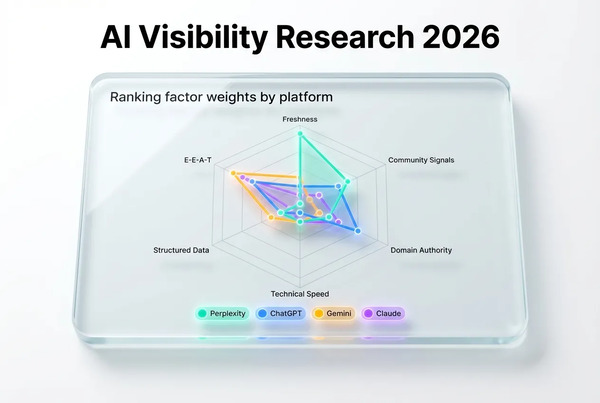
- Multi-Modal Integration: In 2026, content that combines text with original images, short-form video, and structured data (Schema markup) has a significantly higher selection rate (up to 317% higher) because it allows the AI to provide a richer, more helpful answer.
The “Trust” Filter (E-E-A-T)
Before content is presented to a user, it must pass a rigorous trust check. AI systems prioritize:
- Direct Citations: Content that cites its own sources (like academic journals or government data) is flagged as more reliable.
- Author Credentials: Verifiable expertise of the creator (e.g., a LinkedIn profile or industry awards) acts as a high-weight signal for the AI.
- Freshness: For fast-moving topics like tech or news, AI models heavily favor content updated within the last 12–18 months.
Summary of Noteworthy Signals
| High Selection Probability | Low Selection Probability |
| BLUF: Bottom Line Up Front (answer in first 100 words) | “What is…” introductions that delay the answer |
| Original data and unique case studies | Generic “re-hashed” information from other sites |
| Structured lists and Comparison tables | Dense walls of text without headings |
| Verifiable citations and expert bios | Anonymous or AI-generated “unverified” content |
Ultimately, AI systems choose content that acts as a “Source of Truth.” To be noteworthy, your content must be easy for a machine to read, but valuable enough for a human to trust. AI doesn’t randomly pick content. It follows a structured process to decide what to include in its responses.
- Relevance
The content must directly answer the user’s query.
- Clarity
Simple, well-structured information is easier for AI to extract.
- Authority
Trusted and credible sources are prioritized.
- Context
AI evaluates how well your content fits within the broader topic.
- Accuracy
Factually correct and data-backed content is more likely to be used.
If your content lacks any of these elements, it becomes less likely to be selected.
Core Principles of Generative Engine Optimization
Write for Questions, Not Just Keywords
Modern search queries are conversational. Users ask questions like:
- “What is generative engine optimization?”
- “How does AI search work?”
- “Why is GEO important for businesses?”
Your content should directly answer these types of questions in a clear and structured way.
Prioritize Clear and Direct Answers
AI systems often extract content from the first few lines of a section. That means your answers should be:
- Straightforward
- Concise
- Informative
Avoid unnecessary fluff and get to the point quickly.
Use Structured Content Formatting
Structure plays a huge role in GEO. Well-organized content is easier for AI to interpret. Best practices include:
- Clear headings and subheadings
- Bullet points and numbered lists
- Short paragraphs
- Logical flow of information
This not only helps AI but also improves user readability.
Build Topical Authority
AI favors websites that consistently publish high-quality content around a specific topic.
Instead of writing about everything, focus on:
- A defined niche
- In-depth articles
- Interlinked content clusters
Over time, this signals expertise and increases your chances of being referenced.
Include Data, Examples, and Evidence
AI systems value content that is backed by facts.
You can improve your credibility by adding:
- Statistics
- Case studies
- Real-world examples
- Research-based insights
This makes your content more reliable and trustworthy.
Content Types That Perform Best in AI Search
Content that performs best in AI search is the kind that genuinely helps people, not just ranks on keywords. Clear, well-structured articles that answer specific questions, step-by-step guides, and in-depth explanations tend to stand out because AI tools prioritize usefulness and clarity.
Human, conversational content also performs better, writing that feels natural, relatable, and easy to understand is more likely to be picked up and recommended. Adding real examples, FAQs, and concise summaries helps AI quickly understand and present your content to users in meaningful ways. Not all content is equally effective in GEO. Some formats naturally align better with how AI generates answers.
High-Performing Content Formats
How-To Guides
Step-by-step instructions are easy for AI to summarize.
Explainer Articles
Clear explanations of concepts are highly valuable.
FAQs
Question-and-answer formats align perfectly with AI responses.
Comparison Posts
Content comparing options helps AI present balanced insights.
Listicles
Structured lists are easy to extract and display.
Content That Struggles in AI Visibility
- Overly promotional pages
- Thin or low-quality content
- Pages with unclear structure
- Content lacking depth or originality
To succeed, focus on helpful, informative, and user-first content.
GEO vs SEO: A Combined Strategy
The best approach is to combine both strategies:
SEO Helps You:
- Rank on search engines
- Drive organic traffic
- Build backlinks
GEO Helps You:
- Appear in AI-generated answers
- Increase brand visibility
- Establish authority
When used together, they create a powerful digital presence that covers both traditional and AI-driven search.
Measuring Success in Generative Engine Optimization
Measuring success in Generative Engine Optimization (GEO) isn’t as straightforward as traditional SEO, but it’s definitely possible with the right mindset. Instead of focusing only on rankings, you need to look at how often your content is being picked up, referenced, or summarized by AI tools.
When your brand or insights start appearing in AI-generated answers, it’s a strong signal that your content is trusted and valuable. Engagement also plays an important role.
Keep an eye on metrics like time spent on page, click-through rates, and how users interact with your content after discovering it through AI-driven platforms. These signals show whether your content is actually helping people, not just being displayed.
Another way to measure success is through brand visibility and mentions. If your business is being cited or recommended in AI responses, even without direct clicks, it means you’re building authority in your niche.
Over time, this kind of visibility helps strengthen trust and recognition, which is just as important as traffic in the evolving search landscape. Tracking GEO success requires a shift in mindset. Traditional metrics alone are no longer enough. Here’s what you should focus on:
AI Mentions
How often your brand appears in AI-generated responses.
Brand Visibility
Your presence across multiple AI platforms.
Engagement Quality
User interactions after discovering your brand through AI.
Branded Searches
An increase in users searching specifically for your brand.
Content Performance
Which pages are most likely to be referenced by AI.
Even if traffic doesn’t spike immediately, visibility and authority can grow significantly.
Challenges of GEO You Should Be Aware Of
Generative Engine Optimization (GEO) comes with its own set of challenges that businesses should be prepared for. Unlike traditional SEO, where rankings are visible, AI-driven search often provides direct answers, making it harder to track how and where your content is being used. This can feel a bit uncertain, especially when you’re used to clear metrics and reports.
Limited Control
You cannot fully control how AI presents or summarizes your content.
Reduced Click-Through Rates
Users may get answers without visiting your site.
Increased Competition
More brands are optimizing for AI visibility.
Constant Evolution
AI algorithms are continuously changing, requiring ongoing adaptation.
The key is to stay flexible and keep refining your strategy.
The Future of Search is AI-Driven
The future of search is no longer about finding a needle in a digital haystack; it is about the haystack being transformed into a tailored, instant solution. We are moving toward a predictive and conversational ecosystem where the interface adapts to the user, rather than the user learning how to “speak” to a search engine.
The Evolution of the Search Experience
- From Queries to Conversations: Instead of fragmented keywords, future search is powered by multi-modal reasoning. Users can snap a photo of a broken appliance and ask, “How do I fix this?” while the AI understands the visual context, the model of the machine, and the specific mechanical steps required.
- Hyper-Personalization: Search results are becoming unique to the individual. By 2026, AI-driven search doesn’t just look for general answers; it cross-references your past preferences, current location, and even your specific professional expertise to provide a “Segment of One” response.
- The “Action” Layer: We are shifting from information retrieval to task execution. AI-driven search engines are evolving into “Agentic” systems that don’t just tell you which flights are available but can proactively book them, handle calendar conflicts, and manage the logistics of a trip within a single interface.
Shift in Digital Strategy
For professionals in the field, this future demands a move from “keyword stuffing” to knowledge graph integration. Success is defined by how well your brand’s data can be ingested and synthesized by an LLM to serve as a cornerstone of an AI’s answer.
Comparison: Search Today vs. AI-Driven Future
| Feature | Search Today (2024-2025) | AI-Driven Future (2026+) |
| Interface | Static text boxes and lists | Voice, Visual, and Persistent Assistants |
| Response | Links to external content | Direct synthesis and Task execution |
| Context | Session-based (forgets quickly) | Longitudinal (understands your history) |
| Primary Goal | Traffic to websites | Resolution of user intent |
In this AI-driven era, the “search engine” becomes a personal intelligence layer that acts as both a researcher and an assistant, effectively ending the era of the traditional web directory. We are moving toward a world where search is:
- Conversational
- Contextual
- Instant
AI assistants will become the primary interface for information discovery. This means businesses must adapt to a new reality where:
- Visibility matters more than clicks
- Authority matters more than rankings
- Value matters more than volume
Those who embrace GEO early will be better positioned for long-term success.
Practical Steps to Get Started with GEO
- Audit Your Existing Content
Identify pages that can be improved for clarity and structure. - Focus on User Intent
Create content that directly answers real user questions. - Improve Content Readability
Use simple language and clear formatting. - Update Old Content
Refresh outdated articles with accurate and relevant information. - Create Topic Clusters
Build a network of related content to establish authority. - Monitor AI Trends
Stay updated with how AI search platforms evolve.
Conclusion :
Generative Engine Optimization is more than just a new buzzword, it represents a fundamental shift in how content is discovered and consumed. As AI continues to reshape search behaviour, businesses must adapt their strategies to remain visible and relevant.
The goal is no longer just to rank on search engines. The goal is to become the trusted source that AI systems choose to reference. By focusing on clarity, structure, authority, and user value, you can position your brand for success in this new AI-driven era.