


Why B2B Marketing in India Is Rapidly Evolving?
India’s B2B ecosystem is growing at an extraordinary pace. From SaaS startups in Bengaluru to manufacturing exporters in Ahmedabad and enterprise IT firms in Gurugram, competition is intense. Traditional branding-focused marketing is no longer enough. Decision-makers now demand measurable outcomes, predictable ROI, and qualified leads.
This is where performance based marketing for B2B Companies in India comes into play. Instead of paying for visibility alone, businesses pay for results, such as leads, demos, conversions, or revenue. This shift has made performance marketing one of the most effective growth levers for Indian B2B firms.
In this blog, we’ll discover what performance-based marketing is, why it works so well for Indian B2B companies, key channels, challenges, and how to implement it positively.
Performance-based marketing in the B2B sector is a data-driven strategy where businesses pay only when precise, measurable actions occur, such as a lead form submission, a demo request, or a qualified meeting.
Unlike traditional brand awareness campaigns, this model emphasises high-intent targets, ensuring that every marketing dollar is tied straight to the sales pipeline and revenue growth.
Key Characteristics of Performance based Marketing Strategy
- Cost Efficiency: Advertisers minimize financial risk by paying for outcomes (CPL, CPA) rather than just impressions or clicks.
- High-Intent Channels: Strategies often prioritize LinkedIn Ads for job-title targeting, Search Engine Marketing (SEM) for capturing active demand, and Content Syndication to gate valuable whitepapers for lead generation.
- Account-Based Alignment: It regularly integrates with Account-Based Marketing (ABM) to allocate spend on high-value prospects that match a precise Ideal Customer Profile (ICP).
- Real-Time Optimization: Because achievement is measured by hard conversions, marketers can rapidly shift budget away from underperforming tactics toward those delivering the highest ROI.
What Is Performance-Based Marketing in B2B?
Performance-based marketing is a results-driven approach where marketing spend is directly tied to detailed actions or outcomes. Unlike traditional advertising models that charge for impressions or reach, this model focuses on measurable KPIs.
Common B2B Performance Metrics
- Marketing Qualified Leads (MQLs)
- Sales Qualified Leads (SQLs)
- Cost per Lead (CPL)
- Cost per Acquisition (CPA)
- Demo bookings or consultation requests
- Revenue attribution
For B2B companies in India, where sales cycles are longer and deal sizes are larger, this tactic safeguards accountability and efficiency at every stage of the funnel.
Why Performance-Based Marketing Works for B2B Companies in India
India presents an exclusive mix of opportunities and challenges for B2B marketers. Performance-based marketing aligns flawlessly with this environment.
Performance-based marketing for B2B is a data-centric strategy where businesses pay only when a precise, high-value action occurs, such as a qualified lead generated, a demo booked, or a trial sign-up completed.
Unlike traditional brand awareness, this model shifts the focus from “vanity metrics” like impressions to tangible results that directly impact the sales pipeline.
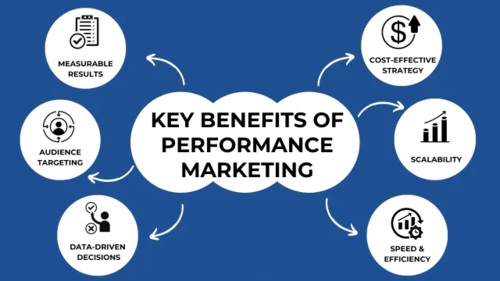
Cost Sensitivity and ROI Focus: Indian businesses are highly ROI-conscious. Performance marketing ensures every rupee spent is tracked, making it easier to justify budgets to stakeholders.
Long and Complex Sales Cycles: B2B buying decisions often involve multiple decision-makers. Performance marketing supports multi-touch attribution, nurturing prospects over time through data-backed strategies.
Digital-First Decision Makers: Indian B2B buyers now research extensively online before engaging with sales teams. Performance channels allow brands to reach buyers at every research stage.
Scalability Across Regions: From Tier-1 cities to emerging Tier-2 hubs, performance campaigns can be scaled geographically with precision targeting.
Reduced Financial Risk: Because spend is tied to outcomes (e.g., Cost Per Lead or Cost Per Appointment), companies avoid the “shotgun approach” of traditional advertising, ensuring every dollar is accountable.
High-Intent Targeting: It leverages intent data and specialized platforms like LinkedIn and Google Search to engage decision-makers at the exact moment they are researching solutions.
Alignment with Sales: By focusing on “Verified Outcomes,” marketing and sales teams stay aligned on lead quality, ensuring the sales team spends time on prospects that match the Ideal Customer Profile (ICP).
Continuous Optimization: Real-time data allows marketers to pivot quickly, scaling successful campaigns and cutting underperforming ones to maintain a high Return on Ad Spend (ROAS).
Key Performance Marketing Channels for B2B in India
Key performance marketing channels for B2B prioritize high-intent targeting and measurable lead generation. Unlike B2C marketing, these channels focus on professional platforms and nurturing long-term relationships through data-driven strategies.
Search Engine Marketing (SEM)
Paid search campaigns target high-intent keywords, capturing buyers actively looking for solutions. This is especially effective for SaaS, IT services, and consulting firms.
LinkedIn Ads
LinkedIn remains the most powerful B2B platform in India. With advanced targeting by job title, company size, and industry, it delivers high-quality decision-maker leads.
Content Syndication
Whitepapers, case studies, and reports are promoted to targeted audiences, generating top-of-funnel leads for nurturing.
Account-Based Marketing (ABM)
Performance-based ABM focuses ad spend only on high-value target accounts, making it ideal for enterprise sales.
Retargeting and Marketing Automation
These tools ensure prospects are re-engaged throughout the buyer journey, improving conversion rates meaningfully.
How Performance-Based Marketing Aligns with B2B Sales Teams
One of the biggest advantages of performance marketing is its alignment with sales objectives.
- Leads are scored based on behaviour and intent
- Sales teams receive better-qualified prospects
- Marketing and sales share common KPIs
- Feedback loops improve campaign quality
This alignment reduces friction and shortens the overall sales cycle. Performance-based marketing bridges the traditional gap between marketing and sales by shifting the focus from “vanity metrics” (like clicks or impressions) to Shared Revenue Goals.
When marketers are incentivized by the same outcomes that drive sales teams, such as qualified meetings or pipeline value, the two departments operate as a single revenue-generating unit.
How Alignment Drives Success
- Definition of Quality: Both teams agree on a strict Lead Qualification Framework. Performance campaigns are then optimized precisely to find “Sales Ready” prospects rather than just high volumes of low-intent leads.
- The Feedback Loop: Sales teams deliver real-time data back to marketers on lead quality. If an explicit campaign is generating high volume but low conversion to deals, performance marketers can promptly pivot their budget toward higher-converting channels.
- Account-Based Precision: In an aligned model, marketing uses performance budgets to “warm up” specific high-value accounts that the sales team is vigorously prospecting, confirming that sales calls aren’t “cold” but are instead supported by relevant digital touchpoints.
Key Integration Points
| Feature | Traditional Marketing | Aligned Performance Marketing |
| Success Metric | Number of Leads | Sales Pipeline & Revenue |
| Communication | Monthly Reports | Real-Time CRM Feedback |
| Targeting | Broad Brand Reach | Ideal Customer Profile (ICP) |
| Incentives | Budget Utilization | Cost Per Qualified Opportunity |
Challenges of Performance-Based Marketing for B2B in India
While powerful, this approach comes with challenges:
Lead Quality vs Quantity
Focusing only on volume can result in low-quality leads. Proper qualification frameworks are essential.
Attribution Complexity
Multiple touchpoints make it harder to assign credit accurately. Advanced analytics tools are required.
Longer ROI Timelines
Unlike B2C, results may take weeks or months. Patience and consistent optimization are key.
Data Privacy and Compliance
With evolving data regulations, ethical data handling is critical.
Best Practices for Implementing Performance Marketing
To succeed, Indian B2B companies should follow these proven practices:
- Clearly define success metrics before launching campaigns
- Align marketing goals with sales outcomes
- Invest in CRM and marketing automation tools
- Test, optimize, and iterate continuously
- Focus on buyer intent, not vanity metrics
Partnering with experienced agencies or specialists can further accelerate results.
The Role of Agencies in Driving Performance Marketing Success
Specialized B2B performance marketing agencies bring:
- Industry-specific expertise
- Advanced analytics and attribution models
- Faster experimentation and optimization
- Access to premium ad platforms and tools
Many Indian companies rely on such partners to scale faster while maintaining efficiency.
Future Trends in B2B Performance Marketing in India
As we move into 2026, B2B performance marketing in India is shifting from simple lead generation to a sophisticated “revenue-first” engine driven by AI and localized expertise.
The Rise of “Agentic AI” and Autonomous Workflows
The most significant trend is the shift from basic automation to Agentic AI. Instead of marketers manually adjusting bids, AI agents are beginning to manage entire workflows from real-time budget reallocation across LinkedIn and Google to dynamically rewriting ad copy based on a prospect’s industry.
In the Indian context, this allows lean marketing teams to scale enterprise-grade campaigns without a massive headcount.
Hyper-Localization and the “Linguistic” Opportunity
Performance marketing is moving beyond English-speaking metros. B2B brands are increasingly using vernacular performance ads in Hindi, Tamil, and Telugu to reach decision-makers in Tier-2 and Tier-3 industrial hubs.
This “Local Flavour” approach isn’t just about translation; it’s about building trust in regional markets where competition is lower, and Cost Per Acquisition (CPA) is significantly more efficient.
Predictive ABM (Account-Based Marketing)
Rather than targeting broad job titles, Indian B2B firms are using predictive intent data to identify “in-market” accounts before they even fill out a form.
By 2026, performance spend is being “lased-focused” on high-value accounts (like Global Capability Centres or large manufacturing units) using AI to score their likelihood to convert, which can increase annual contract values by over 170%.
Zero-Click and Search Generative Experiences (SGE)
With the rise of AI-driven search, “clicks” are no longer the only metric for performance. Marketers in India are optimizing for citations within AI responses.
Success is now measured by whether an LLM (like Gemini or ChatGPT) recommends your brand as a top solution when a procurement manager asks for a “top ERP provider in India.”
Looking ahead, several trends will shape the landscape:
- AI-driven lead scoring and personalization
- Deeper integration of ABM and performance media
- Increased focus on first-party data
- Revenue-based marketing metrics
Companies that adapt early will gain a strong competitive edge.
Frequently Asked Questions (FAQs)
Is performance-based marketing suitable for all B2B companies in India?
Yes, especially for companies focused on measurable growth, lead generation, and ROI-driven campaigns.
How long does it take to see results from performance marketing?
Initial results may appear within weeks, but meaningful ROI often takes 2–6 months due to longer sales cycles.
What budget is required for B2B performance marketing in India?
Budgets vary by industry and goals, but even mid-sized firms can start with controlled, test-based spending.
Which platform works best for B2B performance marketing?
LinkedIn and Google Ads are the most effective, depending on the target audience and intent level.
How do you measure success in performance-based B2B campaigns?
Success is measured through CPL, SQLs, pipeline value, and revenue attribution.
Can performance marketing replace traditional B2B branding?
No, it complements branding. Strong brand trust enhances performance campaign results.
Conclusion: Why Performance-Based Marketing Is the Future of B2B in India
In a competitive and fast-evolving market, Indian B2B companies can no longer rely on guesswork. Performance based marketing for B2b Companies in India offers transparency, accountability, and scalable growth.
By focusing on measurable outcomes, aligning marketing with sales, and leveraging digital channels successfully, businesses can drive supportable success. Those who adopt this tactic today will be best positioned to lead tomorrow’s B2B marketplace.