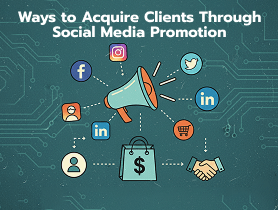
Understanding Social Media as a Client Acquisition Engine
Social media has grown far beyond casual networking. Today, it is one of the most influential tools for predictable and scalable client acquisition. Businesses of all sizes, freelancers, startups, agencies, and global brands use social platforms to attract, nurture, and convert leads daily.
The best way to acquire clients through social media promotion starts with understanding that social platforms are not just broadcasting tools. They are relationship engines.
When used strategically, they permit businesses to meet probable clients where they already spend time, build trust at scale, and shorten the sales cycle.
Why Social Media Works for Modern Businesses?
Social media works because it mixes visibility, trust, and engagement into a single ecosystem. Unlike traditional advertising, users can interact with brands in real time. Comments, shares, and direct messages humanize businesses and decrease buyer hesitation.
Another major benefit is data. Social platforms deliver detailed insights into audience behaviour, interests, and engagement patterns, permitting businesses to improve their approach endlessly.
Organic vs Paid Social Media Promotion
Organic promotion emphasises unpaid content such as posts, stories, videos, and community interaction. Paid promotion involves ads, boosted posts, and sponsored placements.
Organic methods build long-term authority and trust, while paid promotion accelerates reach and conversions. The toughest strategies are syndicated for sustainable growth.
Identifying Your Ideal Client Before Promotion
Before posting a single piece of content, you must clearly comprehend who you want to entice. Promotion without clarity leads to wasted effort and low conversion rates.
Defining Buyer Personas
A buyer persona is a semi-fictional profile of your perfect client. It includes age, profession, income level, pain points, goals, and online behaviour. When content speaks straight to these details, engagement increases naturally. Clear personas help determine messaging, tone, visuals, and offers.
Matching Platforms to Client Behaviour
Not all clients use the same platforms. Professionals and decision-makers often spend time on LinkedIn, while younger audiences tend to gravitate toward Instagram, TikTok, and YouTube.
Understanding where your perfect client spends time ensures your efforts are focused and efficient.
Choosing the Right Social Media Platforms
Trying to be everywhere often leads to burnout and weak results. Strategic emphasis is more effective.
Facebook & Instagram for B2C Growth
Facebook and Instagram excel at lifestyle, product-based, and service-driven businesses. Visual storytelling, reels, and community groups make these platforms perfect for relationship-based selling.
LinkedIn for B2B Client Acquisition
LinkedIn is unmatched for B2B services, consultants, and high-ticket offers. Thought leadership posts, case studies, and direct outreach perform exceptionally well.
According to insights shared by HubSpot, LinkedIn generates meaningfully higher lead conversion rates for B2B companies than other platforms.
TikTok, YouTube, and Emerging Channels
Short-form video platforms offer huge organic reach. Educational and behind-the-scenes content builds authenticity quickly, even for new accounts.
Creating High-Conversion Content That Attracts Clients
Content is the foundation of social media achievement. Without value-driven content, promotion fails.
Educational Content
Educational posts solve problems, answer questions, and teach skills. This positions your brand as helpful and knowledgeable, which naturally builds trust.
Examples include:
- Tutorials
- How-to videos
- Industry tips
- Mistake-avoidance posts
Authority-Building Content
Authority content demonstrates expertise. Case studies, client results, testimonials, and personal insights reinforce credibility and reduce buyer skepticism.
Storytelling and Emotional Triggers
Stories connect emotionally. Sharing struggles, lessons learned, and client journeys humanizes your brand and increases relatability.
Building Trust and Authority Through Consistency
Building trust and authority isn’t a one-time achievement; it is the increasing result of showing up consistently over time. When your actions, messaging, and quality remain steady, you create a “predictable excellence” that permits others to feel secure in their interactions with you.
Why Consistency Matters
- Reduces Cognitive Friction: When you are reliable, people don’t have to guess who you are or what you stand for. This clarity builds a foundation of psychological safety.
- Demonstrates Mastery: Authority is infrequently granted to the erratic. Sustained, high-quality output signals that you have deep-rooted expertise rather than fleeting flashes of insight.
- Strengthens Brand Integrity: Every steady interaction acts as a deposit into your “trust bank.” Over time, these small deposits build a reputation that can withstand occasional mistakes.
- The Trust Equation: Trust is built when Reliability (doing what you say) meets Predictability (doing it the same way every time).
Consistency transforms a series of isolated interactions into a cohesive professional identity, eventually turning skeptics into advocates and peers into followers. Consistency builds familiarity, and familiarity builds trust.
Branding and Visual Identity
Consistent colours, fonts, and messaging help audiences recognize your content instantly. Strong branding improves recall and perceived professionalism.
Posting Frequency and Scheduling
Posting consistently matters more than posting frequently. A realistic schedule, three to five times per week, keeps your brand visible without overwhelming your audience.
Leveraging Paid Social Media Advertising
Paid ads amplify what already works organically.
Targeting and Retargeting Strategies
Advanced targeting allows you to reach users based on demographics, interests, behaviours, and past interactions. Retargeting ads reconnect with users who previously engaged but did not convert.
Budget Optimization for Maximum ROI
Start small, test multiple creatives, and scale what performs best. Data-driven optimization safeguards ad spend generates measurable returns.
Using Engagement to Convert Followers into Clients
Engagement turns attention into action.
Direct Messaging Funnels
Many conversions happen through direct messages. Clear calls-to-action inviting conversations outperform hard-selling tactics.
Community Building and Social Proof
Active communities create trust. Comments, shares, and user-generated content act as social proof that influences buying decisions.
Influencer and Partnership-Based Promotion
Collaborations expand reach and credibility quickly.
Micro-Influencers vs Macro-Influencers
Micro-influencers often deliver higher engagement and trust at lower costs. Their audiences feel more personal and authentic.
Co-Marketing Campaigns
Partnering with complementary brands allows you to share audiences, resources, and authority for mutual benefit.
Tracking Performance and Optimizing Results
What gets measured gets improved.
Key Metrics to Monitor
Important metrics include:
- Engagement rate
- Click-through rate
- Conversion rate
- Cost per lead
- Customer acquisition cost
Tools for Analytics and Automation
Built-in platform analytics, scheduling tools, and CRM integrations streamline performance tracking and follow-ups.
Frequently Asked Questions (FAQs)
-
How long does it take to acquire clients through social media?
Results vary, but consistent effort typically produces leads within 30–90 days.
-
Is organic social media enough to get clients?
Organic methods work well, but combining them with paid promotion accelerates results.
-
Which platform is best for beginners?
Instagram and LinkedIn are beginner-friendly and effective for most industries.
-
Do I need a large following to get clients?
No. Targeted content and engagement matter more than follower count.
-
How often should I post on social media?
Three to five high-quality posts per week is ideal for most businesses.
-
Can small businesses compete with large brands on social media?
Yes. Authenticity, personalization, and niche focus give small businesses an advantage.
In Conclusion :
Social media is no longer optional for businesses that wish for consistent growth. When approached strategically, it becomes an expectable and scalable client acquisition system.
The best way to acquire clients through social media promotion is not about chasing trends or viral content. It is about considering your audience, delivering consistent value, building trust, and using data to refine your approach.
By combining organic content, paid promotion, engagement, and partnerships, businesses can turn social platforms into long-term revenue channels that grow stronger over time.