

Introduction to Social Commerce
So, you know how everyone shops online these days? Well, all the cool stuff and benefits of social commerce have really shaken things up. Basically, social commerce is when you can buy and sell stuff right on social media.
Instead of sending you off to a whole other website, companies can now let you buy things directly through apps like Facebook, Instagram, TikTok, and Pinterest. It all started pretty basic, just ads on social media. But then, the platforms started adding ways to shop, like little tags on products, ways to pay right there, and even live shopping events.
Now, social commerce mixes hanging out on social media with shopping, and it’s a really easy and fun experience. Since billions of people are on social media every single day, brands can now reach customers exactly where they’re already hanging out. It’s a huge deal.
Core Features of Social Commerce
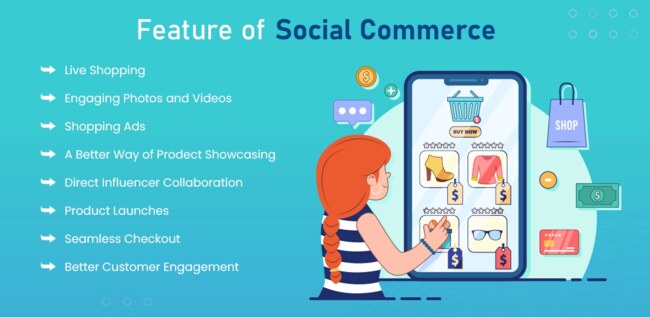
Social commerce isn’t just about putting a “Buy” button on a social media profile. It is the complete integration of the shopping experience directly inside social media networks. Instead of following a link out to a separate e-commerce website, consumers can discover, explore, and purchase a product all within their favorite apps.
By merging entertainment, community, and shopping, social commerce removes the friction that usually causes shoppers to abandon their carts.
The Core Pillars of Social Commerce
Here is a breakdown of the core features that define how modern social commerce operates:
1. In-App Native Checkout
The ultimate goal of social commerce is a seamless transaction. Native checkout allows users to enter their payment and shipping info directly within the social app (like Instagram Checkout or TikTok Shop).
Why it matters: Every click away from an app reduces conversion rates. Keeping the user inside the app environment cuts down checkout time to seconds.
2. Shoppable Content (Posts, Reels, & Stories)
Instead of a static advertisement, brands can “tag” specific products inside their organic content. Users can tap a pair of sunglasses in a photo or a blender in a video recipe to instantly view the price, specs, and a purchasing link.
3. Live Stream Shopping (Live Commerce)
Highly popular across global markets, live commerce combines home-shopping television with real-time digital interactivity. Creators or brand hosts showcase products live, answer questions from the chat in real time, and pin shoppable product links directly onto the screen.
4. Interactive Product Discovery
Social commerce relies heavily on AI-driven personalization and user interaction. Features include:
AR Try-On Filters: Allowing users to virtually “wear” makeup, try on glasses, or place furniture in their room using their phone camera.
Social Search: Consumers increasingly use social media feeds instead of traditional search engines to discover what products look like in real life.
5. Integrated User-Generated Content (UGC) & Social Proof
Social commerce builds trust directly at the point of sale. Customer reviews, unboxing videos, and photo tags from real everyday users are embedded right next to the product listing. Shoppers don’t have to look for third-party validation; the community’s feedback is already visible.
Traditional E-Commerce vs. Social Commerce
To see how these features fundamentally shift the shopping experience, consider how they compare to a standard online store:
| Feature | Traditional E-Commerce | Social Commerce |
| User Journey | Intent-driven (User searches for a specific item). | Discovery-driven (User stumbles upon an item while scrolling). |
| Friction Level | Higher (Requires navigating multiple pages/sites). | Extremely low (One or two taps to purchase instantly). |
| Trust Factor | Brand-generated product descriptions and static reviews. | Peer-driven reviews, video demonstrations, and creator backing. |
| Interaction | Solitary and transactional. | Interactive, community-driven, and entertaining. |
The Big Picture: Traditional e-commerce is digital utility—you go there when you know what you want to buy. Social commerce is digital window shopping—you buy things because the experience of discovering them was engaging and effortless.
Social commerce is basically social media mixed with online shopping, making it super easy to buy stuff right where you’re hanging out online.
Instead of just browsing and then buying like usual, it’s all about a more community feel, where you can find and buy things all at once.
Key Core Features
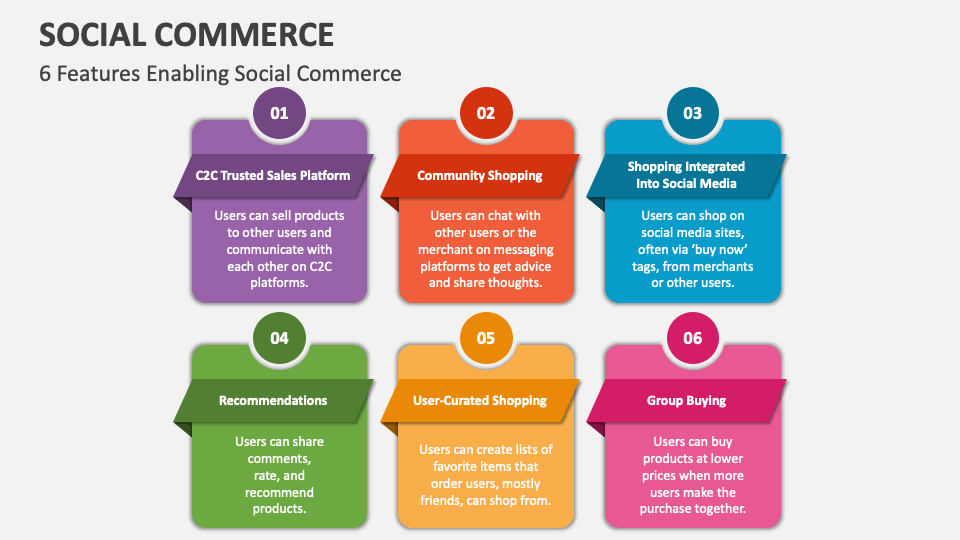
- Native Checkouts: Users can complete a purchase directly within the social app (like Instagram or TikTok) without being redirected to an external website, significantly reducing friction in the buyer’s journey.
- Shoppable Content: This includes “tags” on photos, videos, or Stories that allow users to click on an item to see pricing and product details instantly.
- Social Proof Integration: Real-time features such as user reviews, likes, shares, and “unboxing” videos are embedded into the shopping experience, building immediate trust through peer validation.
- Live Stream Shopping: Interactive live broadcasts where influencers or brands showcase products in real-time, allowing viewers to ask questions and buy items during the stream.
Understanding all the features and advantages of social commerce starts with knowing its core functions.
In-App Purchasing
Customers can browse products, add items to their cart, and complete purchases without leaving the platform. This reduces friction and increases convenience.
Benefits include:
- Faster checkout
- Fewer abandoned carts
- Improved user experience
Shoppable Posts
Businesses can tag products in photos, videos, and stories. When users click the tag, they see product details, pricing, and purchasing options. This feature turns regular content into a virtual storefront.
Live Shopping
Live streaming allows brands to showcase products in real time. Customers can ask questions and buy instantly during the broadcast.
Live shopping:
- Creates urgency
- Builds excitement
- Boosts impulse buying
Chatbots and Messaging
Automated chatbots answer questions, suggest products, and guide customers through purchases.
This conversational approach:
- Improves customer support
- Increases satisfaction
- Speeds up decision-making
Key Advantages of Social Commerce
Social commerce is a great way to help people buy things right after they find them, by showing up where people already hang out online. It turns just browsing around into actual shopping because it’s more engaging and feels more reliable.
Key Advantages
- Frictionless User Journey: By allowing users to checkout directly within a social app, it removes the extra steps of navigating to an external website, which significantly reduces cart abandonment rates.
- Enhanced Social Proof: Features like real-time comments, likes, and shares act as immediate peer endorsements, building brand trust more effectively than traditional advertising.
- Highly Targeted Reach: Social platforms leverage massive amounts of data to show products to the most relevant audiences, ensuring your content reaches users with the highest intent to buy.
- Interactive Engagement: Unlike static e-commerce sites, social commerce allows for two-way communication through live streams, polls, and direct messaging, creating a personalized shopping experience.
Increased Brand Visibility
Social platforms have massive audiences. When users share, like, or comment on content, it spreads organically. Paid advertising further boosts reach.
Brands gain:
- Wider exposure
- Better brand recognition
- Increased follower growth
Higher Conversion Rates
Social commerce reduces steps in the buying journey. The fewer clicks required, the higher the likelihood of purchase.
Because customers don’t need to switch apps or enter long URLs, conversion rates often outperform traditional e-commerce.
Improved Customer Engagement
Interactive tools such as polls, comments, stories, and live chats make shopping feel social rather than transactional.
Engaged customers are more likely to:
- Make repeat purchases
- Recommend brands
- Leave positive reviews
Social Proof and Trust Building for Social Commerce
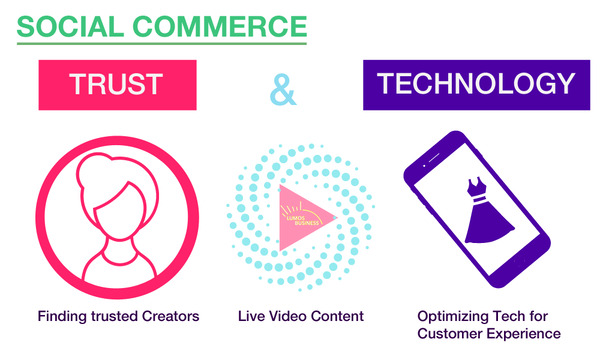
When people shop online and can’t actually see or touch the products, they often rely on what others are saying. In social commerce, this is like getting a recommendation from a friend, and it’s a big deal for making shoppers feel good about buying something.
Because social media is all about communities and connecting with people, trust is built when everyone is open and honest, and when other users vouch for things, instead of just hearing from the company itself.
How Social Proof Drives Trust?
- User-Generated Content (UGC): Seeing real customers post photos or “unboxing” videos provides authentic visual proof that the product matches the marketing. This is often perceived as more trustworthy than professional brand photography.
- Real-Time Engagement Metrics: High counts of likes, shares, and saves act as a “popularity signal.” When a user sees a product trending within their own social circle, the perceived risk of purchase drops significantly.
- Influencer Advocacy: Collaborating with relatable micro-influencers allows brands to “borrow” the established trust those creators have built with their niche audiences over years.
- Integrated Ratings and Reviews: Displaying star ratings and written feedback directly on shoppable posts allows users to vet a product without leaving the app, keeping the momentum of the purchase intact.
Strategies for Strengthening Credibility
| Feature | Impact on Trust |
| Verified Badges | Confirms the brand’s identity and protects users from “copycat” or scam accounts. |
| Community Q&A | Responding publicly to comments shows the brand is active, accountable, and helpful. |
| Micro-Influencers | Offers a more “human” and attainable connection compared to celebrity endorsements. |
One of the biggest advantages of social commerce is built-in trust. People rely heavily on reviews, ratings, and influencer recommendations.
When users see:
- Real customer feedback
- Influencer endorsements
- User-generated content
They feel more confident about buying. Social proof reduces hesitation and builds credibility faster than traditional advertising.
Data-Driven Marketing Benefits of Social Commerce
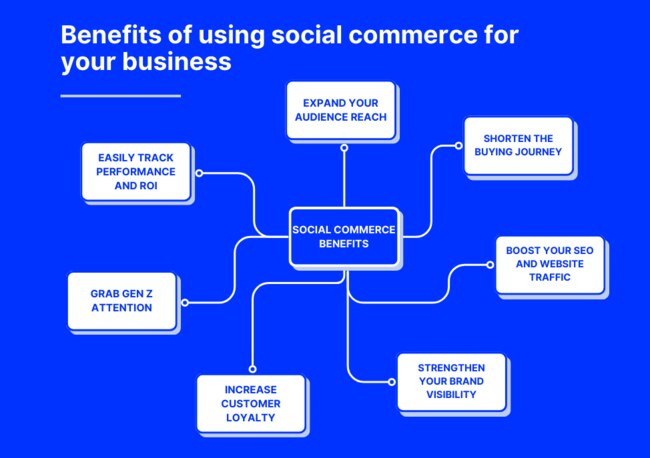
Social commerce provides a “gold mine” of real-time data that traditional e-commerce often misses. By keeping the entire buyer journey within a single app, brands can capture granular insights into how users transition from passive discovery to active purchase.
Primary Data Benefits
- Granular Behavioural Tracking: Unlike traditional sites where data is often limited to visits and sales, social commerce allows you to track “micro-interactions”, such as how long a user watched a product video, which specific frames they paused on, and what questions they asked in the comments before buying.
- Direct Feedback Loops: Social interactions serve as instant, unfiltered market research. By analyzing the sentiment of comments and the types of questions asked during live streams, brands can identify product pain points or desired features in real-time, drastically shortening the product development cycle.
- Enhanced Audience Segmentation: Social platforms leverage vast “interest-based” data. This allows for hyper-accurate segmentation based on a user’s lifestyle, community affiliations, and real-time engagement patterns, rather than just basic demographics or past purchase history.
- A/B Testing at Speed: The fast-paced nature of social media allows marketers to test different creative formats (e.g., a “lifestyle” photo vs. a “technical” video) and offers (e.g., “20% off” vs. “Buy 1 Get 1”) with immediate results, enabling rapid campaign optimization.
Strategic Comparison
| Metric | Traditional E-commerce | Social Commerce |
| Data Type | Transactional & Intent-based | Emotional & Behavioral |
| Insights | What they bought | Why they engaged or hesitated |
| Optimization | Weekly/Monthly cycles | Hourly/Daily (Real-time) |
| Personalization | Based on browser history | Based on real-time social activity |
Social commerce platforms provide detailed analytics.
Businesses can track:
- Click-through rates
- Customer behaviour
- Demographics
- Purchase history
This data allows companies to refine marketing strategies and target the right audience more effectively. With better insights comes smarter decision-making.
Personalization Capabilities
Modern social platforms use artificial intelligence to personalize feeds and shopping recommendations.
Personalization helps:
- Suggest relevant products
- Show targeted ads
- Improve customer experience
Customers are more likely to buy when they see products tailored to their interests.
Cost-Effectiveness
Compared to traditional retail, social commerce requires:
- No physical store
- Lower operational costs
- Reduced advertising expenses
Small businesses especially benefit from affordable entry into digital selling. Organic content can drive significant sales without massive budgets.
Mobile-First Advantage
Most social media usage happens on smartphones. Social commerce is designed for mobile users.
Mobile benefits include:
- Easy navigation
- Quick checkout
- One-click payments
This convenience supports modern shopping habits.
Global Market Access
Social media platforms connect people worldwide. Businesses can reach international customers without opening overseas stores.
Advantages include:
- Cross-border sales
- Global brand awareness
- Diverse customer base
Shipping and digital payment systems make international transactions easier than ever.
Social Commerce’s Integration with E-Commerce Platforms
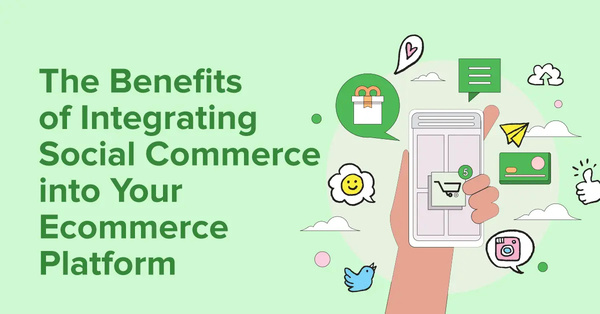
By 2026, social commerce won’t just be an add-on; it’ll be a fundamental part of how e-commerce works. Today’s big platforms like Shopify, BigCommerce, and Adobe Commerce are moving towards something called “unified commerce,” meaning your main website and your social media shops will basically run together seamlessly as one system.
The Unified Architecture
The most critical aspect of integration is the Single Source of Truth. Instead of managing separate inventories for your website, TikTok Shop, and Instagram, integration tools ensure that when an item sells on one, the stock levels are instantly updated across all.
Key Technical Pillars of Integration
- Catalogue Synchronisation: Automated feeds push your product titles, high-resolution images, and real-time pricing from your e-commerce backend to social “Catalogues.” This ensures a customer never sees an “out of stock” item in their feed.
- Bi-Directional Data Flow: Integration isn’t just about sending data to social apps; it’s about pulling it back. Orders placed natively on social platforms flow directly into your website’s order management system (OMS) for fulfilment alongside traditional web orders.
- Centralized Social CRM: Modern integrations allow brands to view a customer’s entire history, from their Instagram comments and WhatsApp queries to their past website purchases within a single dashboard, enabling hyper-personalized service.
- Headless Commerce Flexibility: Using APIs, brands can now deliver “headless” shopping experiences. This means the social app handles the “head” (the visual storefront), while your main platform handles the “body” (payments, security, and logistics).
Comparison of Integration Models
| Model | User Experience | Primary Advantage |
| Native In-App Checkout | Seamless; buy with one tap in-app. | Highest conversion rate; lowest friction. |
| Storefront-to-Site Funnel | Redirects to a mobile-optimized site. | Keeps customers on your owned domain. |
| Conversational (WhatsApp/DM) | Personal; purchase via chat or link. | High trust and custom support. |
Social commerce doesn’t replace e-commerce, it enhances it.
Businesses can integrate:
- Product catalogues
- Inventory management systems
- Payment gateways
This creates an omnichannel strategy where online stores and social platforms work together seamlessly.
Security and Payment Flexibility
Modern platforms use secure encryption and verified payment systems.
Payment options often include:
- Credit/debit cards
- Digital wallets
- Buy-now-pay-later services
Security builds trust and encourages repeat purchases.
Challenges and Limitations
While exploring all features and advantages of social commerce, it’s important to understand challenges:
- Platform algorithm changes
- Privacy concerns
- High competition
- Dependence on third-party platforms
However, with strategic planning, businesses can overcome these issues.
Future Trends in Social Commerce
By 2026, social commerce will have moved from a “trending” experiment to a foundational pillar of global retail. The industry is currently shifting toward “Agentic Commerce,” where AI agents don’t just recommend products but proactively manage the entire shopping journey from discovery to secure automated checkout.
Top Trends Reshaping the Landscape
- AI as a “Creative Co-Pilot”: Brands are moving away from “AI slop” (low-quality automated content) toward using Generative AI for hyper-personalization. This includes AI-driven “personal shoppers” that can interpret vague requests like “Find me a summer brunch outfit under $100” and deliver spot-on, shoppable results instantly.
- The Rise of “Discovery Engines”: Traditional keyword-based search is being replaced by algorithmic discovery. Instead of customers looking for products, products are “finding” customers through highly curated feeds on platforms like TikTok Shop and Instagram, which are projected to capture significant global retail share by 2030.
- Immersive AR & Virtual Try-Ons: Augmented Reality (AR) has become a standard feature for high-consideration categories. Users now expect to “place” furniture in their rooms or “try on” makeup and apparel using AR lenses before committing to a purchase directly within the app.
- Community-Led “Micro-Economies”: Trust is shifting from mass-market influencers to niche community leaders and private groups (WhatsApp, Discord). Purchases are increasingly driven by authentic, unpolished User-Generated Content (UGC) and “behind-the-scenes” brand transparency.
- Unified Commerce Protocols: New industry standards like the Universal Commerce Protocol (UCP) are enabling seamless, secure checkouts across different AI agents and social platforms, making the “Buy” button universal and friction-free.
Projected Market Impact (2026)
| Metric | Projection |
| Global Market Size | Estimated to reach nearly $1 Trillion by the end of 2026. |
| TikTok Shop Growth | Projected to hit $87B in GMV with 56% year-over-year growth. |
| Consumer Adoption | Over 70% of consumers now want Gen AI integrated into their shopping. |
| Regional Leaders | Significant acceleration in India and Australia, driven by mobile-first demographics. |
The future looks bright. Emerging trends include:
- Augmented reality try-ons
- AI-powered recommendations
- Voice commerce
- Influencer-driven marketplaces
According to industry research from sources like Statista (https://www.statista.com/), social commerce revenue is projected to grow rapidly in the coming years. Technology will continue to blur the lines between social networking and shopping.
Frequently Asked Questions
What is social commerce?
Social commerce is the buying and selling of products directly through social media platforms.
How is social commerce different from e-commerce?
E-commerce happens on websites, while social commerce happens within social media apps.
Is social commerce suitable for small businesses?
Yes. It offers low entry costs and access to large audiences.
Which platforms support social commerce?
Popular platforms include Facebook, Instagram, TikTok, and Pinterest.
Does social commerce increase sales?
Yes. Reduced friction and high engagement often lead to higher conversion rates.
Is social commerce secure?
Most platforms use secure payment systems and encryption to protect transactions.
In Conclusion :
All features and advantages of social commerce make it one of the most powerful digital selling strategies today. It combines convenience, engagement, personalization, and trust into one seamless experience.
Businesses benefit from higher visibility, better customer relationships, and increased conversions. Customers enjoy smoother shopping, trusted reviews, and interactive experiences.
As technology advances and consumer behaviour evolves, social commerce will continue to reshape the future of retail. Companies that embrace it today position themselves for long-term growth tomorrow.