
Introduction to B2B Email Marketing for Clients
Email marketing remains one of the most powerful tools for businesses targeting other businesses. When used strategically, the Types of Email Marketing to Capture B2B Clients can help companies build relationships, generate leads, and convert prospects into loyal customers.
Unlike casual consumer marketing, B2B email campaigns focus on delivering value, solving problems, and building long-term trust. Decision-makers in businesses are not swayed by flashy promotions, they need data, insights, and clear ROI.
Why Email Marketing is Crucial for B2B Growth?
Email marketing remains a cornerstone of B2B growth because it facilitates the long-term relationship building required for complex sales cycles. Unlike B2C transactions, B2B decisions often involve multiple stakeholders and months of evaluation; email allows for consistent, automated touchpoints that provide value through white papers, case studies, and industry insights.
Furthermore, email offers unmatched segmentation and data ownership. While social media algorithms can shift overnight, an email list is a first-party asset that enables highly personalized messaging based on a lead’s specific industry, job role, or stage in the buying journey. This precision ensures that marketing efforts translate into high-quality leads and measurable ROI.
Key Advantages for B2B Organizations of Email Marketing
- Nurturing Long Sales Cycles: Keeps your brand top-of-mind during the “consideration” phase.
- Authority Building: Establishes thought leadership by delivering expert content directly to a prospect’s inbox.
- Direct Access: Bypasses the noise of social feeds to reach decision-makers in their primary professional environment.
- Scalable Personalization: Uses automation to deliver “one-to-one” communication at a “one-to-many” scale.
Email marketing offers a direct line to your audience. It allows businesses to:
- Communicate consistently with prospects
- Share valuable insights and industry trends
- Build authority and trust over time
- Generate high ROI compared to other channels
Studies consistently show that email marketing delivers one of the highest returns on investment among digital marketing strategies.
Key Differences Between B2B and B2C Email Strategies
While both B2B and B2C email marketing share the same delivery mechanism, their strategies diverge sharply due to the differing motivations of the recipients. B2B focuses on building professional authority and logic, while B2C prioritizes emotional connection and immediate action.
Strategic Comparison
| Feature | B2B (Business-to-Business) | B2C (Business-to-Consumer) |
| Primary Goal | Lead nurturing & relationship building | Immediate sales & brand loyalty |
| Buying Cycle | Long (months or years) | Short (minutes or days) |
| Content Tone | Professional, educational, and logical | Emotional, urgent, and entertaining |
| Call to Action | Low friction (e.g., “Download Whitepaper”) | High friction (e.g., “Buy Now”) |
| Decision Maker | Multiple stakeholders (Buying Committee) | Single individual or household |
Core Differentiators
The Value Proposition
In B2B, your email must demonstrate Return on Investment (ROI). Subscribers are looking for ways to save time, increase revenue, or solve a specific business pain point. Content usually takes the form of industry reports, case studies, or webinar invites.
Conversely, B2C emails focus on lifestyle and desire. Success is often driven by discounts, New Arrivals, or seasonal trends. The value is personal, how the product makes the consumer feel or how much money they save on a one-time purchase.
Sending Frequency and Timing
- B2B: Usually follows a steady, predictable cadence. Sending an email once a week or every two weeks is common to avoid “inbox fatigue” among busy professionals. Peak engagement typically aligns with working hours (Tuesday through Thursday mornings).
- B2C: Can be much more frequent, especially during holiday seasons or flash sales. Engagement often spikes during evenings and weekends when consumers are shopping on mobile devices.
Personalization Depth
B2B personalization often goes beyond just using a first name; it involves firmographics, such as tailoring content to a specific industry or the recipient’s job seniority. B2C personalization is typically driven by behavioural data, such as past purchase history, abandoned carts, or items viewed on a website.
The Path to Conversion
A B2B email is rarely the final step in a sale; it is a tool to move a prospect from “Awareness” to “Consideration.” The conversion might be a discovery call or a demo request.
A B2C email, however, is designed to be a “one-click” path to a storefront, aiming to reduce the distance between the inbox and the checkout page. B2B email marketing differs from B2C in several ways:
- Longer sales cycles requiring multiple touchpoints
- Multiple decision-makers involved in purchasing
- Focus on logic and ROI, not emotions
- Content-driven communication instead of quick promotions
Understanding these differences is essential before choosing the right email types.
Understanding B2B Buyer Behaviour
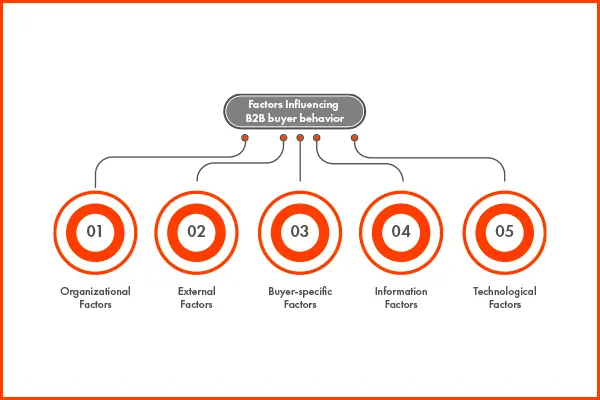
Understanding B2B buyer behaviour requires shifting focus from impulsive, individual desires to structured, collective decision-making. In the B2B world, the “buyer” is rarely a single person; instead, it is a Decision Making Unit (DMU) or buying committee, often consisting of 6 to 10 stakeholders from finance, IT, and operations.
Core Drivers of B2B Behaviour
- Risk Mitigation: The stakes are higher in B2B. A bad software implementation or supply chain choice can cost a company millions or jeopardize careers. Consequently, B2B buyers are risk-averse and seek extensive proof through case studies, testimonials, and third-party certifications.
- The Logic-First Approach: While B2C is driven by “want,” B2B is driven by “need” and efficiency. Buyers prioritize long-term ROI, scalability, and how a solution integrates with their existing tech stack or workflows.
- Information Gathering: Modern B2B buyers are highly independent. Research suggests they are often 70-80% through the buying journey before they ever contact a sales representative. They spend significant time consuming “educational” content to self-diagnose their problems.
The Emotional Paradox
Despite the emphasis on logic, B2B behaviour is not entirely robotic. Trust and Brand Authority act as emotional shortcuts. Buyers gravitate toward brands that make them feel “safe” and appear as thought leaders in their specific niche, reducing the perceived psychological burden of the decision.
Key Behavioural Trends
| Feature | Impact on Strategy |
| Self-Service Research | Requires a robust library of whitepapers and FAQs. |
| Consensus-Based Buying | Content must be shareable and satisfy different department needs. |
| Omnichannel Presence | Buyers expect a consistent experience across LinkedIn, email, and webinars. |
The Decision-Making Process in B2B
In B2B, buying decisions are rarely made by one person. Instead, they involve:
- Managers
- Executives
- Procurement teams
Each stakeholder has different concerns, making it essential to craft emails that address multiple perspectives.
Role of Email in Influencing Stakeholders
Email marketing helps guide prospects through the buyer journey by:
- Educating them about solutions
- Providing proof through case studies
- Reinforcing trust with consistent messaging
Lead Nurturing Emails for B2B Clients
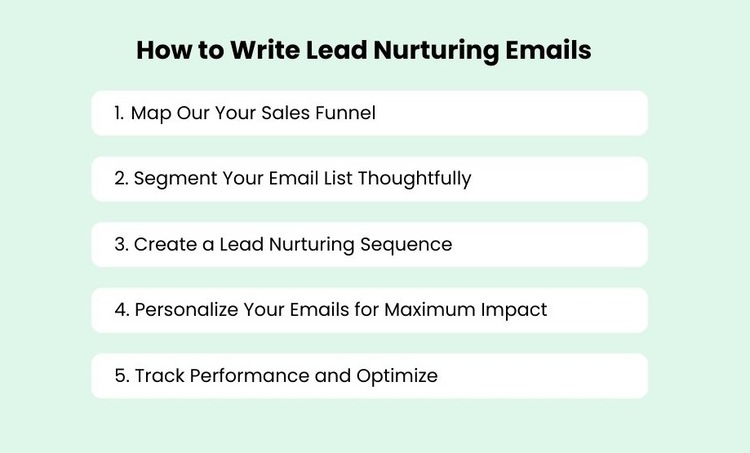
Lead nurturing emails are all about building trust over time rather than pushing for an immediate sale. Instead of sending hard-selling messages, these emails focus on educating, guiding, and staying connected with your potential customers at every stage of their journey.
They can include helpful tips, industry insights, product use cases, or even simple check-ins that show you understand your audience’s needs. The goal is to keep your brand in their mind while offering real value, so when they’re ready to make a decision, they naturally think of you. In a way, lead nurturing emails feel less like marketing and more like a thoughtful conversation that grows stronger with every interaction.
What Are Lead Nurturing Email Campaigns?
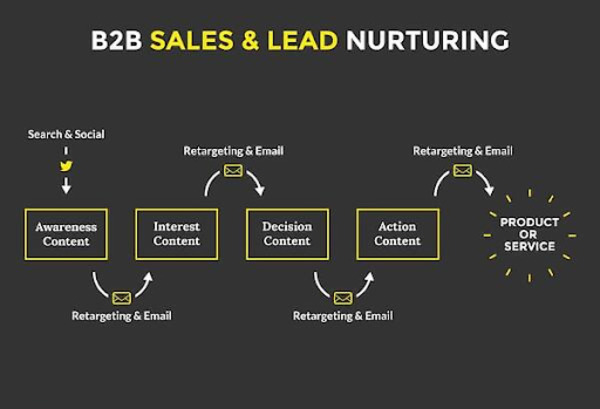
Lead nurturing email campaigns are a series of planned, automated emails designed to guide potential customers through their decision-making journey. Instead of focusing on a one-time message, these campaigns build a relationship over time by delivering relevant and valuable content based on the user’s interests, behaviour, or stage in the sales funnel.
These campaigns typically start when someone shows interest in your business, like signing up for a newsletter, downloading a resource, or visiting your website. From there, they receive a sequence of emails that might include educational content, product insights, case studies, or gentle reminders, all aimed at helping them move closer to a purchase.
The main purpose of lead nurturing email campaigns is to stay connected without being pushy. It’s about understanding your audience, offering consistent value, and building trust so that when they’re ready to take action, your brand is already familiar and reliable in their mind.
Lead nurturing emails are designed to guide prospects through the sales funnel by providing valuable and relevant content at each stage. These emails don’t push sales aggressively. Instead, they focus on:
- Solving problems
- Answering questions
- Building credibility
Best Practices for Nurturing Emails
To make nurturing emails effective:
- Segment your audience carefully
- Use personalized content
- Maintain a consistent schedule
- Include clear calls to action
1. Welcome Emails
Importance of First Impressions
Welcome emails set the tone for your relationship with a new subscriber or lead. A strong first impression can significantly increase engagement rates.
Elements of an Effective Welcome Email
An effective welcome email should include:
- A friendly introduction
- Clear value proposition
- Next steps for the reader
- Contact information
2. Educational Newsletters
Sharing Valuable Insights
Educational newsletters help position your company as an industry leader. Instead of selling, these emails focus on delivering value.
Examples include:
- Industry trends
- How-to guides
- Expert insights
How to Position Your Brand as an Authority
Consistency is key. Regular newsletters that provide useful content build trust and keep your brand top-of-mind.
3. Promotional Emails
Offering Solutions to Business Problems
Promotional emails in B2B are not about discounts, they’re about solutions. Highlight how your product or service solves a specific problem.
Timing and Personalization Strategies
- Send emails based on user behaviour
- Personalize subject lines and content
- Avoid sending too frequently
4. Case Study Emails
Showcasing Real Business Results
Case study emails provide proof that your solution works. They highlight real-world success stories.
Building Trust Through Data
Include:
- Measurable results
- Client testimonials
- Before-and-after comparisons
5. Event Invitation Emails
Webinars and Conferences
Event emails invite prospects to webinars, workshops, or conferences.
Increasing Attendance Rates
- Use clear subject lines
- Highlight benefits of attending
- Send reminders
6. Re-engagement Emails
Winning Back Dormant Clients
Re-engagement emails target inactive subscribers and encourage them to reconnect.
Crafting Compelling Re-engagement Messages
- Offer new value
- Ask for feedback
- Provide incentives
7. Cold Outreach Emails
Reaching New Prospects
Cold emails help you connect with potential clients who haven’t interacted with your brand yet.
Avoiding Spam Filters and Getting Replies
- Keep messages concise
- Personalize outreach
- Avoid spammy language
Personalization and Segmentation Strategies
Using Data for Targeted Campaigns
Segment your audience based on:
- Industry
- Job role
- Behaviour
Tools for Email Automation
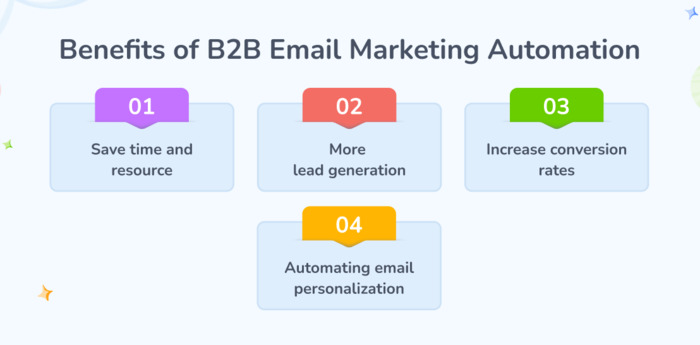
When it comes to email automation, choosing the right tool can make a huge difference in how efficiently you manage campaigns, nurture leads, and drive conversions. Here are some of the most popular and reliable tools for email automation, explained in a simple, humanized way: Automation tools help streamline campaigns and improve efficiency.
Metrics to Measure Success
Key Performance Indicators (KPIs)
Track:
- Open rates
- Click-through rates
- Conversion rates
Improving Campaign Performance
Regularly analyze data and optimize your campaigns accordingly.
Common Mistakes to Avoid while Undertaking Email Marketing for B2B Lead Generation
Email marketing can be a powerful channel for B2B lead generation, but only when it’s done thoughtfully. Many businesses miss the mark by making a few common mistakes that reduce engagement and hurt conversions. Here are some key ones to avoid:
1. Ignoring Audience Segmentation
Sending the same email to everyone rarely works in B2B. Different industries, roles, and decision-makers have different needs. When you don’t segment your audience, your message feels generic and easy to ignore.
2. Focusing Too Much on Selling
If every email is a sales pitch, prospects will quickly lose interest. B2B buyers take time to decide, so your emails should educate, provide insights, and build trust rather than constantly pushing for a sale.
3. Weak or Misleading Subject Lines
Your subject line is the first impression. If it’s unclear, too salesy, or misleading, people won’t open your email, or worse, they may lose trust in your brand.
4. Lack of Personalization
Using “Dear Customer” just doesn’t work anymore. B2B audiences expect relevant and personalized communication. Even simple touches like using a name or referencing their industry can make a big difference.
5. Poor Timing and Frequency
Sending too many emails can annoy your audience, while sending too few can make them forget about you. Finding the right balance and timing is crucial to stay relevant without being intrusive.
6. Not Optimizing for Mobile
Many professionals check emails on their phones. If your emails aren’t mobile-friendly, you risk losing a large portion of your audience instantly.
7. No Clear Call-to-Action (CTA)
If your email doesn’t clearly tell the reader what to do next, they’re likely to do nothing. Every email should have a simple and clear purpose, whether it’s downloading a guide, booking a call, or reading a blog.
8. Ignoring Analytics and Performance
Not tracking metrics like open rates, click-through rates, and conversions means you’re missing valuable insights. Without data, it’s hard to improve your campaigns.
9. Poor Email List Quality
Buying email lists or not cleaning your database can harm your results and reputation. It’s always better to build a genuine, opt-in list of interested prospects.
10. Overloading Content
Too much information can overwhelm readers. Keep emails clear and concise.
11. Ignoring Analytics
Failing to track performance leads to missed opportunities for improvement.
B2B email marketing isn’t about sending more emails, it’s about sending the right emails to the right people at the right time. Avoiding these common mistakes can help you build stronger relationships, improve engagement, and generate more qualified leads.
Future Trends in B2B Email Marketing
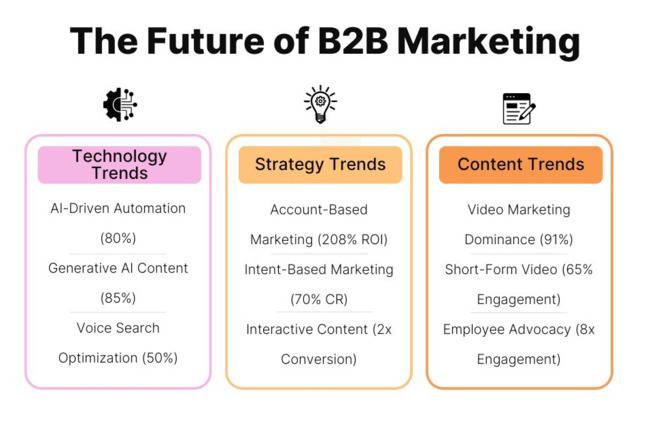
The future of B2B email marketing is evolving quickly, driven by technology, changing buyer behaviour, and higher expectations from decision-makers. Here are some key trends that will shape the future in a simple, humanized way:
1. AI-Powered Personalization
Emails are becoming smarter with the help of AI. Instead of basic “Hi [Name]” personalization, businesses are now using data to send highly relevant content based on behavior, interests, and timing. This kind of hyper-personalization is expected to dominate the future.
2. Automation with Human Touch
Automation will continue to grow, but purely automated emails won’t work alone. The winning strategy will combine automation with genuine, human-like messaging that feels personal and conversational rather than robotic.
3. Interactive & Engaging Emails
Future emails won’t just be text, they’ll include interactive elements like videos, polls, and clickable content. This makes emails more engaging and helps brands stand out in crowded inboxes.
4. Privacy & Data Protection Focus
With stricter data regulations and rising privacy concerns, businesses will need to be more transparent about how they collect and use data. Building trust will become just as important as generating leads.
5. Micro-Segmentation & Predictive Targeting
Instead of targeting large groups, marketers will focus on smaller, highly specific segments. Predictive analytics will help send the right message at the perfect time, improving engagement and conversions.
6. Mobile-First & Accessibility Optimization
More professionals are checking emails on mobile devices, so emails must be optimized for smaller screens. Accessibility (making emails usable for everyone) will also become a key priority.
7. Value-Driven Content Over Promotion
Future B2B emails will focus more on providing value, like insights, solutions, and education, rather than just promoting products. Buyers expect helpful content that solves real problems.
8. Integration with Multi-Channel Marketing
Email will no longer work in isolation. It will be part of a larger strategy that includes LinkedIn, content marketing, and CRM systems to create a seamless customer journey.
9. AI and Automation
Artificial intelligence is transforming email marketing by enabling smarter targeting and automation.
10. Hyper-Personalization
Future campaigns will focus heavily on delivering highly personalized experiences.
B2B email marketing isn’t going anywhere, it’s just getting smarter, more personal, and more human. Businesses that adapt to these trends will not only stay relevant but also build stronger relationships and drive better results in the long run.
FAQs on Types of Email Marketing to Capture B2B Clients
What is the most effective type of B2B email marketing?
Lead nurturing emails are often considered the most effective because they focus on building relationships rather than pushing for quick sales. In B2B, decision-making takes time and involves multiple stakeholders. Nurturing emails help guide prospects by sharing useful content, industry insights, case studies, and solutions to their problems.
How often should I send B2B emails?
There’s no one-size-fits-all answer, as it largely depends on your audience and industry. However, the key is to maintain consistency without overwhelming your subscribers. Sending emails too frequently can lead to unsubscribes, while sending too few may cause your audience to forget about you. A balanced approach, such as weekly or bi-weekly emails, often works well. More importantly, focus on delivering value in every email so your audience actually looks forward to hearing from you.
What makes a B2B email successful?
A successful B2B email is one that feels relevant, personalized, and genuinely helpful to the reader. It should address a specific need or challenge your audience is facing, rather than being overly promotional. Personalization, such as using the recipient’s name, company, or industry, can significantly improve engagement. Additionally, clear messaging, a compelling subject line, and a strong call-to-action all play an important role in driving results.
Are cold emails still effective in B2B?
Yes, cold emails can still be effective when done thoughtfully and strategically. The key is to avoid generic, mass-sent messages and instead focus on personalization and relevance. A well-crafted cold email should clearly demonstrate that you understand the recipient’s business or challenges and offer a solution that adds value. Keeping the message concise, respectful, and benefit-driven increases the chances of getting a positive response.
How can I improve email open rates?
Improving email open rates starts with writing compelling subject lines that spark curiosity or clearly communicate value. Personalization, such as including the recipient’s name or company, can also make a big difference. Additionally, segmenting your email list ensures that your content is relevant to the right audience. Timing also matters, testing different days and times can help you find when your audience is most likely to engage.
What tools are best for B2B email marketing?
The best tools for B2B email marketing typically include a mix of CRM platforms and email automation software. These tools help you manage contacts, segment audiences, automate campaigns, and track performance. Popular options like Mailchimp, HubSpot, ActiveCampaign, and others offer features such as workflow automation, analytics, and personalization. Choosing the right tool depends on your business size, budget, and how advanced your email marketing strategy needs to be.
Conclusion
Understanding the different Types of Email Marketing to Capture B2B Clients is essential for building strong business relationships and driving growth. From lead nurturing to cold outreach, each type plays a unique role in the customer journey. By combining these strategies with personalization, data analysis, and consistent communication, businesses can create powerful email campaigns that deliver real results.