

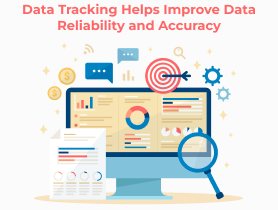
In today’s digital landscape, data is omnipresent. From e-commerce transactions to medical records, companies and organizations heavily depend on information to guide their choices.
However, there’s a catch: data is only valuable when it is reliable. This is precisely why data tracking plays a crucial role in enhancing the reliability and precision of data across various sectors. Data tracking is the organized method of gathering, observing, verifying, and managing information over time.
It guarantees that data stays consistent, accurate, and applicable. Without proper tracking, information can become obsolete, inconsistent, or even deceptive.
As companies expand and the pace of digital transformation quickens, dependable data has emerged as the foundation of informed decision-making. Erroneous data doesn’t merely create confusion; it can result in monetary losses, legal challenges, and harmed reputations.
Understanding Data Reliability
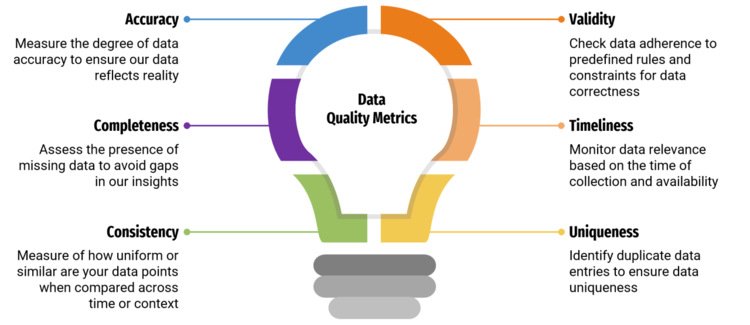
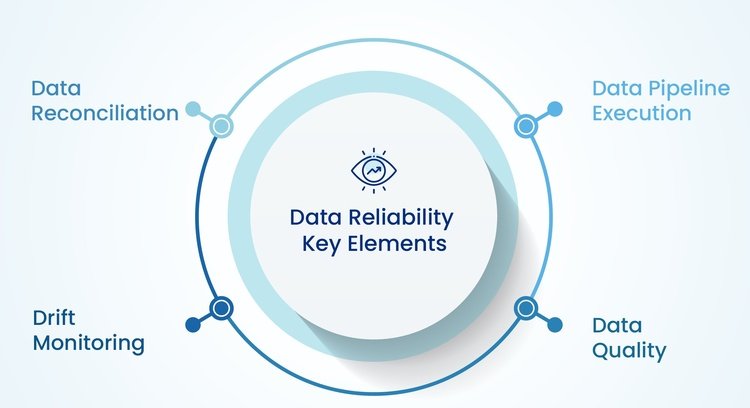
Data reliability refers to the consistency and stability of data over time and across various collection methods. It measures the degree to which a data-gathering process yields the same results under identical conditions, ensuring that information remains dependable for long-term analysis.
While accuracy is about whether the data is “right,” reliability is about whether the data is consistent. For example, a sensor that is consistently off by exactly two degrees is reliable (because its error is predictable) but not accurate.
For an organization to truly trust its insights, data must be both accurate and reliable to prevent “drift” and ensure that strategic decisions are based on repeatable, verifiable facts.
Data reliability refers to the consistency and dependability of information over time. If you take a measurement today and repeat it tomorrow under identical conditions, you ought to obtain the same outcome. That illustrates reliability in practice.
Reliable data ensures:
- Consistent reporting
- Repeatable outcomes
- Stable performance indicators
- Trust in analytics
For instance, a business monitoring daily sales figures requires reliable data to accurately assess growth. If the figures vary because of recording mistakes rather than actual shifts, the decision-making process can be compromised. When systems automatically monitor and document data, they reduce discrepancies. This reliability fosters trust in reporting and future planning.
Understanding Data Accuracy
Data accuracy is the cornerstone of reliable decision-making, representing the degree to which data correctly reflects the “real-world” facts or objects it describes. When data is accurate, it is free from errors, such as typos, outdated information, or duplicate entries, ensuring that any analysis derived from it is trustworthy.
Maintaining high levels of accuracy requires consistent validation and cleansing processes, as even minor inaccuracies can cascade into significant strategic blunders or flawed algorithmic outputs. Ultimately, accurate data provides the solid foundation necessary for businesses to gain true insights and act with confidence.
While reliability focuses on consistency, accuracy focuses on correctness. Accurate data reflects real-world conditions without errors.
For instance:
- A customer’s correct email address
- An accurate financial transaction record
- A patient’s correct diagnosis
If the data is incorrect, decisions based on it will also be wrong. Even small inaccuracies can snowball into larger problems.
By validating entries, cross-checking sources, and monitoring changes, tracking systems help eliminate mistakes before they spread.
How Data Tracking Works?
Data tracking is the systematic process of collecting, managing, and analyzing information about user behaviour and system performance. It acts as a digital trail, allowing organizations to understand how individuals interact with their websites, apps, and physical services.
The Mechanics of Data Collection
At its core, data tracking relies on several key technologies to capture “events”—specific actions like clicking a button, opening an email, or staying on a page for a certain duration.
- Cookies: Small text files stored on a user’s browser that remember login details, preferences, and browsing history.
- Tracking Pixels: Tiny, invisible 1×1 pixel images embedded in emails or websites. When they load, they ping a server to let the sender know the content was viewed.
- SDKs (Software Development Kits): Code blocks embedded within mobile apps that track “in-app” behaviour, such as level completions in a game or items added to a shopping cart.
- IP Addresses: Used to identify the general geographic location and network of the user.
The Data Lifecycle
Once the data is captured, it typically follows a three-step path:
- Ingestion: The raw data is sent from the source (your phone or computer) to a central server or data warehouse.
- Processing & Transformation: The data is cleaned and organized. For example, raw clickstream data is turned into “sessions” to show a cohesive user journey.
- Activation: The refined data is used to trigger actions, such as sending a “forgotten item” email or adjusting the layout of a website to improve user experience.
Privacy and Consent
In the modern digital landscape, data tracking is heavily regulated by frameworks like GDPR and CCPA. These laws require transparency, meaning companies must disclose what data they collect and give users the “right to be forgotten” or the ability to opt-out of tracking entirely.
Data tracking works through structured systems that collect, store, monitor, and verify information continuously. Let’s break it down.
Data Collection Methods
Data can be collected through:
- Automated software systems
- IoT sensors
- Online forms
- Manual input
- Transaction logs
Automation reduces the risk of human error. For example, barcode scanners in retail stores automatically log inventory movements, preventing manual counting mistakes.
Real-Time Monitoring
Modern dashboards provide live insights into operations. Real-time alerts notify teams about unusual activity, such as:
- Sudden sales drops
- Inventory shortages
- System errors
This immediate feedback loop ensures quick correction, maintaining both reliability and accuracy.
Data Tracking Helps Improve Data Reliability and Accuracy in Business
Businesses thrive on trustworthy data. Whether it’s forecasting revenue or managing supply chains, accurate insights drive performance.
Here’s how data tracking supports businesses:
- Identifies inconsistencies early
- Maintains clean databases
- Improves forecasting models
- Enhances reporting transparency
Reducing Human Error
Humans make mistakes. It’s natural. But automated tracking systems reduce manual handling, lowering error rates dramatically. For example, accounting software automatically tracks transactions and flags mismatches, preventing financial discrepancies.
Improving Compliance
Many industries must follow strict regulations. Tracking systems maintain detailed audit trails, ensuring compliance with laws and standards. Organizations that fail to track data properly risk penalties, fines, and reputational damage.
Role of Data Tracking in Healthcare
Healthcare depends heavily on accurate patient data. A small error in medication dosage or diagnosis can have serious consequences. Electronic Health Records (EHR) systems track patient history, treatments, lab results, and prescriptions. These systems improve reliability by ensuring:
- Consistent documentation
- Reduced duplication
- Improved patient safety
The World Health Organization emphasizes the importance of reliable health data systems for improving patient outcomes (source: https://www.who.int).
Role of Data Tracking in Education
Schools and universities use tracking systems to monitor:
- Student performance
- Attendance
- Curriculum effectiveness
By analyzing patterns, educators can identify struggling students early and provide targeted support. Reliable academic data also helps institutions improve programs and allocate resources effectively.
Role of Data Tracking in Marketing
Data tracking is the engine that transforms marketing from guesswork into a precision science. By capturing how customers interact with brands, marketers can move away from “spray and pray” advertising and toward highly relevant, individualized experiences.
Core Functions in Modern Marketing
-
Advanced Personalization
Data tracking allows brands to move beyond generic messaging. By monitoring browsing history, past purchases, and even time spent on specific pages, companies can serve content that matches a user’s current intent.
- Dynamic Retargeting: Showing a user an ad for the exact pair of shoes they left in their digital cart.
- Tailored Recommendations: Suggesting “Products you might like” based on previous behaviour patterns.
-
Attribution and ROI Mapping
Perhaps the most critical role of tracking is determining attribution—which specific marketing effort actually led to a sale. Without tracking, a company wouldn’t know if a customer bought a product because of a Google search, an Instagram ad, or an email newsletter.
-
Audience Segmentation
Marketers use tracking data to group users into “segments” based on shared traits. This ensures that a high-end luxury brand isn’t wasting its budget showing ads to budget-conscious shoppers, and vice-versa.
Tracking Methods vs. Marketing Outcomes
| Tracking Method | Marketing Application | Primary Benefit |
| UTM Parameters | Campaign Tracking | Identifies exactly which link or ad drove traffic. |
| Conversion Pixels | Performance Marketing | Measures the “success” rate of a specific landing page. |
| Event Tracking | User Experience (UX) | Identifies where users “drop off” in a signup flow. |
| CRM Integration | Lifecycle Marketing | Tracks a customer’s journey from their first click to their tenth purchase. |
The Shift to “Zero-Party” Data
With increasing privacy regulations (like GDPR) and the phasing out of third-party cookies, the role of data tracking is shifting. Marketers are now focusing on First-Party and Zero-Party data, information users voluntarily share through quizzes, surveys, or account preferences.
This creates a more transparent relationship where the user “trades” their data for a better, more customized service.
Key Insight: In marketing, data tracking isn’t just about watching what people do; it’s about predicting what they will need next.
Marketing thrives on analytics. Companies track:
- Website visits
- Click-through rates
- Customer behaviour
- Conversion metrics
Accurate tracking ensures campaigns are optimized based on real customer data rather than assumptions. Without tracking, marketing decisions become guesswork.
Tools and Technologies Used in Data Tracking
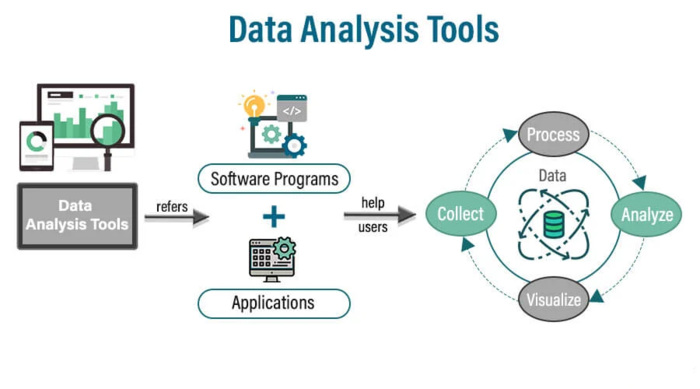
In 2026, data tracking has moved beyond simple “event logging” to a holistic ecosystem where AI agents and automated “observability” platforms manage the flow of information. The focus has shifted from merely collecting data to ensuring its lineage, quality, and real-time utility.
Here are the primary tools and technologies currently driving the data tracking landscape:
1. Modern Data Infrastructure (The Core)
The “Modern Data Stack” has matured into a centralized, cloud-native engine where tracking and storage are inseparable.
-
Cloud Data Warehouses: Platforms like Snowflake and BigQuery serve as the gravitational center for all tracked data, offering elastic scaling to handle massive ingestion.
-
Data Lakehouses: Databricks is the industry standard for combining the structure of a warehouse with the massive scale of a data lake, essential for tracking raw unstructured data (audio, video, PDFs).
-
Ingestion & ELT Tools: Fivetran and Airbyte automate the extraction of data from SaaS tools (CRM, marketing, billing) into central systems, reducing the manual effort of building custom tracking connectors.
2. Digital Experience & Behavioral Tracking
Instead of just tracking clicks, these tools now use “Fullcapture” technology to recreate the entire user journey without compromising privacy.
-
Behavioral Analytics: Contentsquare and Fullstory track “digital body language” (e.g., mouse frustration, scroll depth) and use AI to diagnose why users drop off in a funnel.
-
Product Analytics: Amplitude and Mixpanel allow teams to track specific feature adoption and user retention patterns in real-time.
-
Privacy-First Tracking: With the decline of third-party cookies, tools like Segment (a Customer Data Platform or CDP) are used to manage “first-party” data tracking while ensuring compliance with global privacy laws.
3. Data Observability & Governance
As data pipelines have become more complex, “silent failures” (where data flows but is wrong) have become a major risk.
-
Data Observability: Monte Carlo and Bigeye act like “application performance monitoring” for data, tracking data freshness, volume anomalies, and schema changes
. -
Lineage & Cataloging: OvalEdge and Atlan provide end-to-end lineage tracking, allowing users to see exactly where a piece of data originated and how it was transformed.
-
Transformation Tracking: dbt (data build tool) has become the standard for tracking how raw data is modeled into business metrics, ensuring that everyone in an organization is using the same definition for “revenue” or “active user.”
4. Emerging AI & Intelligent Tracking
-
Agentic Monitoring: New AI “agents” (like ThoughtSpot’s Spotter) allow non-technical users to track trends using natural language queries instead of SQL.
-
Digital Provenance: Technologies like C2PA are being used to embed “digital fingerprints” into data to track whether it was generated by a human or an AI.
-
Physical Tracking: In logistics, mobile-driven systems (e.g., Dynamsoft) have replaced legacy hardware scanners, using AI-powered optical character recognition (OCR) to track physical assets in real-time.
Summary Table: Tools by Use Case
| Category | Top 2026 Tools | Primary Benefit |
| Storage & Ingestion | Snowflake, Fivetran, Databricks | Centralized, scalable “single source of truth.” |
| User Behavior | Contentsquare, Fullstory, Mixpanel | Understanding the “why” behind user actions. |
| Data Health | Monte Carlo, Great Expectations | Catching broken data before it hits reports. |
| AI Analytics | ThoughtSpot, Looker (Gemini) | Asking questions in plain English. |
| Governance | OvalEdge, Alteryx | Ensuring data is compliant and searchable. |
Modern tracking relies on powerful technology, including:
- Customer Relationship Management (CRM) systems
- Enterprise Resource Planning (ERP) tools
- Data analytics platforms
- Artificial Intelligence software
Cloud-Based Tracking Systems
Cloud platforms offer:
- Scalability
- Data backup
- Enhanced security
- Real-time collaboration
These systems maintain consistent updates across multiple locations.
AI and Machine Learning Integration
AI tools detect patterns and anomalies automatically. They can:
- Predict trends
- Flag suspicious activities
- Improve data validation
This intelligent automation further strengthens reliability and accuracy.
Challenges in Data Tracking
Despite its benefits, tracking comes with challenges:
- Privacy concerns
- Cybersecurity threats
- Data overload
- Integration issues
Organizations must balance tracking benefits with ethical data handling practices.
Best Practices for Improving Data Reliability and Accuracy
Improving data reliability and accuracy is an ongoing process of refinement, not a one-time setup. To ensure your insights are both “right” (accurate) and “consistent” (reliable), you need to address every stage of the data lifecycle.
-
Implement Strict Data Validation at Entry
The most effective way to maintain data quality is to prevent “garbage” from entering your system in the first place.
- Input Constraints: Use dropdown menus, date pickers, and specific format requirements (e.g., regex for email addresses) to limit human error.
- Real-Time Verification: Employ APIs that verify addresses, phone numbers, or credit card details the moment they are entered.
- Mandatory Fields: Ensure critical data points (like a unique User ID or a Timestamp) cannot be left blank.
-
Standardize Collection Methods
To ensure reliability, the way you collect data must be identical across all channels.
- Unified Tracking Tags: Use a single Tag Management System (like Google Tag Manager) to ensure that a “purchase” is defined the same way on your mobile app as it is on your desktop site.
- Common Data Schema: Establish a “source of truth” document that defines exactly what each data field means, what its format should be, and who owns it.
- Standardized Timezones: Always store temporal data in UTC to avoid “drift” or confusion when analyzing global datasets.
-
Regular Data Audits and Cleansing
Data naturally “decays” over time, people move, change jobs, or stop using services. Regular maintenance is essential.
- Deduplication: Periodically run scripts to identify and merge duplicate records (e.g., “John Doe” and “J. Doe” at the same address).
- Anomaly Detection: Use automated alerts to flag data that falls outside of expected ranges, which often indicates a broken tracking script or a sensor malfunction.
- Scheduled Purges: Remove outdated or irrelevant data to reduce “noise” and remain compliant with privacy regulations like GDPR.
-
Automate Wherever Possible
Manual data entry is the primary enemy of accuracy. Whenever a human has to type or copy-paste, the risk of error increases.
- Automated Integrations (APIs): Instead of manual uploads, use APIs to sync data directly between your CRM, marketing platforms, and data warehouse.
- OCR Technology: For physical documents, use high-quality Optical Character Recognition to extract data directly into digital formats.
-
Cultivate a “Data-First” Culture
Technical tools are only as effective as the people using them.
- Training: Ensure everyone, from sales reps to executives—understands the impact of poor data quality on the company’s bottom line.
- Data Stewardship: Assign specific “owners” to key datasets who are responsible for their health and accuracy.
- Feedback Loops: Create a simple way for data users to report inaccuracies back to the data providers.
The Golden Rule: Reliability is about the process; Accuracy is about the result. You cannot have the latter without a disciplined approach to the former.
To maximize benefits, organizations should:
- Standardize data entry formats
- Automate validation checks
- Conduct regular audits
- Train staff properly
- Use secure systems
Consistency in procedures ensures long-term data quality.
Future of Data Tracking
The future looks promising. Emerging technologies such as predictive analytics and blockchain may further enhance data integrity.
Automation will continue reducing errors while improving transparency. Organizations that invest in strong tracking systems today will gain a competitive advantage tomorrow.
Frequently Asked Questions (FAQs)
-
Why is data reliability important?
Reliable data ensures consistent results, enabling accurate decision-making and long-term planning.
-
How does data tracking reduce errors?
It automates data collection and validation, minimizing manual mistakes.
-
Can small businesses benefit from data tracking?
Absolutely. Even small businesses can improve efficiency and decision-making with reliable tracking systems.
-
Is data tracking secure?
When implemented with proper cybersecurity measures, data tracking systems are highly secure.
-
What industries benefit most from data tracking?
Healthcare, finance, marketing, education, logistics, and manufacturing benefit greatly.
-
Does AI improve data accuracy?
Yes. AI identifies anomalies, predicts patterns, and validates information automatically.
In Conclusion ;
In a world driven by information, data tracking helps improve data reliability and accuracy more than ever before. Reliable and accurate data is not just a technical necessity, it is a strategic advantage.
From healthcare and education to business and marketing, tracking systems ensure consistency, precision, and trustworthiness. Organizations that prioritize structured tracking processes reduce risks, enhance performance, and make smarter decisions. Simply put, when you track your data effectively, you protect your future.